Life Update | Hospital Admissions & Disability

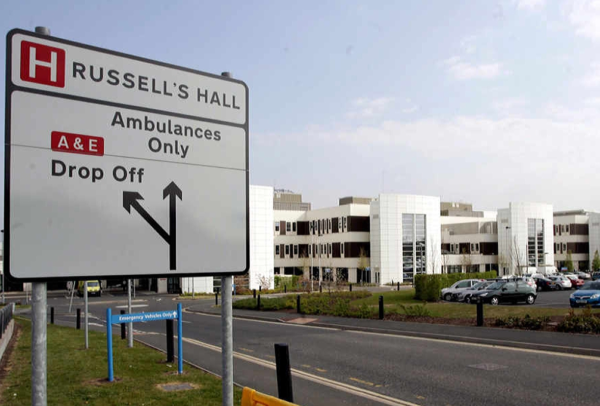
Thursday 8th March marked International Women’s Day 2018. For me, it was spent in hospital (Russells Hall, Dudley) undergoing minor surgery. Could be worse, I suppose!

Due to the fact I have Ullrich congenital muscular dystrophy (a muscle-wasting condition), people are often horrified when I tell them how many general anaesthetics I’ve endured throughout my life (at least 10 – honestly, I’ve lost count!).

Although it is obviously best avoided, I’ve personally never encountered any problems or complications as a result of general anaesthesia.

I’m a big believer in knowing your own body and what you, as an individual, are able to withstand. When undergoing any form of surgery, communication is key – particularly when you have a disability.


A Few Tips:

Go prepared: Take all relevant documentation to your pre-operative assessment(s), including names and contacts for all the medical professionals you see regularly.

Meet with your surgeon(s) and anaesthetist: It is not always common practice to see your anaesthetist prior to surgery, but in my case it is essential. Explain your specific requirements and concerns, and don’t be afraid to ask questions.

Ensure everything is in place prior to your admission date: If, for example, you use a Bi-pap or C-pap machine (non-invasive ventilation), tell your medical team – nurses included. Make sure they know your settings and have your NIV machine ready for you to use post-operative.


I usually discharge myself on the day of surgery or, as soon as I know I’m well enough to manage at home (again, I hear you gasp). Anyone with a disability who has spent time as an inpatient will appreciate why I prefer to escape as soon as physically possible.

Don’t get me wrong – I cannot fault the care and conscientiousness of the doctors and nurses. I am a big supporter of the NHS and frankly, I would not be here today without it.

However, the sad fact is, hospitals in the UK are not equipped for those of us with disabilities and complex care needs. Trust me – having been admitted many times, to various hospitals, for various reasons – I am well versed!

On this particular occasion, it was necessary for me to stay in hospital overnight. My Mom was with me all day but went home at around 7pm when it became apparent that I was unfit to leave. This essentially left me alone and stranded in bed (one that didn’t work!), unable to move, reach or sit myself up.

I couldn’t and wouldn’t expect Mom to stay with me all night, in order to assist with my physical care needs. She herself has recently had a full knee replacement and was exhausted.

After a long, uncomfortable night spent clock-watching, I was incredibly relieved when my folks returned at 11am on Friday to take me home. My home is set up for my care needs. Unfortunately, hospitals are not.


Please follow me on Twitter and Facebook

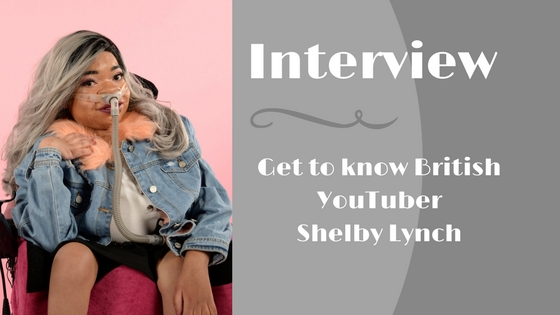
Interview | YouTuber Shelby Lynch

20 year-old Shelby Lynch is an up-and-coming YouTuber from England, who happens to have a muscle-wasting condition similar to myself.

She was recently kind enough to chat with me about her disability, life as a YouTuber and her involvement with the Missguided #KEEPONBEINGYOU campaign.


1. Could you please tell us about your disability and how it affects you?

My disability is called SMA (Spinal Muscular Atrophy). This causes my muscles to become weaker over time. I have a curve in my spine (scoliosis) and am unable to walk, so I use a powered wheelchair to get around. I also need to use a ventilator 24/7 to help me breathe.

2. What have you found to be the biggest challenges of living with your disability?

The biggest challenge of having a disability is having to rely on other people to do things for you. My daily life is affected – I need help with simple things like getting around, eating and personal care. I’d love to be able to do my own hair and makeup.

Also, not having as much independence as someone my age should. Independance for me is key.

3. What, if any, do you feel are the positives to having a disability?

There are a lot of perks! For me, the biggest positive that comes with having a disability is getting to skip the queue for certain things. Sometimes I can get free access to certain places too. But then others do take the piss and charge disabled people more than they would an able-bodied person.

4. Can you please explain why you decided to become a Youtuber?

I wouldn’t say I’m a successful YouTuber but if I’m helping people in a certain way then that’s cool. I started watching YouTube around four years ago. I thought it looked really fun so I decided to make a channel too. On my channel I talk about fashion, beauty, lifestyle and my disability.

Really, I just want to have fun with it to be honest. I want to show people that I’m just a regular 20 year old who enjoys doing what other people like to do. Whether it’s going to concerts or hanging out with friends.

5. Do you consider yourself to be an inspiration?

No, I don’t consider myself to be an inspiration unless I have done something to impact people. People usually call me an inspiration just because I’m disabled but to me, that’s not right.

6. Can you talk about your involvement with the Missguided campaign, and what it means to you?

I saw their campaign on Instagram and really liked the fact they were showing different types of people. So, I took a picture of myself wearing one of their jumpers, and used the hashtag #KEEPONBEINGYOU.

Only a couple of hours later they had reposted my picture. It was so overwhelming receiving so many nice comments from people I didn’t even know. Then somebody from Missguided contacted me, offering to send some clothes, and asking if I would like do a mini photo shoot and video for their campaign which felt like a dream!

Working with them was absolutely incredible! When they asked me if I would join their campaign I was over the moon. It was such a great start to the week. I was a bit nervous as I have never done anything like this before.

But Missguided is a brand that I actually love. And I feel like their clothes are different to any other fashion retailer. The clothes make me feel confident and cool, so getting to work with them was a dream come true.

In addition, it’s great that they aren’t afraid to break barriers by showing some diversity in their campaign. This is something I personally respect so much.

In my caption for my picture I spoke about how disabled people aren’t often seen as pretty or sexy because of their disability, and that’s not the case. We should feel empowered no matter what.

– “Keep On Being You means to be confident in your own skin, and not letting anyone in life tell you that you can’t do anything.”

I hope they ask me to work with them again as it was so much fun and they are certainly leading the way in showing diversity as a fashion brand.

Find out more about Shelby’s involvement with the Missguided #KEEPONBEINGYOU campaign here.


Follow Shelby:
Twitter

Instagram

Youtube channel

Pinterest

Blog


          I’d like to thank Shelby for taking the time to speak with me!

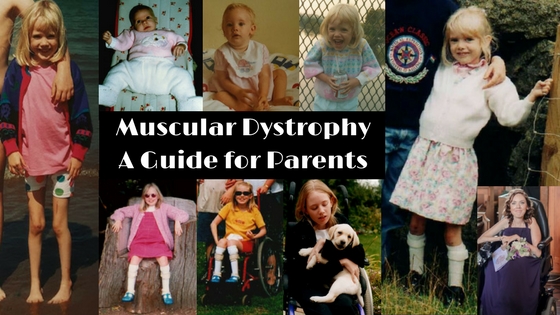
Muscular Dystrophy | A Guide for Parents

About Me

– Disability blogger from the UK
– I have a rare, progressive condition: Ullrich congenital muscular dystrophy
– Born in 1988, with ‘floppiness’ and dislocated hips
– Slow rate of progression: I didn’t start to walk until 19 months of age. Prior to that, I ‘bum-shuffled’
– Able to walk very short distances, wearing custom-made leg splints, until age 10
– Fell over a lot as a child
– Never able to walk up or down steps or stairs
– I am now completely non-ambulant and use a powered wheelchair
– Contractures in all joints (knees, hips, elbows, wrists)
– Severe ‘S’ shaped scoliosis (curvature of the spine), which has not been surgically corrected
– Education: I attended mainstream school, then continued onto college (A-Levels) and later university, completing a degree in Art & English Literature


Diagnosis

Learning your child has a neuromuscular condition can, of course, be distressing and concerning.

In some cases, there may be a family history of the condition, whereas for others, like me, it could appear completely ‘out of the blue’.

I am the only member of my family with any form of muscle-wasting condition.

So, when I was diagnosed with congenital muscular dystrophy, aged 4, following a muscle biopsy, my parents were venturing into the unknown.

It was 1992. There was no Internet, no Google, and no one to relate to.

For us, muscular dystrophy was new and unheard of.


How and When to Tell Your Child

It may be beneficial to talk to other parents of children with a similar condition. If this is something you think might be helpful, ask your care advisor or neuromuscular consultant.

There is no right or wrong answer! Only you can decide what is best for your child.

It is important to consider siblings, as they should be included in any discussions you have as a family. However, I would strongly advise against telling siblings more about the condition than the affected child. Any information you choose to share with your children should (in my opinion) be fair and equal, regardless of age gaps.

When deciding if, when and how to tell your child of their diagnosis, consider:

– Their age
– Their own awareness of their disability        – Emotional maturity
– Your ability to fully answer any questions they might have

From my personal perspective, I recommend an open and honest policy from the very beginning.


I received a diagnosis of congenital muscular dystrophy at age 4. This was specified as Ullrich CMD many years later.

I was always aware of my disability and limitations. I recognised that I was different from my peers – unable to walk, run and climb steps. I also looked different – I was very thin as a child, had joint contractures and scoliosis, causing asymmetry of the torso.

My parents told my siblings and I of the term muscular dystrophy, meaning that my muscles are much weaker than those of other children. At that stage, this was all the information I needed.

For many years, when other children would ask the inevitable question, “what’s wrong with you?”
I would simply answer, “I’ve got muscular dystrophy, so I can’t walk like you”.

Ullrich Congenital Muscular Dystrophy

Infancy

– Do your research: These days, there are many reliable resources of information. Ask medical professionals including consultants, physiotherapists and occupational therapists. I also recommend reaching out to those directly affected, such as other parents and adults with muscle-wasting conditions. Try social media and search for groups to join.
– Always trust your instincts! Aware of my delayed progression as a baby, my mother sought medical help and was told she was an “over-reactive mother”. Thankfully, she persisted and met with a neuromuscular specialist, who almost immediately identified my condition.


Starting School

– Starting school can be daunting for any child. But for a child with muscular dystrophy, this transition can be even more challenging.
– There is no reason why a child with a muscle-wasting condition shouldn’t attend mainstream school. However, you must consider your child as an individual and decide whether or not you feel this would be best for them. Indeed, your child may have a preference. Some may elect to attend a school for special educational needs.
– I suggest making several visits to shortlisted nurseries or schools. Check all areas for accessibility. Meet with staff and the SEN team.
– It is essential to ensure staff are fully aware of your child’s needs and abilities. Meet with the special educational needs co-ordinator (SENCo) well in advance. If possible, meet and introduce your child to teachers and support assistants. This will help them feel more at ease when their first day of school arrives.
– Ask your child’s physiotherapist and/or occupational therapist to visit the school and meet with staff to share their knowledge and expertise.
– Be positive, be optimistic, be encouraging. BUT don’t make promises you can’t keep: As your child grows and interacts with other children, they will become increasingly aware of their differences. They may ask why they can’t stand, walk or run like their friends. Furthermore, if your child has a progressive form of muscular dystrophy, they may wonder if their symptoms will get worse as they get older.

I was able to walk short distances until the age of 10. We were never given any information or guidance. We weren’t advised if or when my ability to walk would come to an end. I would therefore often ask my parents, “will I always be able to walk or will I have to use a wheelchair?”

I appreciate why many parents may be reluctant to overshare and reveal what the future may hold, for fear of scaring their child. However, I feel it is important to be open and honest. If you’re unable to answer their queries, say so.

Knowledge and preparation is power!


Teen Years

– For most children with muscular dystrophy, the biggest changes occur during puberty.
– Growth puts extra strain on weakening muscles.
– If able to weight-bear, your child could lose this ability resulting in the need for a wheelchair.
– It is likely your child will accept and embrace mobility aids and equipment more than you. Children are very adaptable. For me personally, using a wheelchair was a great relief. A wheelchair offers mobility and freedom.
– Growth also leads to contractures. Regular physiotherapy helps to maintain flexibility and movement.
– If untreated, spinal curvature (scoliosis) will progress, resulting in asymmetry of the torso, a tilted pelvis, pressure sores and discomfort.
– Scoliosis, along with muscle deterioration, impacts on respiratory function. If your child feels overly tired, naps during the day, or experiences regular headaches, particularly on first waking, you must see a specialist respiratory consultant. It might be necessary to introduce nocturnal noninvasive ventilation.
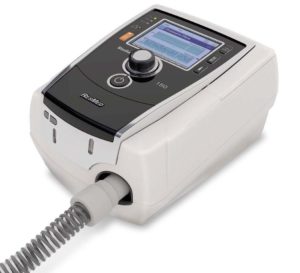
– Noninvasive ventilation (NIV) comes in the form of either a CPAP or BiPAP machine (usually the latter).
– Bilevel positive airway pressure (BiPAP): a face mask is worn, and air is delivered from a machine through a tube to support breathing.
– Other respiratory equipment your teenager may benefit from, especially when ill: Nebuliser and cough assist machine (seek advice and information from your respiratory consultant and respiratory physiotherapist).

BiPAP Machine
NIV Face Mask


Other Family Members

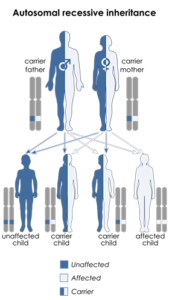
Some forms of muscular dystrophy are inherited. This can obviously be a concern if relatives are planning families of their own.

A few years ago, my brother and his wife decided they wanted to have children. Because of my condition, they sought genetic counselling, taking with them a copy of my medical record.

It was determined that my brother is highly likely to be a carrier, while his wife is highly unlikely. Once pregnant, they were offered a test which involved inserting a needle into the developing embryo to ascertain if the baby would be born with muscular dystrophy. They decided against this due to the invasive nature of the procedure.

They now have two children. Neither have muscular dystrophy.


Accepting and Adapting

As a parent, it is natural for you to focus all your energy into your children. Raising a child with muscular dystrophy brings with it many more challenges. This can impact on your health and relationships. It is therefore crucial to take good care of yourself too.

Remember, it is okay to cry, scream and shout! I’m sorry to say, battles are never ending and you will need to fight for your child throughout their life.

It’s good to talk: whether you choose to confide in relatives, friends, fellow parents of disabled children, or healthcare professionals – don’t bottle up your feelings, concerns and frustrations. This will negatively affect the wellbeing of you and your family.

Make time for yourself:

“what time?!”, I hear you say.

I fully appreciate that caring for a disabled child is a full-time job. But you must seek some form of relief. Even if it is just meeting with friends once a week for coffee. You need space. Your child needs space too.


*Disclaimer* The purpose of this post is to offer support and advice from my personal perspective, having lived with Ullrich congenital muscular dystrophy for over 3 decades.


Follow Me!

Instagram

Twitter

My First Ceiling Hoist

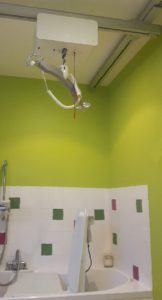
As some of you may know, my very first ceiling track hoist was *finally* fitted on Monday 11th December.

I now have a straight track in my bedroom and a separate H-frame in my ensuite bathroom.

Why I need a ceiling hoist

I am 29 and completely non-ambulant due to Ullrich congenital muscular dystrophy. Being rather petite, I have always been manually transferred (yes, lifted by family and carers) rather than hoisted. This method has always been preferable since it’s much quicker and frankly less faff. But, we’re all getting older and more frail.

I live with my parents who are both in their 60s. They are my primary source of support, though I do employ a carer part-time. My mother underwent a full knee replacement in August 2017, and is therefore limited in how much she is able to help me. Consequently, we have reached a stage where a ceiling hoist is a necessity.

A long and frustrating process!

Back in October 2016, Mom was told she needed a full knee replacement. The following Spring, my only carer announced she would be leaving within the next few months to pursue a career as a paramedic. With this in mind, I contacted my local community occupatinal therapy team to request an assessment. I was told they’re vastly understaffed and, with an extensive waiting list, I would need to be in a terminal condition in order to be seen. I appreciate their predicament, I really do, but I was unwilling to be fobbed off so easily.

I was instructed, over the phone by an OT I had never met, to “camp out”, meaning I should wash, dress and be toileted on my bed. Yes, for a prolonged and indefinite period of time, I should go without a shower and simply not wash my hair. (Due to my physical limitations and my wheelchair, there’s no way I could wash my hair over the sink).

Disgusted at her casual disregard, I asked my neuromuscular consultant to issue a letter of support. On receipt of this, an OT suddenly found time to visit me in my home for an assessment. Following this, representatives from Prism Medical and TPG DisableAids attended separately to advise, measure up and draw plans. Both rep’s then submitted quotes to the purse holder at County Council who, of course, approved the cheapest option.

NB: A portable hoist was trialled but proved unusable with the layout of my room and the type of bath in situ.

Prism Medical

We were expecting Prism to arrive at 9am on 24th October 2017, as arranged. Having waited over an over with no sign of anyone, I called only to be told they weren’t coming because of a “technical issue”.

To cut a long story short, Prism claimed they couldn’t connect the track from my bedroom to that in my ensuite bathroom. This is despite consulting with occupational therapists and agreeing to do the job. Prism also claim they left telephone messages for both myself and the OT’s, on the previous Friday, to inform us that they wouldn’t be attending. Neither I, nor the community OT’s received any messages. I call bullshit!

Dad even removed the partition above the bathroom door in preparation.

Later, I learnt that Prism have similarly disappointed several others, resulting in formal complaints being issued against them. So when the purse holder at County Council told me she would renegotiate with Prism rather than approve funding for TPG to carry out the work, I insisted otherwise.

Having to fight for your rights and basic needs is, unfortunately, very much part and parcel of having a disability. ‘Tell, don’t ask!’ This is my motto. In my experience, if you are not clued-up and assertive, those in authority simply fob you off.

TPG DisableAids

Thankfully, Funding was approved after a different OT, accompanied by the rep from TPG, visited to discuss and re-evaluate the situation.

Rather than trying to connect the single rail in the bedroom to the H-frame in the ensuite bathroom, it was decided that two separate hoists would be best.

My carer had by then handed in her notice and would be leaving at the end of the month. I was seriously starting to worry the hoist would not be in place before Christmas.

But much to my relief, TPG (who, compared to Prism, were infinitely more professional and efficient throughout) booked in for the 4th December.

Then, just my luck, we were hit by the worst snow in 7 years! It was like flipping Narnia.

I tried to remain optimistic though in reality I knew there was no way TPG would be able to make the journey from Hereford. And they didn’t.

So, it was third time lucky, on the following Monday that the long-awaited ceiling hoist was installed. I no longer need to worry about hiring new carers as lifting is not an issue. Furthermore, the pressure is off Mom – literally! And, the thing I am perhaps the most happy about – my dealings with community OTs and the County Council are over.

For now at least…


(Apologies for the poor quality of the images. All were taken by myself on a Samsung S5!)

20 Questions with…

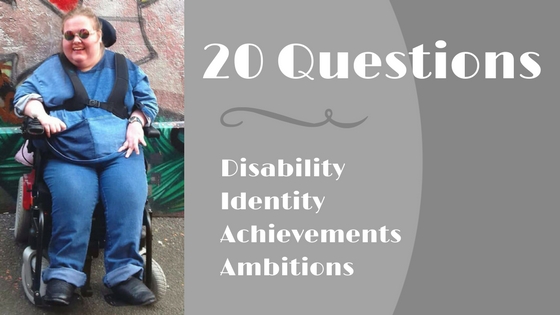
Rebecca who has cerebral palsy

I recently got chatting with a lovely lady called Rebecca, who contacted me after reading my blog.

Rebecca, who has cerebral palsy, is high-achieving, ambitious and incredibly interesting to talk to.

Consequently, I thought it would be beneficial for you guys to learn more about Rebecca, her views and how she manages life with a physical disability…


1. What is your disability and how does it affect you?

I have Ataxic Cerebral Palsy, which affects my four limbs and means that I use an electric wheelchair for getting around both inside the house and for outside activities in my day-to-day life. I also have a visual impairment called Nystagmus, which prevents me from going out unaccompanied as I sometimes struggle to see steps and kerbs in the street.  My disability affects my life as I require 24 hour care.

2. What is the worst thing about living with your disability?

The worst thing is the stigma and negative attitudes that still surround disability. For example, strangers often make assumptions about my mental capabilities and underestimate my intelligence. However, I am learning to become resilient through my experience of this, and have developed coping mechanisms.

3. What, if any, are the positives to having a disability?

The free carer ticket to gigs/festivals/theatre/talks is a bonus! I also value my electric chair and the feeling of acceleration when I drive fast. On a more serious note, I view the fact that I feel I have a unique perspective on the world as a result of my disability as a positive. I have a greater tolerance of difference due to the empathy and understanding that my disability has taught me.

4. How do you feel about the term ‘disability’? Do you refer to yourself as having a disability or do you prefer another term, such as differently abled?

I used to physically jump at the word ‘disability’ as well as ‘wheelchair’ and ‘handicap’. This was because hearing myself being described as disabled hit home the fact that other people viewed and labeled me in this way. It made me feel as if my disability was my main or only attribute. This all changed when I attended counseling sessions in my early 20’s, where I was encouraged to unpack the meaning of these words and confront why they prompted a physical reaction from me. It is still the case that disability will never be my favourite word, but I’m now comfortable enough to describe myself in that way to others.

5. Do you feel under-represented in the media? If so, what changes would you like to see?

I can understand why some people would feel under-represented, and I agree changes do need to be made. But in my opinion, these changes reside in discussion, ideas and inclusion rather than purely exposure.

6. Are you a leader or a follower?

I used to be a follower, afraid to voice my opinions.  Now I am comfortable taking the role of the leader in certain social situations, i.e. with less confident friends I am able to guide the conversation to allow people to be heard. As well as this, I hope to lead with my ideas surrounding disability ethics and the research I am doing in this particular area.

7. Optimist, pessimist, realist or idealist?

I live in the most realistic way possible so that I am most connected with reality and grounded in my thoughts. To be too pessimistic can prevent us from progressing, whereas being overly optimistic can also be counterproductive to personal growth.

8. Are you easy going or high-maintenance? Would those who know you best agree?

I would say that I am easy going because I have learnt how to balance my own well-being so as not to allow myself to become too stressed out. Those who know me best would probably agree, but I imagine they would claim that I’m more high-maintenance when I have an important deadline to meet!

9. Are you more of an introvert or an extrovert?

This really depends on whom I am with. In my professional career as a counsellor it is my responsibility to be the facilitator who steers the conversation, and this doesn’t allow for me to be introverted.  However I can still become shy around people that I struggle to connect with on a deeper level.

10. Are you more creative or logical?

I am more creative in my thoughts and my writing and in the way I can construct an argument in a debate.

11. You are currently studying Philosophy at Cambridge University –  why did you choose that subject in particular?

I have been fascinated by the world around me from a young age with my intuitive questioning of values and beliefs. This then developed when I embarked on a short course to find out more about the subject, which then inspired me to study philosophy at a higher level. What I like about philosophy most is that it’s a never-ending endeavour; there is always more to question, learn and explore. Philosophy can help to find new ways to think about old problems and with considering things from different perspectives, to overcome many of the hurdles that we encounter in our everyday lives.

12. What difficulties have you faced whilst at University, resulting from your disability?

Having to deliver presentations has been difficult for me, but luckily the University allowed me adapt my assessments, and have been really accommodating. One of my personal assistants delivered this presentation and I was able to answer class questions afterwards. I also require a personal assistant to write down my thoughts, and this can sometimes take a long time because conversations can be misinterpreted. For this reason, I always request the option of extra time because it can take longer for me than for an able-bodied student to formally express my thoughts in an assignment.

13. What do you hope to do following completion of your degree?

I am hoping to continue studying and develop my qualifications, embarking on a postgraduate course that combines philosophy and mental health.

14. Are you the type of person who always knew, from an early age, what job you wanted to pursue?

Yes, from about the age of 10 I remember hearing of people’s difficulties and wanting to help them by giving them advice at the time! This then developed into aspiring to become a qualified counsellor.

15. What is your ultimate ambition in life?

To gain as much knowledge and wisdom as possible to discuss new ideas and create meaningful change.

16. Bucket list: Can you list your top 5 goals?

I took some time to contemplate this question because I’ve never had a bucket list as such, but I’ve managed to come up with 5 things that are important to me:

 1. Experience something daring in nature – i.e. wheelchair tree-top climbing

2. Using my counseling skills to change someone’s life for the better

3. Learn more about the psychiatry side to mental health

4. Finish reading a book in its entirety!

5. Finish my dissertation

17. If you won the Euromillions, what would you do with the money?

I would first of all build my own custom-made cabin in the forest. I would also double my betting stakes. (I do now and again enjoy a little flutter on the horses and football!) Although overall I am pretty content with my life how it is now.

18. Where is your favourite place in the world?

I really love spending time by the weeping willows in Newnham, Cambridge. These trees overlook the River Cam which makes it a very tranquil spot, where I feel safe and at peace.

19. Do you believe in ghosts, spirits and the like?

I have heard many stories about spirits and the afterlife that have led me to believe, or at least be open to the idea.

20. If a pill existed that could completely cure you of your disability, would you choose to take it, and why?

No, simply because I wouldn’t be me any more. And I wouldn’t have experienced the same things if I had been able-bodied. The only thing I would perhaps alter is the fact that I don’t get to spend much time on my own.


I’d like to thank Rebecca Sherwood for taking the time to answer my questions.

What do YOU think of Rebecca’s responses? how would YOU answer these questions? Leave and comment and let me know!

If you found this blog post interesting, please do share so that others can see it too – thank you!

Emergency Care: My Experience

Muscular Dystrophy UK | #AmbulanceAction campaign

Throughout my 28 years, I have on many occasions had to call on the Emergency Care services.

I live with the progressive condition, Ullrich congenital muscular dystrophy. Consequently, I have contractures of the joints, a severe ‘S’ shaped scoliosis, and respiratory decline. I lost the ability to weight-bear at the age of 10, and now use an electric wheelchair to get around. I live with my parents and employ a part-time carer as I require support with daily activities including personal care.

My primary medical concern is respiratory related. Ambulances, A&E and hospital wards are all too familiar to me, having endured several bouts of acute pneumonia, a collapsed lung and pleurisy.

Although general knowledge of my disability is limited within all areas of Emergency Care, on the whole my treatment has always been thorough and adequate, if a little clueless at times!

I have found that whenever muscular dystrophy is mentioned, medics immediately assume it is the Duchenne form. This can be incredibly frustrating as it clearly indicates a lack of education and awareness.

There are many different variations of MD, the effects of which are wide ranging. I do feel that comprehension of these various forms needs to be increased throughout the Emergency Care services.

Each time I have called for an ambulance or been admitted to hospital, I need to relay every detail of my disability and how it affects me. This becomes unnecessarily repetitive and extremely tiresome.

Worryingly, there does seem to be a large gap in the most basic knowledge of muscular dystrophy.

I cannot complain about the care and conscientiousness shown towards me by paramedics, nurses and doctors. However, I am concerned about being in a position where I’m unable to answer their questions regarding my condition.

For instance, it can be dangerous to give those with Ullrich congenital muscular dystrophy supplementary oxygen as we retain carbon dioxide. It is therefore preferable to support breathing with non-invasive ventilation such as a Bi-pap machine. Failure to communicate this vital information can be literally life threatening.

Furthermore, the fact that I require the presence of a carer whilst an inpatient can be problematic. This again, has to be explained again and again, thus demonstrating a complete lack of awareness.


Find out more and join the #AmbulanceAction campaign.

Please share ~ Thank you!

Life Update: Part 2

Carers and my first ceiling track hoist


Hey everyone, hope you’re all well.

As promised, here are the developments following on from my previous life update…

Care

Having re-advertised for a part-time carer to replace my current PCA, I interviewed seven applicants, plus one who’s interested in ad-hoc cover. All were enthusiastic, though as any employer will know, things often change in the days that follow.

There was only one no-show which actually isn’t bad at all compared to my previous attempts to recruit new carers.

One of the seven ladies later asked to be a backup as she decided she couldn’t do every weekday. From the six remaining, I invited three to shadow, knowing that at least one would change their mind. I was right; they did.

The first was a no-show (yes, another)! After I contacted her to ask if she was going to attend, she simply replied, “I forgot”. Needless to say she was scrubbed from the list.

Number two messaged me a few days before shadowing, to say she had reconsidered and felt there weren’t enough hours. This left me with one applicant.

Thankfully she did show up. Seemingly reliable and keen to take on the role, I offered her the job on a trial basis from Monday 30th October.

My current PCA is leaving in December to pursue a career as a paramedic. So, fingers crossed all goes well with the newbie…

Ceiling track hoist

To my surprise, I was contacted a couple of weeks ago by Prism Medical to arrange a date for installation. Finally, after waiting for so long and constantly pushing the matter, I would get the much needed ceiling hoist on Tuesday 24th October.

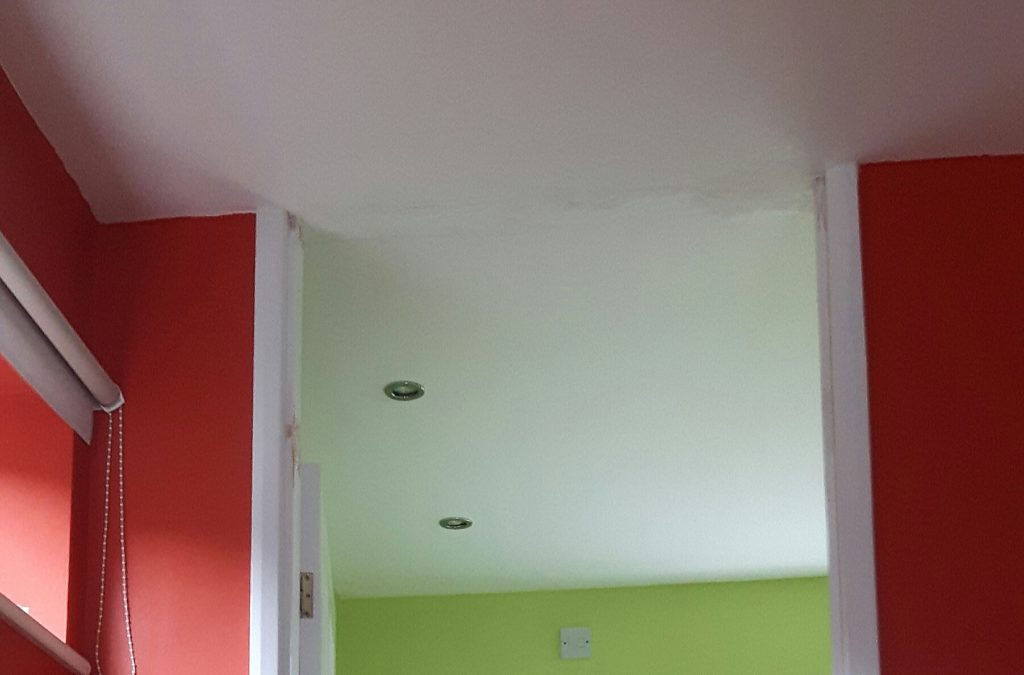
In preparation, my Dad had to remove the glass intersection above my bathroom door to allow through-access.

Before:

After:


When the day arrived, we cleared the room and waited for the workmen to arrive, as expected, at 9am. An hour later and still no sign. Becoming impatient, I called Prism Medical but was told they wouldn’t be coming due to a technical issue.

What?! What technical issue?

Prism Medical claim they left a voice message, on the previous Friday, explaining they couldn’t connect the single rail going from my bed to the bathroom door, with the H-frame in the bathroom. We received no voice message. They also claim to have contacted the Community OT’s. They too have had no calls or messages from Prism.

A rep from Prism previously visited my home to take measurements, draw up plans and provide quotes. They then corresponded with a Community OT (or so I’m told) and agreed to install the ceiling track hoist. Yet despite all this, they have suddenly decided they’re unable to carry out the work. Excuse my language, but what the actual fuck?!

As you might expect, the remainder of Tuesday was spent on the phone: trying to get hold of an occupational therapist, complaining to and about Prism Medical, and negotiating with County Council Equipment Services.

I’m hoping to get funding approval for TPG to do the work, as they too had sent out a rep to provide a quote.

Naturally the County Council opted for the cheaper quote from Prism. That’s worked out really well, hasn’t it!

Final Thoughts

Today is Thursday 26th October. There has been no notable progress since Tuesday. Essentially, I am back to square one – harassing the OT’s daily to ensure my case is not ignored. Unless you constantly pursue the issue yourself, frankly nothing happens.

I am so angry and disappointed with the whole cock-up, though sadly not overly surprised. In my experience, unless you’re prepared to self-fund, this is the service (or lack thereof) you can expect!

I will be putting in a formal complaint and am seriously considering writing to my local MP. If we allow companies and organisations to get away with such failures and blatant disregard, nothing will change.

So, once again the saga continues. I will keep you updated – *Keep an eye on Twitter and my Facebook page*


Thank you so much to each and every one of you who has offered advice and support!

Life Update ~ Carers, Hoists and OT’s

Hi folks, I hope you are all healthy and happy.

I feel like it’s been a while since I blogged about the goings-on of my day-to-day life. Not a particularly exciting post, granted. But I thought it might be useful to share these ‘goings-on’ with you, as I’m sure there are some of you facing similar struggles.

I have for the past few months been occupied with life crap – specifically, disability-related life crap – which has meant that blogging has unfortunately had to take a backseat.

Righty right, I’ll try and keep it brief…

Care

As some of you may know, I live with my parents who are my primary source of support. I do have a part-time carer who I employ, but otherwise my Mom (yes, I say Mom vs Mum) is my main caregiver. Sadly she herself suffers with progressive osteoarthritis, and following exploratory surgery in October, it was decided that she needed a full knee replacement.

This in fact took place on Sunday 20th August, although it wasn’t until a couple of months ago that Mom was given a date for surgery. However, prior to this I had to put in place provision for my care needs. This involved recruiting a second carer and ensuring I have all the equipment I would need.

For the past 4 months I have searched for a second carer. I advertised everywhere and anywhere – newspapers, news agents, local shops and the post office, job sites, Facebook and so on. The response has really surprised and frustrated me – so many no-shows, let downs and people failing to read or understand the basic job specification.

I ask very little of applicants. I don’t request references, qualifications, experience or even a CRB/DBS (criminal records check). I interview informally in my own home, and with employees I am flexible, easy going and more than fair, taking into consideration their individual circumstances.

However, despite the fact I am completely non-ambulatory, I have never used a hoist. Thus far, family and carers have always preferred to lift me manually as it’s much quicker and frankly less faff! I’m only tiny – approximately 5 feet tall and 5.5 stone in weight. So until very recently, it has always suited to go without a hoist.

Understandably this is off-putting to potential applicants. But, every carer I’ve ever employed has openly admitted that working for me is a breeze compared to any other job they’ve had, and that for them the lifting is a non-issue. Nevertheless, I appreciate that most would prefer not to lift – that’s fair enough.

Hoists

With this in mind, I instigated the process of applying for a ceiling track hoist to be installed in my ground-floor bedroom/ensuite bathroom. I will need a H-frame in the bathroom and a short track from my bed to the bathroom.

Not a huge ask really, particularly as I have never received any support in the way of equipment. Everything I have – wheelchairs, bed, bath lift etc. has been self-funded. The post-code lottery is a very real and unjust thing, people! But that’s a topic for another day…

Dealing with Community Occupational Therapists

I contacted the community Occupational Therapists, explained the situation and requested a needs assessment. I was initially fobbed off with the excuse that they’re vastly understaffed and that I would need to be terminally ill in order to qualify. When I asked how they suggest I manage after Mom’s operation, the OT replied that I should “camp out” and be dressed, bathed and toileted on my bed!

Disgusted at her casual disregard, I asked how she would feel having all her personal care needs carried out on the bed she sleeps in. “Oh well, this is the situation we’re in. It can’t be helped”, was her insensitive response.

I then contacted my neuromuscular consultant who wrote a letter of support. On receipt of this letter, the OT’s suddenly found time to carry out a needs assessment in my home – shocker! (It’s not what you know, but who you know, right!?)

Following this, two reps – one from TPG, the other from Prism Medical – came and measured up in order to provide quotes for the ceiling hoist. I have since learned that the second quote is unusable, which frankly is no surprise, as he clearly had no clue what he was doing; at one point asking to see the gas meter. Even the OT who accompanied him questioned his experience.

In the meantime I have been issued with a portable hoist, though it has taken many weeks to receive a usable sling. Rather than measuring me, then visiting me in my home with a variety of slings to try, the OT’s insisted on sending one at a time. After much harassment from me, a community OT finally conceded and actually attended to properly assess me for a sling.

Honestly, they complain that they have a backlog of work and no time, and yet they waste so much. The sling issue could have been carried out in one appointment. Simple, done, move on. But instead, they chose to drag it out for weeks simply because they wouldn’t visit or listen to the patient.

And now…

Today is Sunday 10th September, and no further progress has been made with the ceiling hoist. Yet again I will have to chase the OT’s, otherwise nothing will ever happen. Sad but true.

I had taken on a second carer who began shadowing at the beginning of August. She was very enthusiastic, supportive and accommodating – said all the right things. Then whilst on my way to visit mom in the hospital, two days after her surgery, I received a message from the new carer, who was due to work that evening. She issued a stream of excuses as to why she couldn’t (translate: wouldn’t) do the job.

Until then, my current carer had always been present. Essentially it turns out she was happy to come and get paid to watch someone else do the job. She just didn’t want to have to do any work herself. Now I know why she’s had so many jobs!

So, as it stands I am managing as best I can with my one part-time PCA, though she is planning to leave in late October to train as a paramedic; thus posing yet another obstacle.

Having realised how long this post is, I think I will leave it there for today, though there is much more to tell. Suffice to say, the saga continues…

My Open Letter to Personal Care Assistants | Muscular Dystrophy Trailblazers

All my life I’ve required care, whether it be from family members, friends or paid employees. For over a decade now I have been hiring assistants to help me with an array of tasks, including personal care. I have always chosen to recruit my own staff rather than use agency workers. This has given me much more flexibility in terms of when, how and for the duration of time I use my PAs. It also means that I know exactly who will be providing my care, which is not always the case when going down the agency route. However, with this comes the added responsibility of being an employer, which in itself can be rather daunting and stressful.

I’m in the fortunate position of having been gifted the best family I could ever hope for. I do appreciate though, that not everyone has the invaluable support of relatives to rely on. For these individuals their only option is to pay others, often strangers, to assist with their needs. Like me, they might advertise, interview and hire independently, paying for their care with council funded Direct Payments (available in England, Scotland and Wales). Alternatively they may decide to use an agency.

For others though, in times of desperation, they have no choice but to leave their residence and spend time in respite care. I know of cases where young people in their 20s have been placed in nursing homes for the elderly, where staff have no knowledge or experience of their condition and specialist needs. Personally I can’t imagine such an experience and count myself lucky that I’ve never had to resort to this.

Over the years I’ve had several carers (or personal assistants) – whichever label you prefer. For the most part, I have found them through friends, associates or word of mouth.

Several months back my longest serving employee had to leave for personal reasons. It came as quite a shock but couldn’t be helped. She worked for me for eight years and had seen me at my worst and most vulnerable. She is a good friend close to my age, whom I trusted and relied on, and so the news of her resignation was somewhat distressing. Thankfully she was good enough to stay until her position had been filled, which she was under no obligation to do. Nevertheless, I was abruptly faced with the immediate and unavoidable task of advertising for her replacement.

I was under no illusion that finding someone who could and would meet my needs was going to be a simple endeavour. It certainly was not. I’ve been casually told social workers, who carry out my annual Needs Assessment, to simply advertise and hire, as and when needed. As if I’ll be flooded by pools of applicants to choose from. Then again, I guess these social workers have never had to find people willing to drag them from their pit every morning and get them ready for the day ahead. Trust me it’s no easy undertaking when job seekers are sadly too often put off to discover that personal care does in fact mean personal care!

I placed ad’s everywhere I could think of; online and locally. After several weeks of limited interest, I arranged interviews with each candidate in the hope that at least one would be suitable. Most were let downs, failing to turn up without notice or changing their mind after showing initial enthusiasm. My expectations were raised only to be shattered.

I was surprised by the casual disregard and lack of consideration from some of the applicants. I spent whole days at home waiting for interviewees to arrive, as if I have nothing better to do. Is it really that difficult to send a text message or make a quick call to say you cannot attend for whatever reason?

Time was ongoing and I was increasingly aware that I would have to find someone – anyone – as soon as possible. I live rurally in a town populated by less than 10,000 and so inevitably I wasn’t getting as much interest as I might if I lived in a city. This was an incredibly tense and stressful time for me.

Although my carer had said she would remain with me until a replacement could be found, I knew it was too much to expect her to stay as long as it was taking. I couldn’t be without the care I needed to live my life – to simply exist. Yet at the same time I couldn’t find anyone to provide this care. I was facing an almost impossible challenge.

In the end it was once again through friends of friends and frankly sheer luck that I found someone to take on the essential role. I won’t lie, it’s been a difficult transition and my daily routine has had to adapt. But, several months on, things seem to be coming together and all the initial doubts and struggles have been ironed out. I do still worry about the future prospect of having to go through the whole hiring process once again. It’s an unenviable task but one that is an essential and unavoidable part of life for those of us with a disability.

I realise it’s difficult for those applying for positions as PAs to empathise with our unusual and complex situation. If you’ve never needed care yourself it’s understandably difficult to grasp the necessity and importance of the role of caregiver.

For this reason, I have written an open letter to carers and prospective PCAs (personal care assistants). It has been published on the Muscular Dystrophy Trailblazers website. If you’re interested to read the edited version of my letter, click here.


Open letter to carers

On behalf of all of us who require personal or social care, I invite anyone considering taking on the role of personal assistant to think carefully about what it really means before you do apply.

Firstly, this is not a choice for us. We’re not, for example, hiring a cleaner because we’re too busy or too lazy to clean our own homes. When we advertise for carers, it’s because we NEED them and not necessarily because we want them.

As physically disabled individuals, many of us cannot independently carry out essential everyday tasks such as washing, dressing and toileting. To have no option but to entrust such intimate activities to another person – a stranger – is unnatural and unnerving. We are in effect placing our lives in your hands when you take on the vital role of personal carer.

Recruiting carers can be a lengthy and extremely stressful process for us. There’s the initial worry over whether there will be any applicants at all, followed by the dreaded interview process.

We often find ourselves waiting around for interviewees to attend, only for them to carelessly fail to show without any notification. Please do bear in mind that just because we are disabled, like you we have lives too, so don’t waste our time. We appreciate there are valid reasons for failing to attend job interviews, but it’s no hardship making a quick phone call or sending a text message to let us know in advance. As you would with any potential employer, be professional and courteous.

If and when we are able to successfully recruit, it can be incredibly frustrating and disheartening when that person flippantly decides to resign days later. You may wonder how and why this can happen but the sad fact is that for many disabled people it is a reality. We are not afforded the luxury of being able to manage until a replacement is found. No, we can’t simply wait for the right person to show up.

Some of us even have to resort to respite and residential homes in the meantime, thereby taking us away from our own homes and everything we hold dear. Try to imagine if you will, how demoralising and distressing such a situation would be if it happened to you. I therefore reiterate how important it is to think before applying for a role as a personal carer.

Are you trustworthy, reliable, willing and able? Ask yourself: are you entering this area of work for the right reasons? Your role will involve a range of tasks and you will be responsible for the safety and wellbeing of your potentially vulnerable employer. So, if your attitude to care work is casual and indifferent, then this is most definitely not the job for you!