My Wheelchair Accessible Holiday to Whitby

Once again, the lovely SimplyEmma invited me to guest-post on her blog (go check it out!) and so I chose to write about my recent holiday to Whitby, North Yorkshire.
To read my second blog post for Emma, click here.

I recently returned from my annual, week-long family holiday. This year, my parents and I chose to stay in the UK after all the hassle we had last year with flying (find my review of our trip to Salou, Spain here).

So, back in February we booked a self-catering accessible cottage through Disabled Holidays.

We’ve always loved Yorkshire; the history, countryside, charm and culture. But we also wanted to be near the coast and so we opted for the seaside town of Whitby, situated in the Borough of Scarborough.

Accommodation

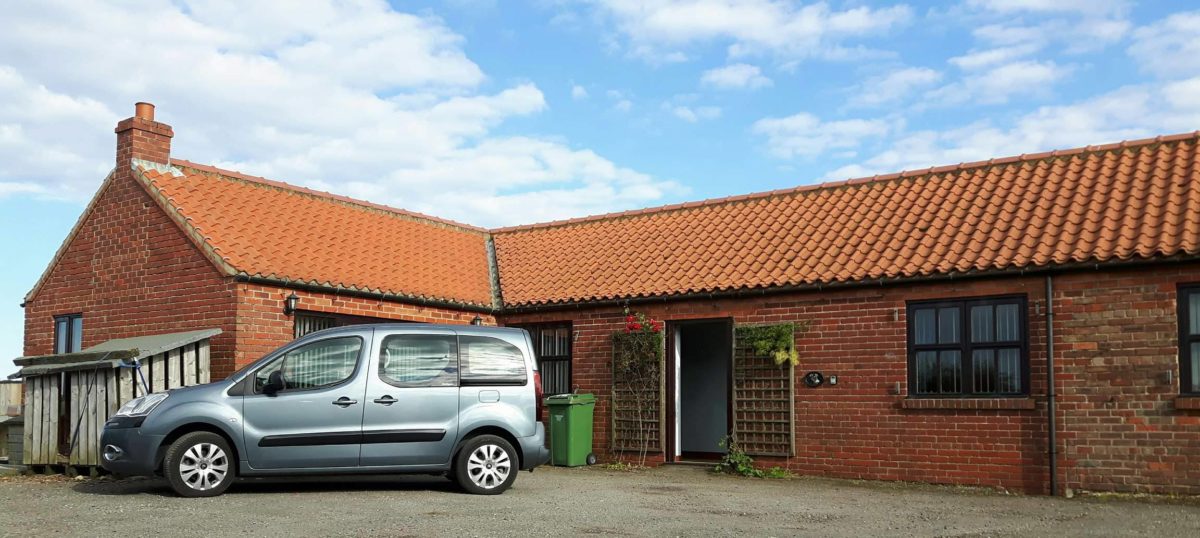
A wheelchair accessible holiday cottage in Sneaton Thorpe:
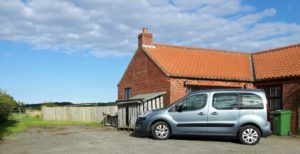
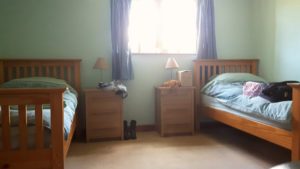
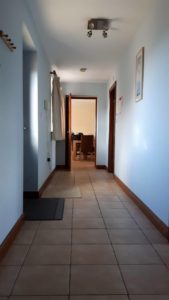
  • A large ground-floor property, all rooms are generously sized. More than enough room to manoeuvre with hoists, wheelchairs and any other equipment required.
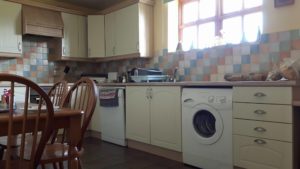
  • 2 bedrooms, sleeps 4. Large living/dining area and sizeable separate kitchen.
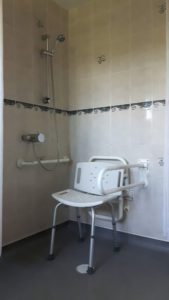
  • Huge wet room with both bath and shower! There is a wall-mounted shower seat, though these are rarely any use to me as my balance is poor. I therefore pre-requested a static shower chair with armrests (as you can see from the photo, there are no armrests on the chair!) However, there are sturdy, wall-mounted grab rails either side and so this suited fine.
  • The door ridges could be problematic for some wheelchair users. I use a Quantum 600 powered chair which managed the front door but struggled with the patio door. Alternatively, I went around the side of the property and through the gate in order to access the garden.
  • Stunning views of Whitby coastline, the surrounding countryside and the Abbey in the distance.
  • Ideal location: quiet and peaceful yet only a 10 minute drive to Whitby town centre.
  • Overall very impressive and well thought-out accommodation. My only complaint is the beds, which were VERY firm and uncomfortable. I use an electric adjustable bed at home with a regular mattress but I’ve always slept on normal beds when away, without issue. There was however, plenty of room underneath to use a manual hoist should you need to.
  • I would thoroughly recommend this property to anyone with a disability, particularly wheelchair users. My only suggestion would be to take some form of mattress topper and maybe a blanket as only heavy, winter duvets were provided.
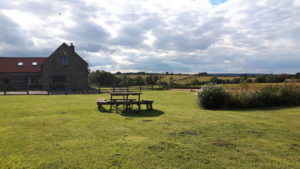


Places I visited

Robin hoods bay

  • Historic fishing village, scenic views. 10-15 minute drive, south of Whitby.
  • Pavements are fairly wide and smooth. A reasonable amount of dropped kerbs.
  • Sufficient disabled parking (not exempt from payment).
  • Most pubs and restaurants are wheelchair accessible.
  • Very steep towards the bay itself. I chose not to venture down as the gradient was too steep for my wheelchair.

Whitby town
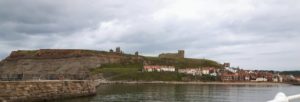
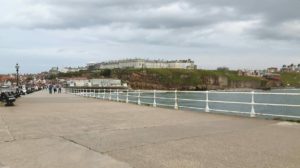
  • Could do with more dropped kerbs although generally flat in the west side of the town. Pier is mostly accessible (steps to reach the very end but you’re not missing out).
  • The beach is accessible via slope and the sands are firm (powered wheelchairs and scooters may struggle!)
  • You can hire mobility equipment including scooters, manual and powered wheelchairs, beach wheelchairs and even an all-terrain wheelchair from Whitby Tourist Information. I would advise you do this in advance! Call: 01947 821001 or click here for more information.
  • West side of town is much more commercialised than the east side.
  • Plenty of disabled parking (not exempt from payment) and accessible toilets (take your Radar key). I recommend the new Marina car park toilets, located near the Tourist Information Centre, as they’re the best equipped and the most pleasant.
  • East side far less accessible depending on your tolerance for cobbled streets. Manual wheelchairs would struggle unless pulled backwards which is obviously not ideal or particularly appealing. I ventured through the cobbled streets and Whitby Market Place in my Quantum 600 and didn’t get stuck – so it is doable.
  • There are some interesting shops showcasing local arts, crafts and Whitby jet jewellery.

Scarborough North Bay
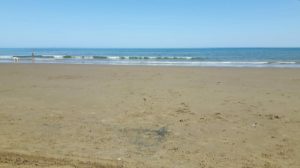
  • Flat, wide, smooth, even pavements.
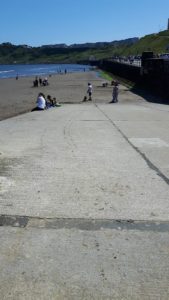
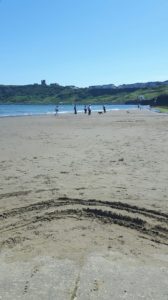
  • Dropped kerbs, free disabled parking, ramp access to beach which is accessible depending on the wheelchair or scooter you use.
  • My heavy Quantum 600 power chair got stuck in the sand, and I had to call on the assistance of some friendly locals to haul me back onto the pavement. However, manual wheelchairs shouldn’t encounter any problems as the sands are flat and firm.
East pier and Scarborough town centre

  • Impressively accessible: flat, even, wide pavements and plenty of dropped kerbs.
  • Free disabled parking.
  • Much more commercialised and populated than the North Bay, so if you prefer the peace and quiet, stick to the north.
  • Lots of amusement arcades, fast food and tourist/gift shops.
  • Beach again is very flat and accessible although powered chairs may struggle.
  • Accessible buses and sight-seeing tour buses.
  • The main disabled toilet in town (Radar key required) is small and unpleasant! I would use one of the accessible toilets within the pubs or restaurants.

Whitby Abbey

  • The Abbey is surprisingly accessible for all. I really enjoyed my visit as it was so easy to get around and there was nothing I missed out on.
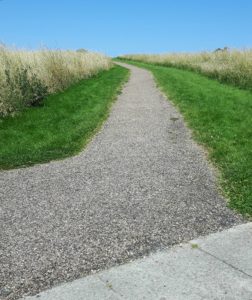
  • Smooth, even paths and slopes where necessary. Even the grass isn’t bumpy.
  • 4 disabled parking bays, 2 large lifts and disabled toilets at the main entrance and in the tea rooms.
  • All staff were extremely helpful and advised us of the most accessible routes. Even the gift shop was a decent size, allowing wheelchair users to browse without bumping into other visitors.
  • I highly recommend visiting the Abbey!
  • Obviously, the famous 199 steps are in no way disabled-friendly. But you can park at the top and take in the view.

Final Thoughts

While North Yorkshire is admittedly very hilly, rugged and rural, it is for the most part accessible to those with disabilities, as I discovered. It’s not always easy or comfortable to get around in a wheelchair, but it’s worth a bloody good try as the North Yorkshire Moors has so much to offer.

There are many narrow, winding, steep roads and country lanes to navigate. For this reason I think it’s important for anyone with a disability to have access to a car in order to explore Whitby and the surrounding area.

* All photos taken by me


If you liked this blog post, please do share!

Let’s connect on Twitter and Facebook
 

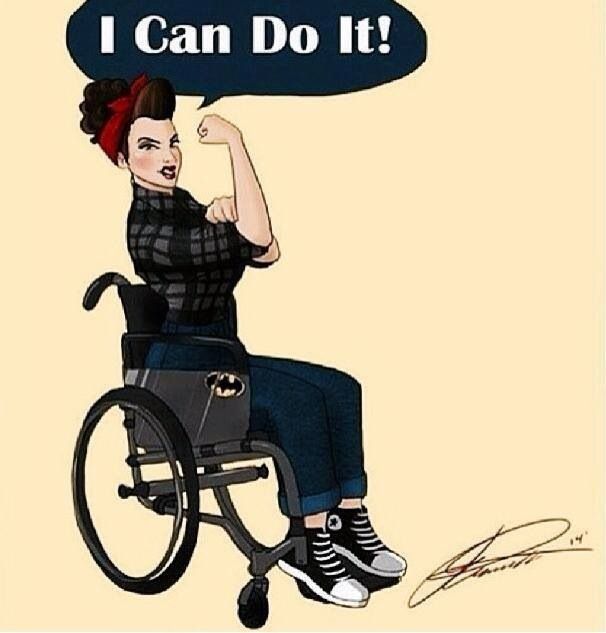
We can and we do: Highlighting the Ability in DisAbility

Hi folks, hope you’re all healthy and happy!

Here is my latest piece for Muscular Dystrophy Trailblazers. I really hope you like it!


I’m presently in the process of recruiting new carers. Many applicants have expressed their disbelief at how much I do for myself. One even congratulated me; “well done you!”, to which my current carer responded with a subtle mocking applause.

Why are people so surprised at my level of ability? Do they see me in a wheelchair and assume that all wheelchair users are similarly afflicted and completely dependent on others? Is the concept of disability really that black and white to the general public?

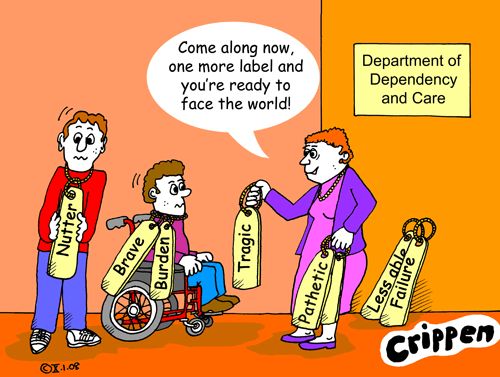
This made me think about how disabled people are perceived by society. Not for what we are able to do, but rather for all the things they assume we cannot.

Each of us is an individual and we therefore experience different limitations and variable degrees of severity.

I have Ullrich congenital muscular dystrophy and as a consequence there are certain things I am physically unable to do. However, not everyone with the same condition will be affected in exactly the same way. A persons disability is arguably as unique as their personality.

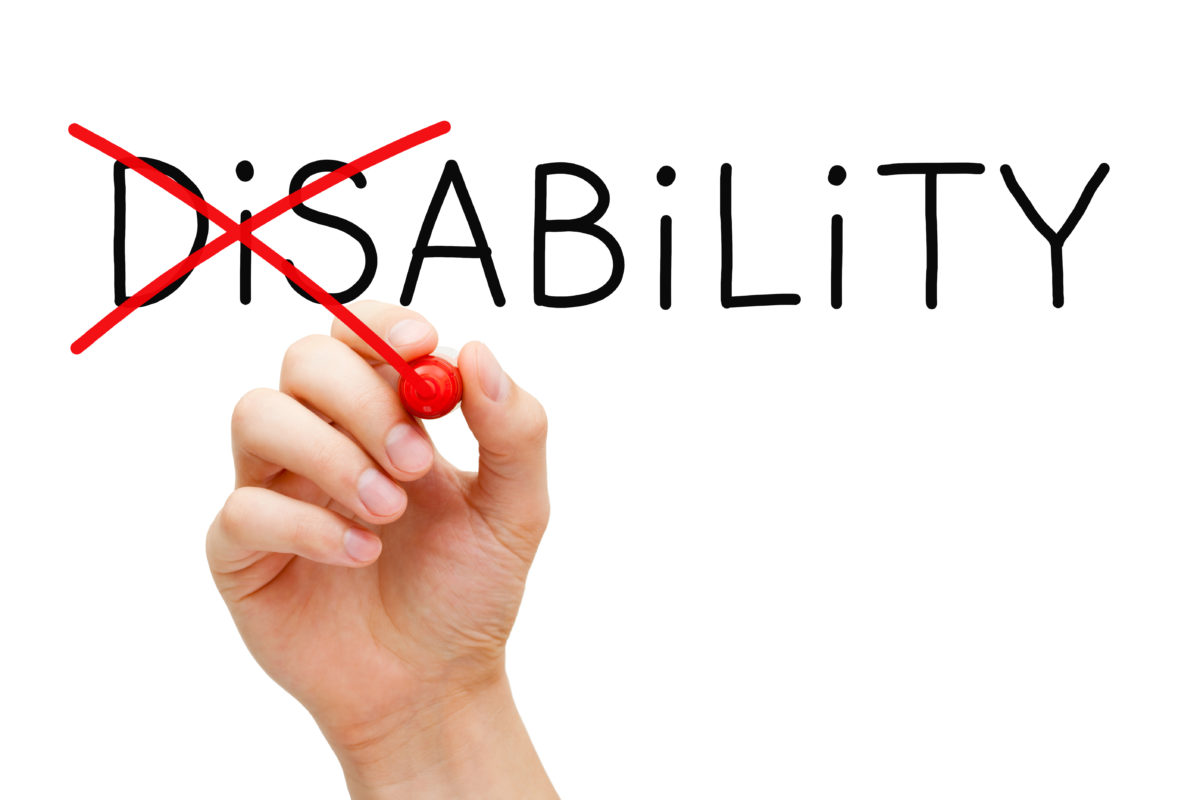
Raising awareness of the fact that there is also ability within disability is, I feel, essential in addressing the societal misjudgement that ‘disability’ equals ‘cannot’.  Disability is diverse. Yes it restricts us. But disability is not just about what we can’t do, it’s also about what we CAN do.

We can and we do…

1. Have sex – Yes, believe it or not sex is not exclusive to the young and beautiful. Guess what, old people do it too – shock horror!

2. Have romantic relationships, get married and have children.

3. Leave the house! Sometimes unaccompanied – While independently wheeling around town, I often encounter puzzled onlookers questioning, “where is your helper?”. Sometimes I tell them I’m trying to escape or that my “helper” fell in the river. Sometimes!

4. Drink alcohol – Having managed to leave the house and evade the confused locals (well done me!) I may join some friends for a drink. Yes, an alcoholic drink. Now of course not all disabled people can or do drink. Then again, not all able-bodied people drink, do they. So the next time you see someone with a disability enjoying a pint, don’t be so surprised.

5. Travel – Although many of us require support from friends, family or a carer in order to get out and about; travel, both nationally and internationally is becoming increasingly accessible to all.

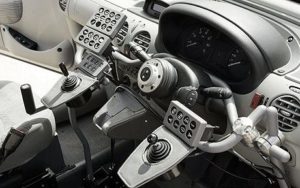
6. Drive a car – You’d be amazed how vehicles can be adapted to accommodate disabled drivers. We too want to get out and explore the open road. And for those of us who are unable to drive, travelling as a passenger is another option.

7. Attend university, get a job and have a career – It still baffles me why people are so astounded by the idea of disabled people who are both intelligent and able to work. Two words: Stephen Hawking!

8. Have our own homes – It would appear the general consensus amongst society is that this is something disabled people cannot ever achieve. Of course, many of us do reside with family members, myself included. But there are also those who can and do, rent or buy their own property. Some are able to live independently, while others require assistance from carers.


This is just a brief overview of the ways in which society misjudges the potential and capabilities of those of us with disabilities.

I’d love to hear more examples from you – comment below.

If you liked this blog post, please share – thanks!


Interview | Samantha Renke

Actress, TV Presenter & Disability Campaigner

Here I interview actress, presenter and disability campaigner Samantha Renke. She reveals all about growing up with a disability and her dreams of becoming an actress despite brittle bone disease. She also discusses her involvement with Parallel London 2017.

Here is the link to the interview, originally posted by Disability Horizons.


Parallel London

The 3rd September sees the return of Parallel London, a mass-participation race for people of all abilities. Feature writer Carrie Aimes speaks to disabled actress Sam Renke, ambassador for Parallel London, about why the event is so important and why you should get involved.

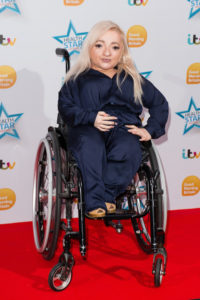
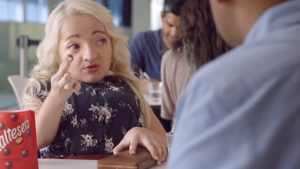
Despite her disability, 31 year-old Samantha Renke moved to London five years ago to pursue her long-held dream of becoming an actress. Now a familiar face to many, she has since starred in an award-winning film, music videos, webisodes as well as the popular Maltesers television advert. The former teacher is also a columnist, disability campaigner and charity worker.

As if all this is not enough to keep her busy, Samantha was recently appointed ambassador for Parallel London. Here, we learn more about the rising star and her involvement with Parallel London, the world’s first fully-inclusive, fully accessible mass-participation event.

Life & Disability

1. Would you please tell us a little about yourself, your disability and how it affects you?

I was born in Germany to a German mother and British father. We moved to the UK when I was a baby. I studied French, German, Sociology and European Studies at the University of Lancaster before completing my PGCE in Secondary Education at the University of Cumbria.

Following this, I worked as a high school teacher for a number of years. I was also a trustee for the Brittle Bone Society for 6 years, supporting people with my condition, Osteogenesis Imperfecta (brittle bones).

I am a full time wheelchair user and my bones break very easily. I’ve had around 200 fractures starting in my mother’s womb! I get fatigue and have some breathing difficulties. I do have a PA to help me with day-to-day tasks, which is my saving grace and allows me to live my life to the fullest.

After moving to London in 2012, my debut role was playing Alice Gardiner, a mischievous disabled girl who absconds to London in the film Little Devil. I won best actress and the film won Best Film in the Diversity of Arts category at the LA Diversity Film Festival. From there, I got an agent at Visable People and have appeared in a number of projects since.

I still love my charity work and I am patron of Head2Head, a multi-sensory theatre group. I am also affiliated with some other well-known charities, such as SCOPE. I love writing and have a regular column in Posability magazine and write regular blogs for the Huffington Post.

Maltesers TV Advert

2. People may know you best from the popular Maltesers TV adverts, which aired during the Paralympics. Why did you want to be part of that, and what response did you receive?

I think it’s any actor’s dream to be part of a national commercial as it’s certainly great exposure. More than that, I knew the concept was revolutionary and I felt so excited about the positive impact the advert would have.

Apart from some online trolling, the response has been phenomenal. Every day, without fail, when I leave my flat in East London I am recognised. People want my autograph and selfies. The lovely thing is that my disability is not the reason people stare at me now.

Celebrity Status

3. You’re a celebrity who happens to have a disability. What does this mean to you, and what challenges have you faced?

I always loved drama at school and attended a number of after-school drama clubs. However, one of my teachers took me to one side and told me not to get my hopes up of being cast in an acting role. I suppose at that time, 15 years ago, she had a point – the representation of disability within the media was non-existent. Nevertheless, this was heart-breaking to hear and I dropped all of my classes.

But after being a teacher for a couple of years, I knew I wanted to pursue my passion again. I hope my story encourages more people who have disabilities to get involved in TV, film and presenting. I’d like to think that when I have my own family, my children will follow their dreams, no matter what anyone else says.

Parallel London Ambassador

4. You were recently made an Ambassador for Parallel London. How did you come to be involved with this event?

My amazing friend Daniel White and his daughter Emily, who run the awesome blog the Department of Ability, introduced me to the Parallel team and the rest is history. It is a total love affair!

5. Can you tell us more about what Parallel London is and what it means for disabled people?

Parallel London is a fully-inclusive and accessible fun run and free family festival held at the iconic Queen Elizabeth Olympic Park. Open to all ages and abilities, there are no cut-off times and no barriers to involvement.

Parallel’s inaugural event took place on 4 September 2016. We hosted over 3,000 participants, of which, 41% declared themselves as having a disability. 5,500 people attended our family festival showcasing all different types of inclusive and accessible attractions. This year it is being held on the 3rd September.

6. Why is it so important to you to be involved with such an event?

Being part of a team and having people around you who love and support you for you is so important. As a child I did not get involved in anything as much as I would have liked, and this left me feeling isolated a lot. Parallel is all-inclusive, no matter what your ability. I think this is just amazing.

7. Is there any insider information you, as ambassador, can exclusively reveal to Disability Horizons readers?

Expect some surprises! I’m going to be getting my burlesque on with the amazing Folly Mixtures and their all-inclusive Burlexercise master class. So get your feather bowers ready.

My good friend Stephen Dixon from Sky News will also be at the event presenting for Sky and hosting with yours truly. He has told me that, regardless of the weather, he will be wearing his short shorts!

8. How can we all get involved with Parallel London?

Parallel London is taking place at Queen Elizabeth Olympic Park on the 3rd September. There’s a 10km, 5km, 1km, 100m and the Super Sensory 1km walk, cycle, push or run – whatever you want to do. It’s for all ages and abilities and everybody can be running side-by-side. You can get sponsorship for any charity or cause that matters to you – so why not give it a go?!


For more information on Parallel London visit www.parallellondon.com. You can also find out all the latest information about the event by following Parallel London on Twitter.

Please follow me on Twitter and Facebook

Suprapubic Catheters (SPC)

Have you ever looked at a disabled person and wondered how they go to the loo?

I am physically disabled (Ullrich congenital muscular dystrophy) and have, in fact, asked this question myself many times over the years. As a wheelchair-user unable to weight-bear, toileting was always my biggest obstacle. Believe me, I’ve tried every method, technique and contraption available. But if you can’t stand or transfer, HOW do you do it?

Most wheelchair-users require the assistance of at least one other person to hoist, transfer or manually lift them. From experience, I can tell you this is time consuming and challenging enough when in your own, fully adapted, accessible home. When out and about, going to the loo can be an absolute nightmare!

Public facilities for disabled people are vastly inadequate. Bathrooms are barely big enough to accommodate a manual wheelchair, let alone a powered wheelchair plus carers and the necessary room to maneuver. They are often used as storage cupboards, occupied by cumbersome baby-changing equipment and the litter covered floors are filthy. This lack of consideration and basic adaptions in disabled toilets means that many are forced to lay on these dirty floors in order to be dressed and undressed. It is degrading and wholly undignified.


In October 2011, after careful consideration, I elected to undergo medically unnecessary surgery (on the NHS) to insert a suprapubic catheter (SPC).

I have always had full sensation and an otherwise healthy, fully-functioning bladder. Despite a lifetime spent severely restricting fluid intake and holding the need to urinate, I thankfully never suffered from urinary tract infections. I was not physically incontinent, rather socially or environmentally incontinent, since public toilets fail to meet my practical needs.


Following many requests for information and advice, I have written about my personal experience with a suprapubic catheter. Please refer to the document below, which you are welcome to download and print as required.

*Disclaimer* This is my experience only, and in no way represents that of any other person(s). 

Suprapubic Catheters – My Experience

Please feel free to ask questions and leave comments! 

Walking vs Wheelchair: Accepting the Need for a Wheelchair

I was recently invited to write a guest post for the lovely SimplyEmma.

You can view my post for Emma here.


I’ve noticed a lot of discussion, within Facebook groups, around the topic of walking versus the use of a wheelchair.

Many disabled people gradually lose the ability to walk over a period of time. Often it occurs in stages: from independent mobility, to the need for walking sticks, then a frame and finally a wheelchair.

I appreciate that for the individuals affected, it is an incredibly difficult decision to make. Do I continue to walk for as long as possible, despite the struggle and restraints? Or, do I resign myself to the confines of a wheelchair?

I have noticed, from comments on social media, that this is how some view wheelchairs: objects of confinement and restriction.

On the contrary, I see my wheelchair as an essential mobility aid, removing the limitations I faced when walking for only short durations. The powered chair I now use offers me freedom and independence.

Obviously, your condition and individual circumstances determine whether or not you have the option to continue walking.

Personally, I never had a choice. I have Ullrich congenital muscular dystrophy and lost the ability to walk quite abruptly at the age of 10. Not that I could walk very well or very far up to that point.

Nevertheless, the choice was taken from me. I had reached a stage where I literally couldn’t support my own weight. Grit and determination played no part. And so, I went from walking minimal distances whilst wearing leg splints, to using a manual wheelchair that I couldn’t self propel due to a lack of strength and joint contractures. Sticks and frames were of no use to me whatsoever.

It was a difficult transition, of course. But not totally unexpected. As a child, I was offered little assurance of how my condition would progress. Doctors simply didn’t know. They couldn’t tell me if I would maintain my ability to walk or not. It was a case of, wait and see; roll with the punches. So that’s what I did.

To be honest, I was to a large extent relieved to be using a wheelchair, despite the fact I was dependant on others to manoeuvre me around. Even just a few small steps was a huge feat and physically laborious. That in itself was disabling me.

Committing to a wheelchair full time meant that I was free to roam with my peers. Kids at school used to squabble over whose turn it was to push me around. I was no longer exhausted, battling to stay on my feet or falling over and injuring myself. Being non-ambulant, I no longer had to wear those unsightly leg splints, which pleased me no end!

I had recently started middle school and, within a matter of a few weeks, I found myself completely unable to weight-bear.

However, less than twelve-months later, I was fortunate enough to benefit from my first powered wheelchair. I can’t emphasise enough how much of a difference this made to my life.

I could zip around at break times with friends, I could take myself wherever I wanted to go without the need for assistance, and I could venture into the local countryside. I was no longer confined!

It’s been eighteen years since I took my last footstep. And, I can honestly say I don’t miss walking. Naturally, I wish I could stand, walk and run ‘normally’. But I would never trade my wheelchair for my old leg splints, the bumps and bruises from falling so often, and the constant exertion to achieve a few small steps.

Not that I have a choice.

A Positive Perspective on Disability

Here is my latest piece for Limitless Travel.


We, as a society, often consider disability to be disadvantageous. Many disabled people themselves hold this viewpoint. Of course, there are various challenges and downsides to living with a disability. But having lived with muscular dystrophy all my life, I have come to realise that there are also many positives.

It’s all too easy to succumb to self pity; adopting a pessimistic attitude towards your impairment and complaining about all the things it prevents you from doing.

I won’t deny, I fall victim to this school of thought from time to time. I’m only human after all. But at the end of the day, I’m stuck with me. There’s no cure for muscular dystrophy, and so there’s really no point in wasting valuable energy complaining about something I cannot control.

To counteract the common perception that to be disabled is to be disadvantaged, I have decided to list some of the ways my life has been enhanced by my condition.

  • Being able to skip to the front of the queue has brightened my day on many occasions.
  • Concessions: Many leisure facilities and tourist attractions offer some sort of concession for those with a disability.
  • In most cases, a carer can accompany you for free. If you don’t have a carer, take a friend instead!
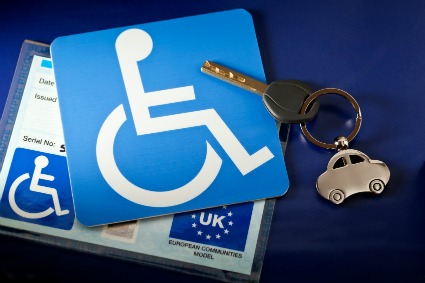
  • Parking: I hold a blue badge which allows me to park in disabled bays, as well as on single and double yellow lines for up to 3 hours. The blue badge scheme is recognised by all European countries.
  • Thanks to the Motability scheme, I have a wheelchair accessible vehicle in which I travel as a passenger. Essentially a free car, all I have to fund is the fuel.
  • I can’t drive. Admittedly I wish I could, but the upside is that I have the freedom to drink when I’m out, as I’m never the designated driver. Being chauffeured around means I can relax and enjoy the journey rather than stress over traffic and navigation.
  • Shoes never wear out. Furthermore, if I don’t feel like wearing shoes, even to go out, I don’t have to since my feet never touch the ground.
  • I always have a comfy seat.
  • Kids are fascinated by my wheelchair with all its buttons and mechanisms. They love to sit on my lap or climb on the back and go for a ride. I’m always happy to oblige!
  • Being unable to weight bear, I never have to worry about falling over (a common problem for me as a child). Frosty weather and black ice is no concern.
  • Being faced by an oncoming electric wheelchair makes people instinctively move out of the way. Move or be mown down!
  • I can “accidentally” run into idiots and get away with it by blaming my wheelchair. Disclaimer: I accept no responsibility if you decide to follow my lead. But by all means, do!
  • Similarly, if someone is getting on my nerves I can ‘accidentally’ run over their foot.
  • It’s pretty frustrating finding yourself stranded on the top floor because the only lift has malfunctioned. But there’s always a silver lining: being carried downstairs by a strapping young man is a small price to pay for such an inconvenience.
  • Determination: I believe my perseverance (some would say stubbornness) is a result of living with my disability. I have, in many circumstances, had to fight harder, work harder and prove myself more than I would if I were able-bodied.

  • I’ve been introduced to many people through my disability.
  • My limitations force me to think outside the box. As a wheelchair-user, there are many struggles. In order to overcome these challenges, I have to think creatively. This may be through adaptive technology, home modifications or inventive DIY solutions.

Life as a Wheelchair-user | Societal Preconceptions

Being a wheelchair-user with Ullrich congenital muscular dystrophy, means that I have a very visible disability. Consequently, I have encountered many societal preconceptions over the years, based solely on the fact that I have a physical disability.

Joe public isn’t shy about voicing such assumptions, regardless of how stupid they may be, thus demonstrating a lack of awareness and education.

I can’t even reassure you that the following misjudgements are those of children who, through no fault of their own, know no better. In fact I have found that the most narrow-minded and ignorant ideas and interrogatives come from older people.

Here are some examples of the preconceptions I have personally experienced throughout my 29 years.


1. Because I am physically disabled I must therefore have learning disabilities too.

2. I didn’t or couldn’t have attended mainstream school.

3. I need to be spoken to very slowly and very loudly, otherwise I simply won’t be able to understand basic verbal communication. Furthermore, some people surmise I cannot speak at all!

4. Because I have muscular dystrophy, I cannot achieve the same milestones as everyone else, such as learning to drive.

5. I cannot work, or contribute to society, because I am physically disabled.

6. Most assume that since I’m now unable to walk, I never could. They are often shocked to learn I could walk up to the age of ten.

7. I am completely non-ambulant (unable to weight-bear). However, many seem to assume that despite the fact I use a powered wheelchair, I must be able to walk.

This becomes most apparent when attempting to access public transport or when travelling.

I may be faced with a few steps or a short walk to my seat on the plane, or I might be asked to transfer out of my chair.

When I tell them I can’t weight bear at all, I am met with an expression of complete confusion:

‘You can’t walk? Not at all? It’s really not far.’

No, I’m afraid I cannot walk AT ALL!

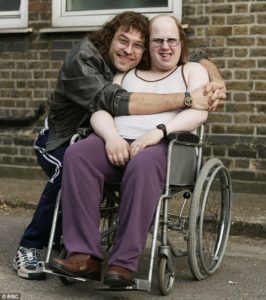
8. As much as I laughed along to the Little Britain sketch of Lou and Andy, I feel it may be at least somewhat responsible for the common assumption that I, along with all other wheelchair-users, conveniently jump up and run around maniacally when no one’s watching. Although admittedly I would if I could, sadly this is not the case.

9. When you find accessible accommodation isn’t accessible at all:

Upon arrival, I once found myself unable to enter my supposedly accessible hotel room because the door was so narrow. The manager’s response: ‘Oh, can’t you just squeeze through?’

10. I am rather petite – child sized in fact. (Just what you want when you’re a 29 year-old woman!) However, I like to think I look a little older than twelve. But I am still, on occasion, presented with the children’s menu!

11. On multiple occasions I’ve been approached by strangers who tell me that I sinned in a former life and my disability is my penance.

12. Similarly, I have been asked if I believe in God. Replying that I do not, I was told that I am therefore being punished by God – my disability is an affliction! Erm, nope. In my case, it’s genetic.

13. I’ve been told I need “fixing”.

14. It doesn’t occur to people that I have the same needs and desires as anyone else.

15. A misguided generalisation is that disabled people like myself are asexual and do not have romantic relationships.

16. Being a wheelchair-user, I clearly can’t have and don’t want children.

17. Friends are too often mistaken for my carers.

18. I must know many other similarly disabled people. Of course, makes total sense. We are know each other!

19. I use a wheelchair, therefore I must be taking LOTS of medication and cannot drink alcohol.

20. I have a disability therefore I must be contagious.

21. I don’t go out or have fun like my peers.

22. I must be a loner or even a recluse. (Perhaps suggesting there are still many out there who feel disabled people, like me, shouldn’t be seen in public or play an active role in the community).


*This list is representative of my personal experiences. However, I’m sure there are many of you who will be able relate to some degree.*

It is understandable and all too easy to express anger and frustration when presented with such ignorance. But, I do feel strongly that knowledge is power. Therefore, the best way to respond to such misguided preconceptions is to educate, infor and raise awareness.

Holiday Season | My trip to Salou, Spain (2016)

Though I would like to be, I’m not a frequent traveller. Living with a physical disability – in my case, Ullrich congenital muscular dystrophy – can make overseas travel difficult and stressful. However, after several years without a holiday (neither at home in the UK or abroad) I decided it was about time I set off in search of sun, sea and sand – a sight unseen here in the Midlands!

Most importantly, the holiday must meet all my accessibility requirements, (I am a non-ambulant, powered wheelchair-user). Another major consideration was my parents, with whom I would be travelling. This presented me with the task of organising a holiday that would satisfy their wants and needs as well as my own.

Of course, it’s far from ideal to travel with your parents at my age (27), but it was my only option at the time. I resisted their considerate invitations to accompany them abroad for years, but I had reached the point of desperation – one way or another, I really needed to get away. There’s only so much British weather a girl can take!


Planning & Booking:

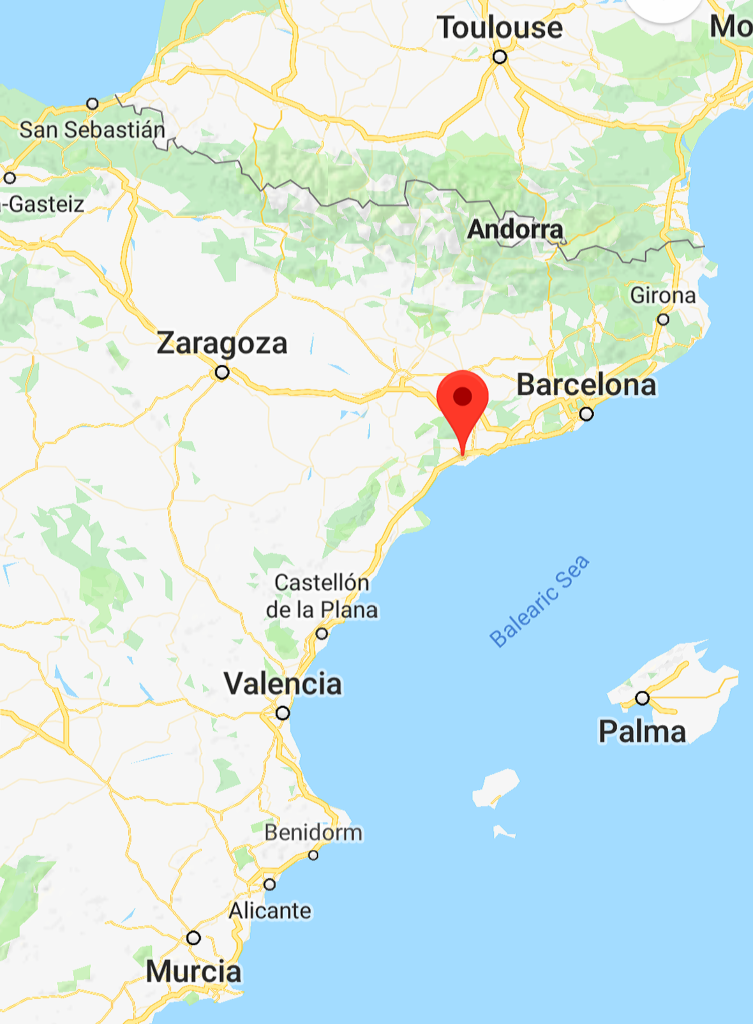
7 years earlier, I visited Tarragona, situated in the Costa Dorada region of Spain. I found it to be a great place to roam around in a powered wheelchair. Back then I booked with Enable Holidays.

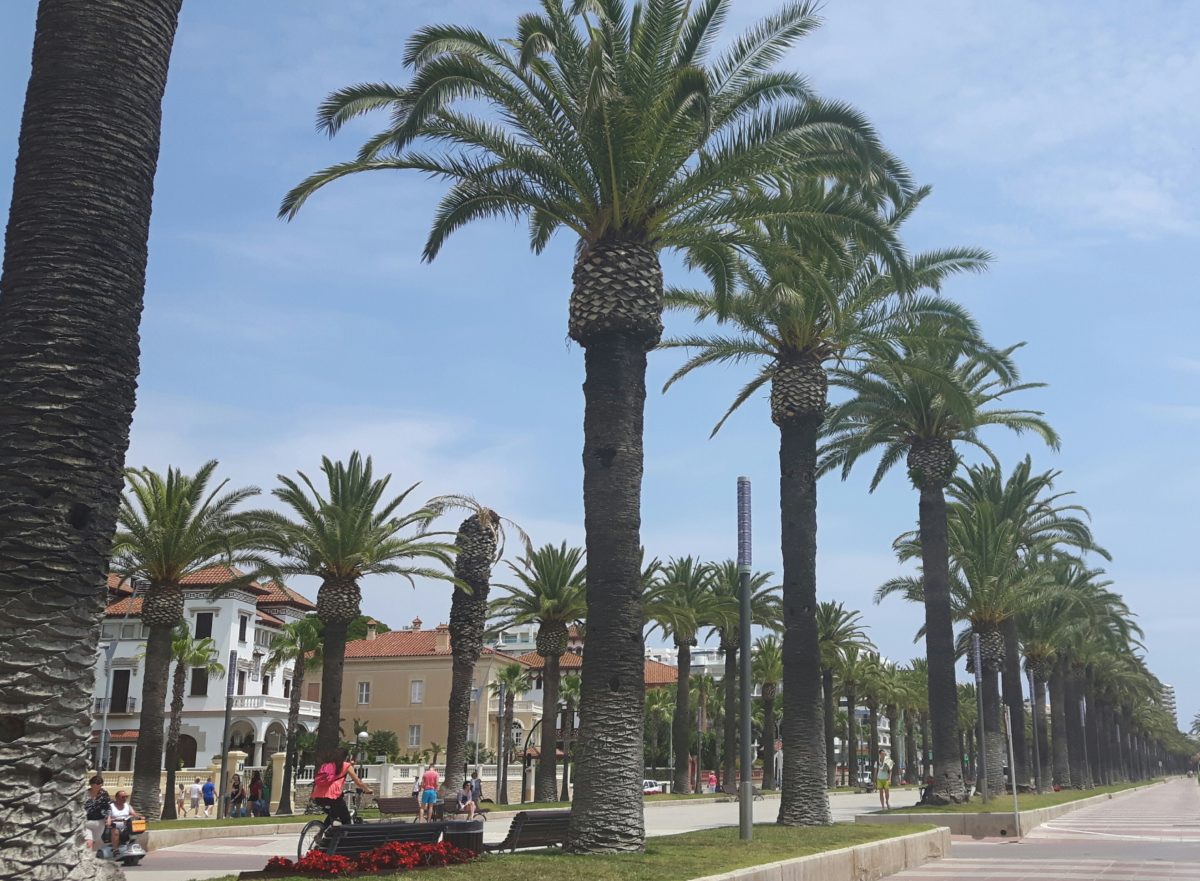
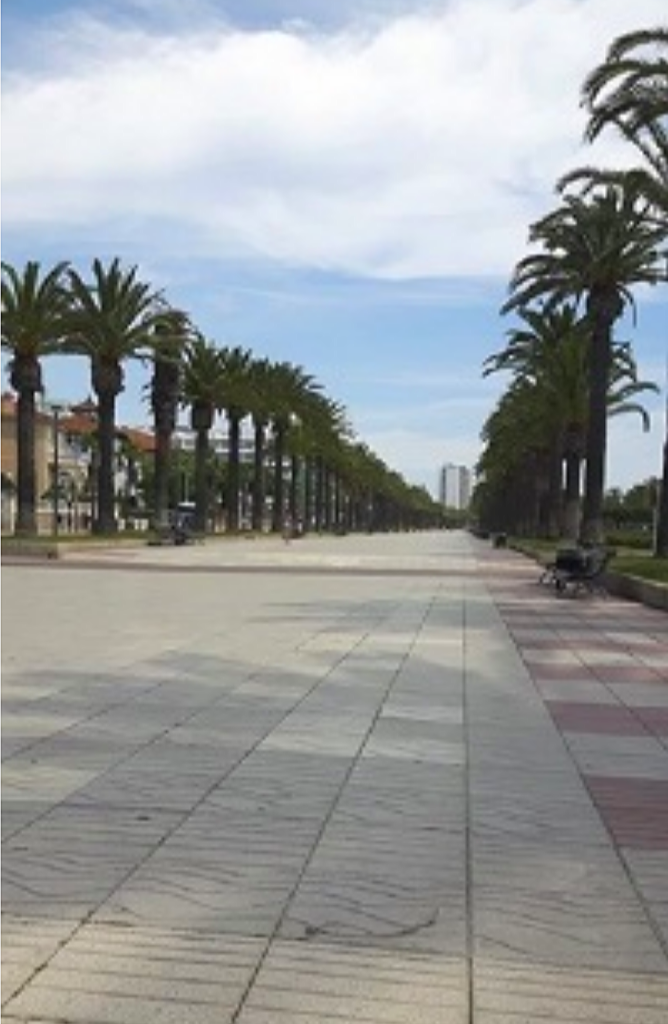
Salou, situated in the Costa Dorada region of Spain

For personal reassurance regarding reliable accessibility (and frankly to make life a little easier), we decided to return to Costa Dorada. When comparing prices online, I found it significantly cheaper to book with Disabled Access Holidays (DAH) – a small business based in Glasgow, UK.

Throughout the whole booking process, I interacted with the same agent who sorted everything. Airport assistance and wheelchair accessible taxi transfers were organised. An electric wheelchair was also hired for the week, as I prefer to travel with just my manual chair for fear of damage to my Quantum 600 (I’ve heard horror stories from fellow wheelchair-users).

The only thing I had to arrange was travel insurance for myself. DAH recommended AllClear, even offering a discount code. I enquired with a few providers though they all quoted a similar price. Just one week in Spain would have cost me over £500 and so, admittedly, I chose to take the risk and travel without insurance.


Off we go…

We flew from Birmingham airport on 7th July (2016), arriving in sunny Reus after a thoroughly chaotic checking-in and boarding process. Conveyer belt malfunctions, lack of staff, delays and the absence of assistance at Birmingham established an initial sense of unease.

What really frustrated me was the fact that we boarded via the centre of the plane – my parents and I being made to wait until last. Since our seats were at the front of the plane, I had to struggle some distance in an old aisle chair, bumping elbows with strangers all the way (bear in mind, I’m pretty damn petite). I can’t stand these cronky aisle seats, mainly because they offer no postural support whatsoever and are incredibly uncomfortable. My balance is poor and consequently I always feel I’m about to fall when forced to resort to one.

Upon reaching our front row seats, my poor Dad was left to manually transfer me by himself, as no one offered to help. There was a complete lack of care and consideration from all staff at Birmingham.

A short and uneventful flight ensued. This was one of my major concerns when organising the holiday. A long haul flight was a no-go as there’s just no way I would be able to access the bathroom. With the best will in the world, in my case it really can’t be done.


Disembarking at Reus:

15-20 minute transfer from Reus Airport to Hotel Medplaya Piramide in Salou, Spain

After the disappointment at Birmingham airport I was relieved to receive a much more conscientious service when disembarking at Reus. The assistance for passengers with disabilities was swift and effective. Without question, the staff safely lifted me from my seat straight into my manual wheelchair which was brought to the front of the plane where we exited, this time without an audience. I was so thankful as I hate to have to burden my parents with the physically exhaustive task of manually transferring me.

Our pre-booked taxi transfer was at first nowhere to be found but soon arrived after being prompted by a phone call. The English speaking driver was extremely helpful and repeatedly assured us that she or another driver would collect us from our hotel at the time and date arranged.


The Hotel:

Medplaya Piramide Hotel in Salou, Spain

And so we found ourselves at the Medplaya Piramide 4 star hotel in Salou, Costa Dorada. The three of us shared one, accessible room situated on the second floor resulting in a daily battle for the lift which everyone felt the need to use, regardless of age or ability.

Aside from the presence of a grimy shower chair with one, dismembered footplate, it’s difficult to see how our room could be considered ‘accessible’. The bathroom comprised a regular bath along with a roll in shower which flooded our entire room and out into the hallway within seconds. The bathroom door veneer was all peeled away suggesting this is a long term issue which the hotel has failed to address. We had to call reception for extra towels to mop up the excess water flooding our room after every brief shower.

Furthermore, the sink was far too high and unreachable for me to use whilst sat in my chair. The toilet was lower than normal and lacked any surrounding support aside from a fairly redundant and misplaced grab rail affixed to the wall. A small lip in the patio door may cause an obstacle for some in accessing the sizeable exterior balcony but with a bit of a run up I didn’t have a problem in my hired power chair.

The hotel itself, both interior and exterior, I found to be suitable for anyone with a disability. With smooth, flat surfaces, ramp access where needed, wide open spaces to manoeuvre, and a large ground-floor disabled loo, I was able to roam around completely independently. There’s also a pool hoist – a clean, fully functioning pool hoist!

With plenty to keep you occupied including a bar, restaurant, pool room, terrace area, as well as day and night-time entertainment, this modern hotel caters for all ages and abilities. The staff too were welcoming, sociable and most accommodating.


Location:

There are some steep pavements surrounding the hotel to be aware of, but plenty of slopes and access points more than make up for this. The hotel is ideally situated, just a short stroll to the impressively accessible Levante beach, 250m from Salou town centre and 1.5km from Port Aventura theme park. The area for the most part is flat and even, making it ideal for wheelchair users.

The Beach:

I have to say the major selling point for me was the beach. Though not an experienced traveller, of all the beaches I have ever visited this one is by far the best. It’s vast, it’s flat, and there are numerous platforms which allow wheelchairs and prams to enjoy a smooth ride right down to the waters edge. I was pleased to see many others with various disabilities accessing the sands without the all too familiar struggle.

Furthermore, the individuals who hire out sun loungers could always be counted on to offer a helping hand if and when needed. Without question they would often come running to the assistance of someone. This is not part of their job, nor is it commonplace (sadly), and so I feel it worthy of mention.


On the whole my week in Salou provided much needed respite and relaxation. However, the biggest dilemma was saved for our last day. Our pre-booked taxi never arrived so we were forced to ask reception staff to telephone for a local cab asap. This took over an hour to arrive since there is only one wheelchair accessible taxi in the local area. Fortunately our return flight was delayed otherwise we would certainly have missed our flight. Despite this rather stressful conclusion to an otherwise enjoyable holiday, I would definitely recommend Disabled Access Holidays. However, it’s also important to do your own research and investigation prior to committing to any accommodation and travel arrangements.


Please follow me on Twitter and Facebook

My view on dating for MDUK Trailblazers

My latest blog piece for Muscular Dystrophy UK Trailblazers:

“I’ve learnt that life is not defined by your relationship status and you don’t need a partner to be happy. It doesn’t hurt to keep an eye out though, does it!”

On Dating Diaries Day 2, we hear from Carrie Aimes who talks about why it’s okay to be single.

Read more of her great blog here.

This blog forms part of Trailblazers Dating Diaries, which looks to lift the lid on dating and relationships when having a disability.

I’m not at present in a relationship and that’s fine, that’s okay. I’ve never actively searched for a partner – dating sites in particular just aren’t for me. In fact, dating isn’t for me if I’m honest. Pretty socially awkward at the best of times, the whole dating thing feels far too daunting a prospect. It just seems so forced and unnatural. Of course it serves its purpose and is a means to an end. But knowing myself as I do I think I would just fail miserably!

A fairly solitary character, I like my own space, I like being able to do as I please, when I please. And I most definitely couldn’t bear to share my bed, it’s my haven!

As is the case for many with muscular dystrophy, much of my time is lost to frequent and prolonged bouts of respiratory illness and fatigue, which doesn’t exactly lend itself to dating or a cohabitative relationship.

I live with my parents in their home which is not exactly the dream for a 28 year-old woman. So privacy and finding time for myself is enough of an issue without adding another person to the mix.

Yes it’s the norm for those my age to be settled in relationships or even married, as most of my friends are. Perhaps my choice to remain single for the time being (and it is a choice) is selfish. But why not be selfish. This is my life and right now I’m content with things as they are. Relationships are hard work, they require you to compromise and invest your time and energy. At present, I’m just not willing to share myself with anyone.

This isn’t to say I’m not open to the possibility of meeting someone spontaneously, as I have found tends to be the best way. But if it doesn’t, I’m totally cool with that. I’ve learnt that life is not defined by your relationship status and you don’t need a partner to be happy. It doesn’t hurt to keep an eye out though, does it!

The [Un]dateables

In February 2017, I wrote a piece for Muscular Dystrophy UK about the Channel4 TV dating show, The Undateables


Last week, Channel4 aired the final episode of its reality series The Undateables, a dating show for disabled people.

For those who are unfamiliar, individuals with any disability are invited to appear on the show, now in its sixth season.

With the help of dating agencies and personal introduction services, they take part in blind dates, speed dating and match-making in the hope of finding love.

Now, I’ve seen almost every episode since it premiered in 2012, and I have to say I am a fan and supporter.

I appreciate and understand the controversy surrounding the show, particularly within the disabled community, although I personally disagree with much of the negative criticism. For this reason, as someone with a physical disability myself, I would like to offer my point of view.

Firstly, I’d like to point out that all participants have applied of their own free will. Following their appearances, all have reported a positive experience, even those who did not find love as a direct result of the show.

Tammy from series 5 says, “I put myself forward for The Undateables. At no point during filming did I feel like I was being used for entertainment. It’s an entertaining show [but] we all just want to find someone who loves us for us.”

The program has been invaluable and life changing for many, leading to long term relationships, marriage and babies. Furthermore, despite the claims of some, disabled individuals have not been coupled exclusively with other disabled people.

For example, Brent, a young man with tourettes married his able-bodied date Challis.

Steve with Crouzon syndrome married able-bodied Vicky whom he met on Twitter after the show gave him much needed confidence – he remains friends with his able-bodied date from the show.

Then there’s Carolyne from the first series, whose childhood sweetheart left her when she became paralysed following a spinal cord lesion. She later met Dean who is able-bodied. The couple had their first child together in 2014.

These are just a few of the many success stories resulting from the show.

Some critics have called into question the editing, which it can be argued is an issue with any reality TV show. However, taking into consideration the accounts offered by the participants themselves, it would seem to me that great care has been taken to ensure fair and accurate representation.

Again, I personally have no issue with the tone or editing, and have never found it to be exploitative, patronising, sensationalist or insincere. Quite the opposite in fact, I feel The Undateables realistically and positively depicts a range of disabilities, thereby raising awareness and breaking down social barriers and stigma.

James, who has Asperger’s, took part in the show last year. He told ITV’s This Morning, “It [the show] provides a lot of education on a wide range of things, not just conditions… The fact that people will tune in knowing they will learn a bit more, maybe take away the stigma, is a very positive thing. It paints a very positive picture of British audiences.”

The format itself is understandably a contentious issue: why is it not the norm for disabled people to participate in mainstream dating shows such as First Dates, (also a product of Channel4), and ITV’s Take Me Out?

Why must the disabled community be confined to a show exclusively for them? There is no definitive answer, though I would argue that it comes down to choice and demand.

As previously stated, those who partake make the choice to do so. Many have learning disabilities and are supported by family, friends and caregivers, as viewers will know. Therefore, to suggest they are being taken advantage of by producers, which some critics have, I feel implies that these people are not able to form rational decisions and make up their own minds. This is inaccurate and unjustified.

Secondly, the show is now in its sixth year (as of Feb 2017), which proves there is continuing demand from both the viewing public and applicants eager to find love, friendship and companionship.

I have found that questions and accusations such as the aforementioned are often posed, more often than not by those with disabilities. This indicates to me that, in fact, it is not predominantly the able-bodied community who have issues with the show. Yes, you may hear the occasional, ‘bless them’, ‘aw, how sweet’ and ‘good for them’ from able-bodied viewers – how very dare they indeed!

But to conclude that this is a form of ‘inspiration porn’ is in my opinion, vastly overstretching the mark. I take issue with the term ‘inspiration porn’, particularly in relation to The Undateables.

Frankly, even if viewers are in some way inspired by the determination and go-getting attitude of those they see on the show, why is that so awful?

Paralympians are equally as inspiring as Olympians. Yet there are some, particularly in the disabled community, who deem this to be ‘inspiration porn’. That is to say, people draw inspiration from disabled athletes solely due to their disability rather than their sporting achievement, as well as to feel better about their own lives. Personally, I think this is nonsense and insulting to both the able-bodied and disabled.

I cannot speak for the entire viewing public, obviously, but I have watched the show with friends and family over the years, and the feedback has always been one of support and genuine happiness for the love-seekers. Not one person I have spoken to has ever indulged in this so called ‘inspiration porn’ to, as critics say, feel better about themselves. This is the one accusation that frustrates me the most.

Okay, the title… Are Channel4 saying that we, the disabled, are undateable? Put simply, NO!

Producers have themselves stated that the title is to challenge this common misconception within society. Furthermore, as viewers will know, during the opening sequence of each episode, the prefix clearly falls from the word ‘dateables’, thus indicating the contrary.

The show itself is proof that no one is undateable – an eye opener to many viewers who may have previously thought otherwise, or have just never considered the fact that like them, we (the disabled) also need, want and desire love and intimacy.

For one reason or another, there remains a section of society that has never encountered anyone with a disability. Through no fault of their own, they consequently may be ignorant to the needs, desires and feelings of disabled people. I think The Undateables is a great way to introduce this concept to such individuals.

As James with Asperger’s says, the show is successfully removing stigma and raising awareness.

I have an older brother with complex learning disabilities, and so I’m able to draw from his perspective in addition to my own. He has expressed a keen interest to appear on The Undateablesand my family and I would be more than happy for him to do so. Neither of us feel alienated, uncomfortable, ridiculed or patronised by the show. Again, I do appreciate the criticism but for those who bother to watch it with an open mind, I believe you will find it to be well-meaning, sincere and sympathetic.

Those involved have benefitted, it has given others in similar circumstances the confidence to look for love, and it has made society realise that we all have basic human needs and desires, and the right to pursue them.

It’s easy for viewers to criticise on social media, having watched only one episode, or even one at all. But I implore you, ask the participants. Their response says it all, for me anyway. It seems to me the majority of negative critics haven’t actually seen the show and are therefore judging it superficially. It is certainly not a freak show and is not treated as such.

The dating agencies, often run by the parents or relatives of those with disabilities, aim to match clients based on common interests. Disabled people are not matched with others with similar disabilities. To assume so says more about those who think this than anyone involved with The Undateables.

So finally, I urge the harsher critics out there to actually WATCH (preferably more than once!) before judging so narrow-mindedly.

Who knows if Channel4 will commission another series of the popular show. Based on viewing figures, I’m guessing it’s more than likely they will. If so, I’ll certainly be tuning in.