3 Great Ideas For A Stay At Home Date

The dating world is a bit of a minefield, but it can be especially difficult if you have a disability. Unfortunately, there is still a lack of awareness and much stigma around some lesser known disabilities.

Able-bodied people may be unsure about acknowledging their date’s disability, for fear of causing offence. This lack of understanding, awareness and confidence often leads able-bods to avoid dating disabled people.

Regardless of ability or circumstance, there are great dating coaches out there who can offer guidance and support.

You might feel more comfortable, confident and secure in your own home, and therefore prefer to date in this familiar setting rather than in public. Let’s not forget, going out to eat at a restaurant is expensive when you factor in drinks as well. You might not be able to afford such a social luxury, thus adding even more stress to the situation. For this reason, conducting your dates from date home is sometimes better.

Of course, it’s not sensible or advisable to first meet somebody at your home (even if you’ve spoken on the phone). But once you feel safe, reassured and familiar with each other, a date night at home could a viable and appealing option.


Here are some great ideas for a stay-at-home date:

Image Source

Themed Movie Nights

A movie night is the classic at-home date idea, but why not take it to the next level and give it a bit of a theme? Pick a movie series or genre you both love and hold an all-night movie marathon. Order a takeaway (to make life a little easier) or maybe cook your signature dish to impress your date.

Watching a French film, why not cook some French food to go with it? Make it more of an occasion!

Cooking together is another fun idea – it’s romantic and will encourage bonding, interaction and tactility.

Turn Your House Into A Wine Bar

Going to a fancy wine bar may seem great, but it’s going to cost a fair amount of money. However, if buying booze from the supermarket, you could create a mini wine bar of your own. Get a few different bottles, they don’t have to be expensive, and maybe splash out on a classic bottle of moet chandon to make the night extra special.

Games Night

This is a particularly good idea if you’re nervous about a date and want to make it a bit more casual. Invite other couples along and have a games night. This way, you’ll still be able to spend time with your date in a fun setting, minus the added pressure of being alone. Being part of a larger group will aid social interaction and enable the conversation to flow more freely and without any potential awkwardness.

So, as you can see, stay-at-home dates can be just as fun, engaging and romantic as going out, (and they’re a lot cheaper too, which is always a bonus!).

Working Through Chronic Pain

Working full time is the goal for most of us – to earn our own money, pay the bills, put our skills and knowledge to good use, in addition to contributing to society. But for those who deal with chronic pain each and every day, this is not so easy to achieve.


Living with chronic pain can be debilitating, difficult to manage, incredibly stressful and for some it is sadly all-consuming. It is hard to focus on anything other than how you feel, thereby potentially affecting your personal and professional life, as well as your mental health and wellbeing.

No one wants to be out of work due to ill health. Aside from the obvious financial gain; work provides a purpose, opportunities to socialise, integrate with peers and further your own personal development.

Whether you commute or work from home, it’s important to find the method of pain management that suits you. Chronic pain can manifest in many ways, and as such there are several forms of treatment including medication, heat pads and even CBD oil.

Image Source

How to work through the pain:

Begin your day with strength and positivity: Try listening to motivational podcasts before bed or first thing in the morning. This will aid your mental health and encourage determination and perseverance to help you make it through the day.

Set the alarm: Seems obvious, right? But in all seriousness, this is an important step. An alarm will provide that extra nudge to get you out of bed. Position the alarm out of reach so that you’re unable to hit the snooze button or knock it over in frustration.
The earlier you start the day, the more time you have to prepare yourself physically and mentally. Rushing around will only add extra stress and inevitably exacerbate your chronic condition.

Learn to stretch: You might stretching is a bad idea for anyone living with chronic pain. However, in consultation with doctors and specialists, it can be of great benefit to devise a plan to stretch and exercise each day.
Stay as mobile and active as possible, but be sure to reserve energy and rest when necessary. Don’t force yourself to work through unbearable pain. This is counter-productive.

Comfort: Pay attention to your working environment – introduce furnishings and features for optimum comfort. Think about seating, cushions, footrests/stools and massagers.
Consider consulting an occupational therapist who will help to make your working life as easy as possible. If that means adding eight cushions of varying
firmness to your office chair, then do it!


Planning and preparation will result in good performance at work, despite constant chronic pain. Of course, it is sadly the case that many sufferers will never be completely rid of pain. But in order to work, and to work to the best of your ability, you need to formulate an individually tailored method of management. There is no ‘one fits all’ solution.

Living Well | Making a property into an accessible home

Image Source

It’s fair to say that most of us dream of buying our own home, right? That first step on the property ladder is an exciting milestone in our lives. It is representative of independence, responsibility and yes, becoming a ‘real’ adult!

However, for many it can be a lengthy and stressful process. Finding a suitable property in the right location, and at an affordable price is not easy, particularly for today’s generation.

For those of us with a disability, the task is far greater. To some, being able to live independently in your own home, whether renting or buying, feels like an unreachable goal. If and when you’re able to find a property to suit your requirements, you then face the inevitable task of adapting it to ensure it’s fully accessible.

While this can be daunting and even off-putting, if you choose to take a positive perspective, it could be considered a fun, and thoroughly rewarding project.
Remember, you don’t necessarily need to wait for an accessible property to become available. Alternatively, why not find the home you love and adapt it so that it’s perfect for you.

1. Taking Your Time

Perhaps most importantly, don’t rush the process (tempting though this may be). Of course, we’re all impatient to leave the family nest and move into our own place. This is major undertaking (particularly for disabled people) and a great expense, therefore it needs to be done right. It may take months, it may take years! Believe me, I know how disheartening the waiting game can be. But is really is essential to take your time.

2. Consulting A Contractor

Once you have found a suitable property, where applicable, the next step is to consult contractors (ie. builders). If structural work is necessary, seek advice and obtain quotes from at least three builders. I would also advise checking out a range of accessible homes. This will provide information and inspiration, thereby enabling you to plan your new home effectively.

3. Estimating The Budget

Obviously, there is no point obtaining quotes and making calculations if you are unaware of your overall personal budget. It is imperative, from the start, that you establish an estimated budget, and that you stick to it. You could fund the adaptations using savings, your original house buying budget, or you may choose to investigate the option of long term loans. Either way, ensure you have a genuine estimated budget.

4. Making It Your Own

When modifications are required to make a home accessible, it will affect the physicality and aesthetic of the property. For example; ramps, wider doors, level access, hand rails, lifts, lowered units and ceiling track hoists – these are all very visible features. You may feel like you are having to forego style and character in favour of practicality – and it’s okay to feel that way. But regardless of the extent of the adaptations, you can always make your mark. With a little planning and creativity, you really can make an accessible property your own. Have fun with furnishing and decorating your new home.

5. Making Room For Your Things

Whilst working with professionals (occupational therapists, builders etc) who will help to adapt the property to your specific needs, you’ll also want to make sure there is room for your personal items and equipment. Make a list of everything you will need to store – from wheelchairs to hoists.
At the end of the day, thorough planning is key! Prepare, plan and be patient…

Interview | Accessing University as a Disabled Student

My good friend, Lucy, recently graduated from Canterbury Christ Church University with a First-Class Honours degree.

Lucy Hudson at her graduation ceremony

24 year-old Lucy, who lives with her family in Kent, has a progressive form of muscular dystrophy.

Now that she’s free from study, I thought I’d grab her for a chat and ask about her university experience.

Perhaps the insight, information and advice offered here might be helpful to anyone out there with a disability, who is applying to university or considering higher education.

Lucy with her carers and peers at university.

1. Hi Lucy, can you please describe your disability and how it affects you.

Hey! So, I have Congenital Muscular Dystrophy – Merosin Deficient, meaning I lack the merosin needed to knit the layers of my muscles together. Because of this, I get progressively weaker over time due to my muscles being unable to properly repair themselves.

This weakness means I can’t really do anything for myself without support from other people. It also makes daily habits difficult as I lack the strength to hold things and do things. A few examples might be that I find it difficult to feed myself as I find certain cutlery too heavy to lift, I can no longer read books unless they’re digital as I cannot hold them or turn pages, and I need regular hoisting for transfers and the bathroom.

Being a muscle defect, my organs and my lungs in particular are affected, meaning I have regular medication and ventilator intervention to aid my breathing. Lying down helps with this, as well as only being able to write/type lying down, which means I lie down most of the time.

2. Did your disability put off going to university?
And what, if any, concerns did you have prior to applying for university?

I knew it would be difficult to apply to university but I wouldn’t say my disability ever “put me off” of applying. I’ve been very lucky with my education in that my parents have always pushed for inclusion and for me to receive education befitting my abilities. I went to a mainstream primary school, a grammar school for my secondary education, and college after that. So applying for university, whilst scary, was the logical next step for me.

That’s not to say I didn’t have any concerns regarding how I would be able to access higher education with my disability. One of my main worries was that Uni is a very different environment from school in that the campus is a lot bigger! Having hoists and a portable bed so I can lie down is all well and good when it’s accessible but, what if I was timetabled for lectures in a different building to my equipment? It wouldn’t be possible to transfer every 5 minutes, so it took a while to negotiate a timetable solely in one place – it was tough but doable.

3. Could you please explain the application process and any challenges you faced?

The application process itself was exactly the same as if I were an ‘able-bodied’ student – I applied through UCAS and SFE (Student Finance England). However, perhaps most importantly for me, I also had to apply for extra DSA (Disabled Students Allowance) as well. It was the next steps that were a bit different…

After applying and being accepted, I began having regular meetings with the disability officer who would be supporting me during my time at Uni. The disability department at my university in particular was split into different fields: physical disabilities, learning disabilities, and mental health.

We discussed suitable timetabling, storage for my hoists and bed, even suitable places for my carers to chill out whilst I was in lectures. It was all sorted over the summer months before term was due to start.

I chose to live at home with my family throughout the duration of my course (2015-18) rather than on campus, so that was one less thing to organise.

4. What support did you receive and was it difficult to get this support in place?

I have my own team of personal carers, provided by an agency, who supported me whilst a student. In my case, this wasn’t something the university or disability officer organised or supported with.

The DSA I used mainly to pay for transport. I paid for a wheelchair-accessible taxi to take me to Uni or the library each day. The finance was also used to supply me with a MacBook and accompanying software such as Dragon Naturally Speaking and Claroread, as well as a printer and allowances for things like ink cartridges and paper.

I personally found the process of co-ordinating with my disability officer really straightforward at the beginning. She really listened to what my needs were and to the best of her abilities made sure everything was in place before I started my course. However, it was once I had enrolled that her involvement became less proactive. I think a major learning experience for me would be that I should have been more proactive myself in maintaining regular contact with her.

There are undoubtedly going to be a number of disabled students on the system at whichever university you attend. Therefore, I would say if you feel you need help or advice, don’t hesitate to ask! Because, when I did ask, she generally followed through. I only wish I’d asked for her help a lot more than I did.

5. How would you rate your university experience from a disability/inclusivity perspective?

Looking back on my experience as a disabled student, I’d rate my experience quite highly to be honest. There were certain things I found more difficult but generally I was included really well. I was able to lie down in lectures and participate fully, timetabling was set so I remained in one classroom for the entire day (something which my peers were VERY appreciative of, and made it known to me regularly). My equipment both on campus and at the library was easily accessible and staff were very helpful in its safe storage. All members of staff – from lecturers to security and housekeeping were continuously supportive and understanding of my needs.

6. In your opinion, what improvements need to be made to make higher education more accessible to disabled people?

As previously mentioned, I’ve been lucky in having the family support and confidence to access university, but I know how difficult it can be to have that confidence. I think one of the main reasons for this is because the process isn’t made clear or obvious. I mean, I had to work out my own process moving forward after my application. Whilst every process for establishing individual needs at Uni is going to be different, I think it’s important that the availability of such a step is highlighted.

I think UCAS and all university websites should, as a minimum, have a clear disability section outlining key contacts of enquiry. It’s far easier to make confident decisions if you’re fully informed and know that there’s going to be the support you need behind you.

I won’t rose tint – accessing higher education as a disabled student can be like having to find your own way in the dark! By no means is it a clear, easy-to-follow process.

7. What advice would you offer other disabled people considering university?

Having now completed university, I guess I’d advise others to try their best not to get anxious about the process. Yes, it’s daunting. Yes, it’s tough. But ultimately it is worth it.

As long as you’re clear and assertive about your needs, there will always be people around to support you. If you need support with campus or timetabling issues, ask the Uni. If you need help in class, ask your lecturers. If you need a pen, ask one of your peers! It all sounds really obvious and stupid but I can’t stress enough how important it is to just ask for help. But most importantly, be confident in yourself and just be yourself!

8. As a physically disabled individual, what do you consider to be the potential challenges around the social aspect of university life?

I think the social aspects of life in any context can be difficult for disabled people but at Uni it can be especially hard for some. I think one of the most important things to remember is that, actually, it’s not just you and it’s definitely not just disabled people that have this issue.

Many students relocate for university, sometimes half way across the country, sometimes half way across the world. So you’re all going to be in the same boat in that respect.
However, I’m not dismissing the fact that disabled people have it tougher than most. I think the most important thing is, once again, confidence. Many people lack the confidence to introduce themselves to disabled people for a multitude of different reasons – they don’t know what to say, they don’t know if you can respond, they don’t know if you want to be spoken to. All of these things can seriously put people off because they don’t want to embarrass themselves, or you for that matter, so it’s up to us to have the confidence that they lack.

Introduce yourself to people at Freshers’ Fayre, be an active member of your class and, if possible, join a society or two. Be the best version of yourself and people will be drawn to you.

*All images courtesy of Lucy Hudson


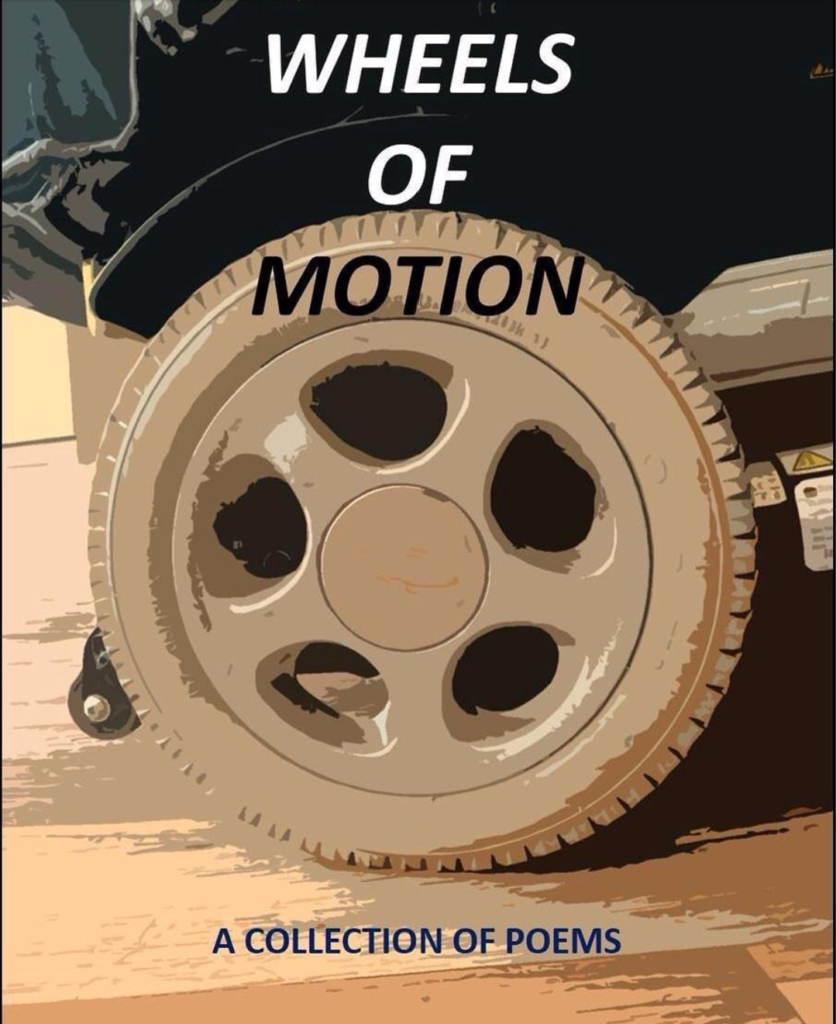
Lucy is a brilliant writer, having co-authored the poetry anthology ‘Wheels of Motion‘ which can be purchased here!

You can also follow Lucy on Twitter


Please follow me on Twitter and Instagram

Interview | Daniel Baker

Disabled Actor

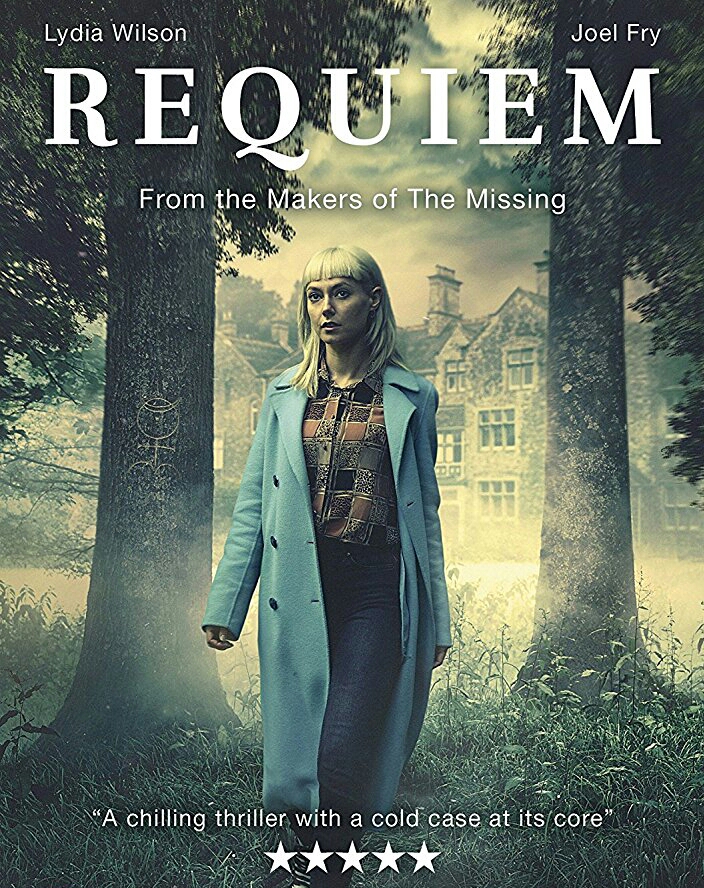
Daniel Baker is a first-time actor who landed the role of a man with Duchenne muscular dystrophy, in the primetime BBC1 drama, Requiem. Most notably, Daniel himself has the condition.

Muscular Dystrophy UK contacted Daniel after the production team specifically set out to cast someone with the disability. He appears in the psychological thriller, alongside Brendan Coyle, best known as John Bates from Downton Abbey.

The newcomer, from Cheltenham, is one of the few men with Duchenne muscular dystrophy to reach his forties. Here, he talks openly about life with a muscle-wasting condition, tells all about his debut acting experience, and shares his views on able-bodied actors portraying disabled characters.


1. Could you please tell us a little about yourself and your disability?

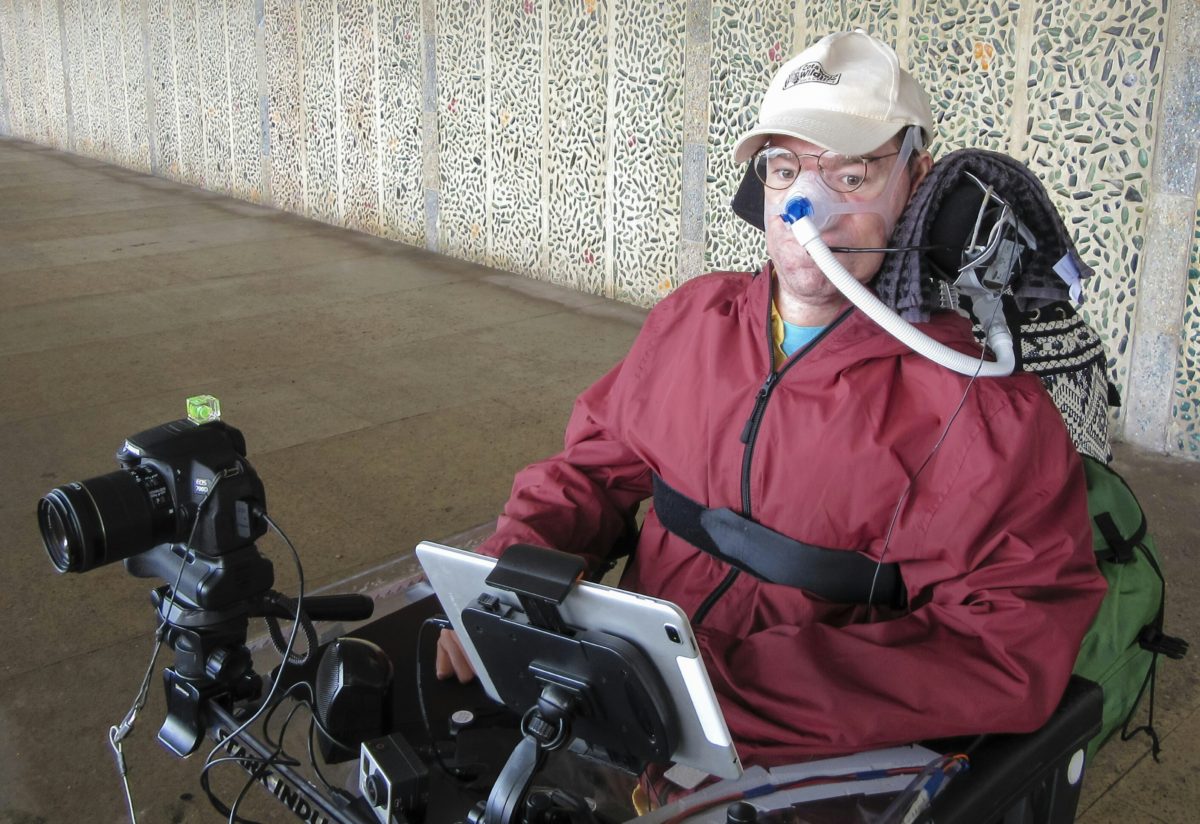
I am a 43 year-old man with Duchenne muscular dystrophy. I had a fairly normal childhood until the final years of primary school, when I could no longer walk and had to start using a wheelchair. I attended mainstream schools, followed by university. After university my condition worsened and I was given a ventilator to help me breathe. Due to this and some medication which caused negative side effects such as panic attacks, I ended up being bed-bound for nearly ten years. However, I eventually managed to control my anxiety. Then, after raising the funds for a new powered wheelchair, I faced the outside world again.

Duchenne is a condition where muscles get progressively weaker over time. We usually end up in a wheelchair by our early teens and require ventilation in our twenties. Although things have progressed medically, life expectancy is still in the 20’s. Some of us are living far longer than this, but sadly it’s still rare.

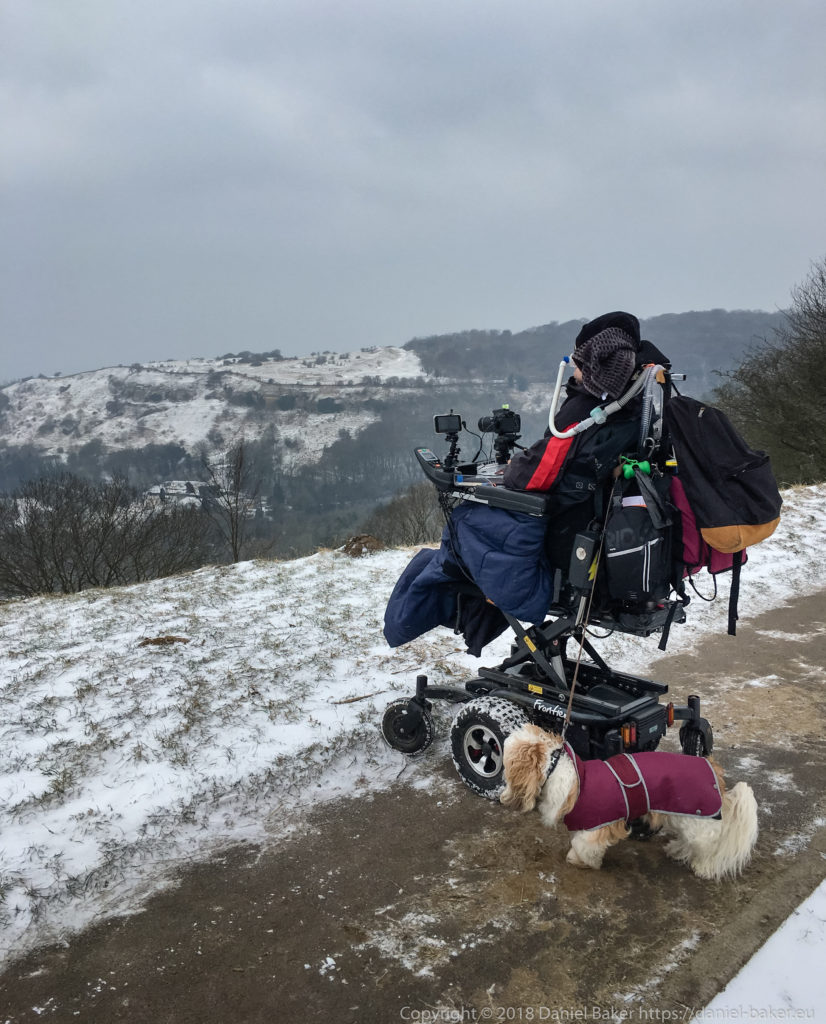
I try to live as normal a life as possible, and although there are always going to be limitations, I push myself and use technology to find ways around them. I manage to get out most days to either explore my hobby of photography or just walk my dogs. The dogs have their leads attached to my wheelchair so I can actually walk them myself. I still need someone with a pooper-scooper following me though as I can’t reach to do that job!

2. You achieved a BSc(Hons) in Applied Physics from Oxford Brookes University. How was your university experience in terms of inclusivity and disability awareness?

I attended university and got a government grant to pay for everything. I also received another grant called the Snowdon Award, which paid for travelling and a carer to help me. Nowadays things look much harder for anyone wanting to attend university and I doubt I would have been able to afford it myself.

I decided to commute each day as living on campus and finding accessible accommodation would have been very difficult for me. The journey varied between an hour and two hours each way, and though this was very tiring, it gave me chance to read text books and revise while in the car.

One consequence of not living closer was that I missed out on the social aspect of university life. I wasn’t overly bothered at the time as I’ve always liked my own company and was really there just to learn. But now when I look back, I think more socialising may have done me good.

The university itself was fairly accessible. There was one lift that was tiny and would break down on occasion, necessitating me being carried down stairs in my wheelchair- not a pleasant experience!

As I studied physics, I did need help performing the experiments, though luckily most lab work was done in groups so it wasn’t a big issue. The staff were always helpful and treated me like any other student. I can’t really complain about the inclusiveness and accessibility at all. Yes, some things could have been better, like having more accessible toilets. But overall it was a good experience and I’m grateful to have had that opportunity.

3. You recently featured in 2 episodes of Requiem (congratulations!) How was this experience and what challenges did you face as a disabled actor?

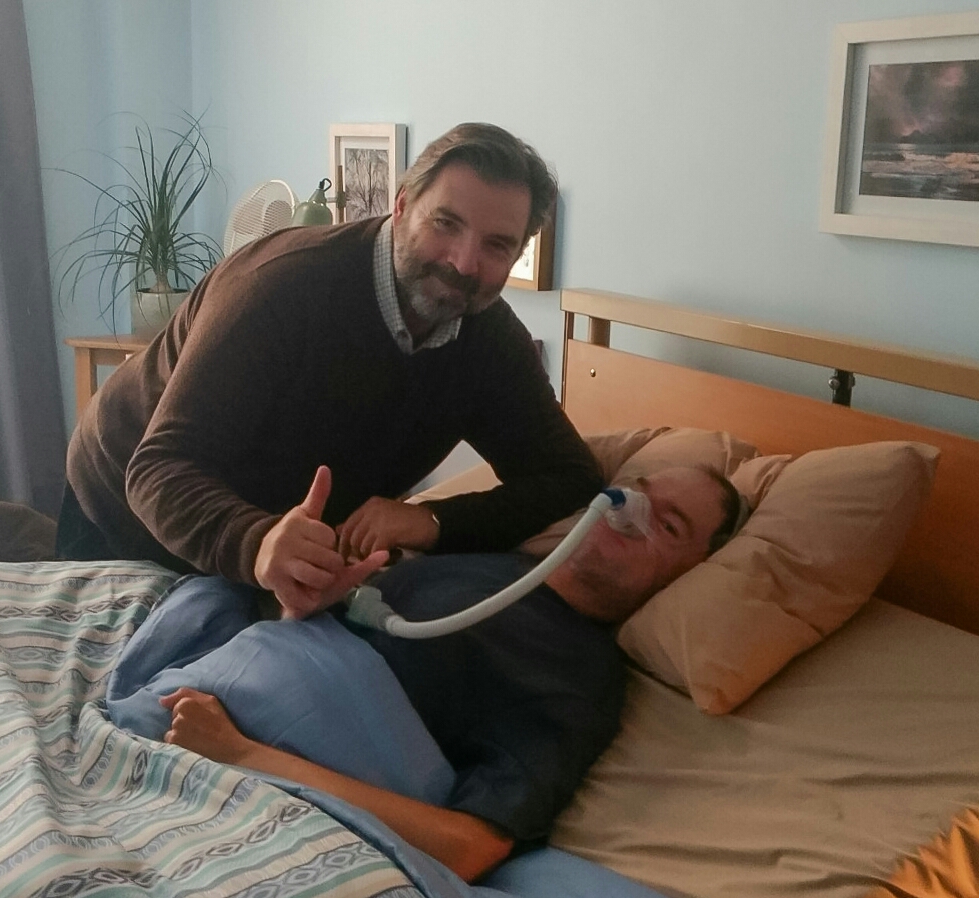
Daniel with actor and co-star, Brendan Coyle

Appearing in Requiem was an amazing experience! I had never acted in any fashion before, other than primary school plays where I usually hid in the background. So the whole experience was something new to me and pushed my boundaries – something I try to do as much as possible these days.

I think the casting process was likely a lot easier due to my disability. They were looking for someone with my specific condition and there aren’t that many of us around. I sent a few headshots and pictures of myself, then chatted with the production team over email. I was offered the part within a couple of days.

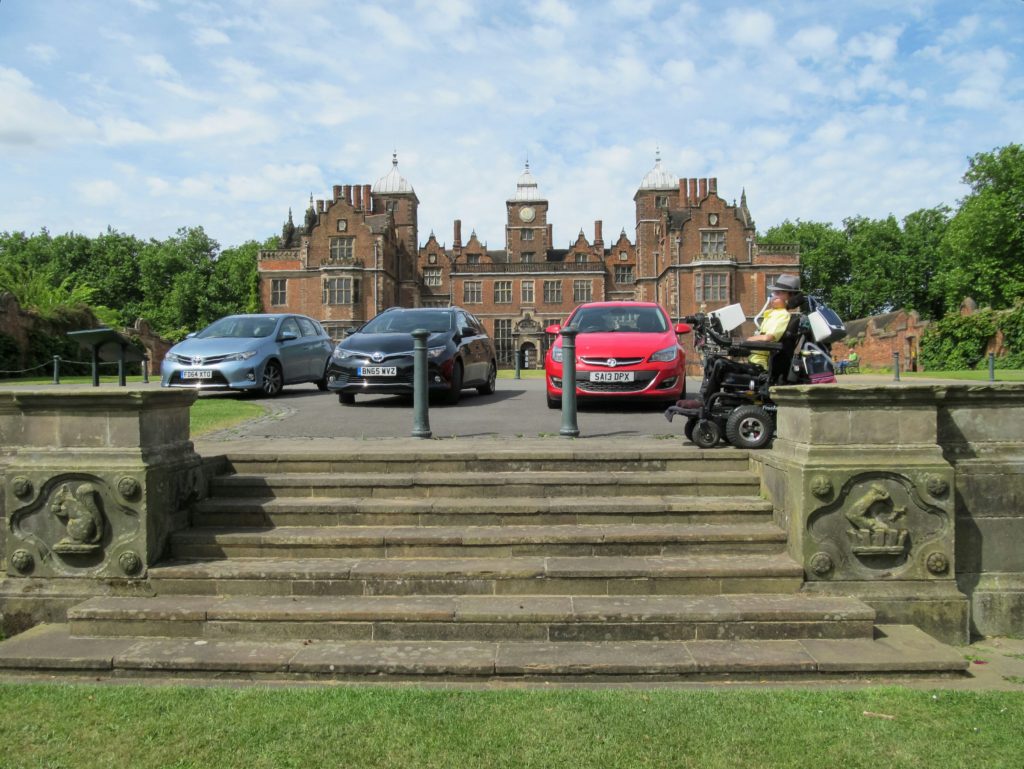
Daniel at Aston Hall in Birmingham

As for difficulties, I think they probably aren’t the things people would expect or think about. As soon as the offer of a role came up, I had to check that my personal assistant would be available and flexible to take me. I had to think about transport and did some research to find which trains had the best accessible carriages without any changes. I even did a test run the week before filming just to make sure everything would go smoothly. I had long chats with the production team to ensure the correct equipment, like a portable hoist, would be available on the day. They were very thorough and wanted to make sure I was safe and comfortable. This is something most actors wouldn’t need to even think or worry about.

I was extremely lucky to be working with a great team on Requiem. They ensured I had my own room on set, organised taxis and sent a runner to meet me at the train station. They also had a medic check my needs on set in case of emergency, and made sure the set itself was accessible.

The day itself was perfect. Everyone (cast and crew) welcomed me into their family and I felt right at home. I didn’t feel nervous at all and the scenes were all shot in one take, which I think really impressed them. I felt just like any other actor – I was treated as one of the team and not “special”.

4. As a disabled actor yourself, how do you feel about able-bodied actors portraying disabled characters on stage and on screen?

I think it depends on context and certain circumstances. Sometimes it is probably necessary, especially when the condition being portrayed is progressive, and when a good actor who has done plenty of research plays the part it can work well.

In general though, I think disabled actors playing the parts of disabled characters is a lot more authentic and should be done as much as possible. We have skills and knowledge that could be invaluable to the production team.

There is also the aspect of showing disability to society so we are more accepted and understood. This can’t really be achieved unless the actor is disabled themselves. The more we (disabled people) are on screen and included in mainstream media the better.

5. What advice would you give to others like yourself, who are living with a muscle-wasting condition?

I would use the old cliché, ‘live every day to the fullest’, because you never know what is going to happen tomorrow. I take risks everyday. For example, if my ventilator stops working while out, I’m in big trouble!

But we need to just get on with life and not worry about every possible risk, otherwise we would be stuck inside doing nothing. This can and does lead to depression, which I have experienced myself.

Having said that, I do believe that people in a similar position as me should embrace and be proud of their internal strength and determination. Yes, we face an uncertain future, most without hope for a cure and declining health. But this gives us an advantage over able-bodied people – we are used to overcoming adversity and major obstacles in life.

Life with Duchenne muscular dystrophy isn’t easy! Maintaining happiness and finding enjoyment in things is an every day struggle. It can be incredibly frustrating too.

There are days I wish I could get myself up, washed and dressed. I would drive my van to the woods, venture to where it would be impossible for a wheelchair to go, and just be alone, listening to nature.

For people like me with a muscle-wasting condition, it isn’t a simple life. There are many things we won’t experience, so I would advise you make the most of what you can do and take advantage of every opportunity.

Some things I have done, like appearing on a primetime BBC drama, most ‘normal’ people will never get to experience.


Daniel features in episodes 4 and 6 of the BBC drama Requiem. The whole series can now be found on the BBC iPlayer.

Daniel is also a trustee for the charity DMD Pathfinders. View his IMDB page here, and find out more from the man himself by visiting his personal blog.


I’d like to thank Daniel for taking the time to speak with me and answer my questions.

Please follow me on Twitter and Facebook

Interview | Life with my Assistance Dog

“Petworth has changed my life greatly…he has given me a reason to get up every morning.”

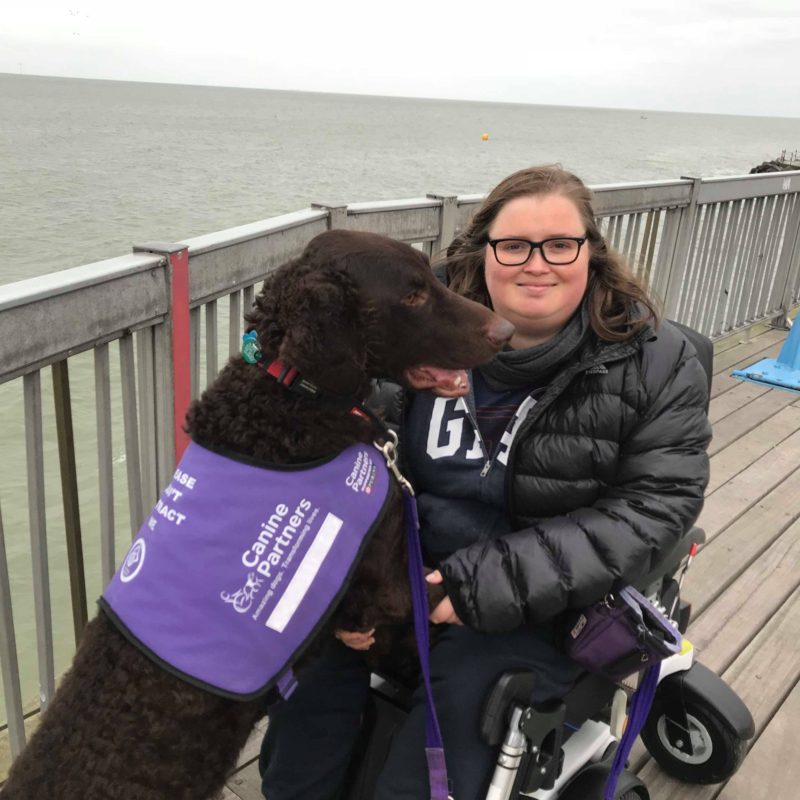
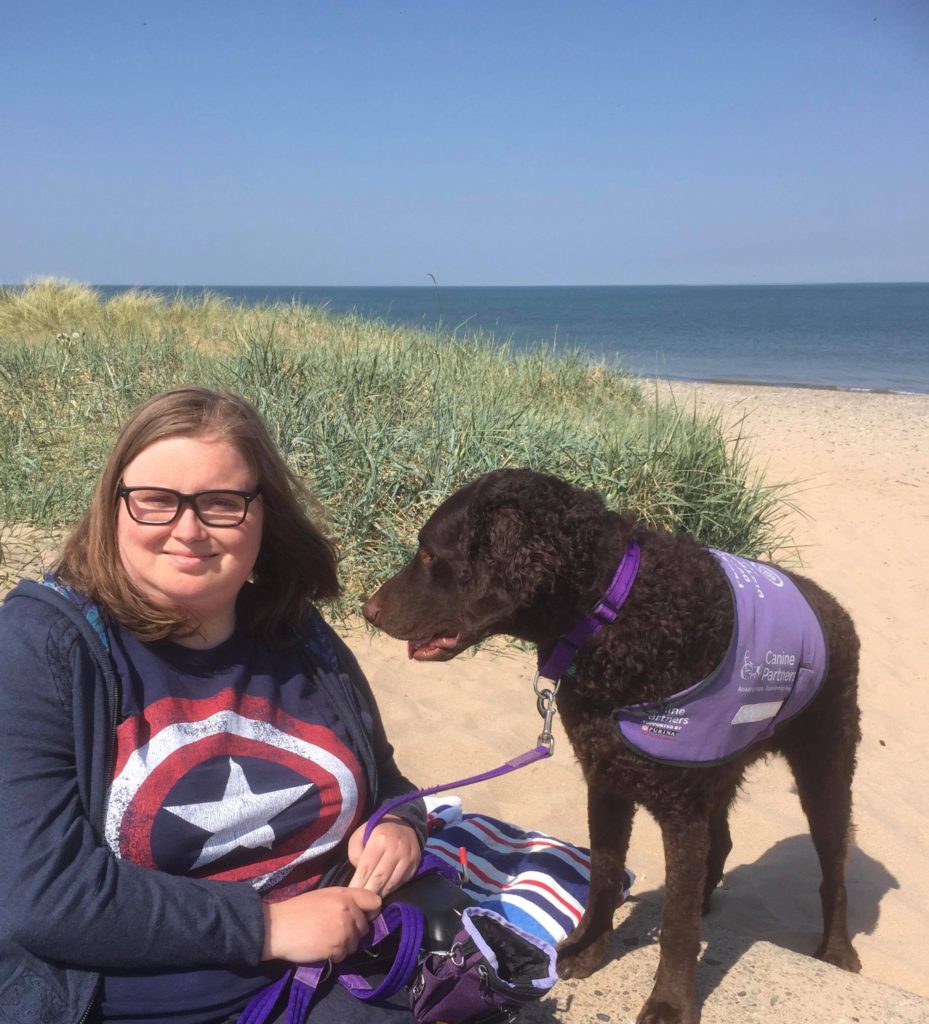
I recently had the pleasure of chatting with the lovely Harriet Butler about life with her beloved assistance dog, Petworth.

Harriet, 26 from Worcestershire, studied media and cultural studies at University and currently volunteers at KEMP hospice. Like me, she has a form of muscular dystrophy.

Here she explains all about the application process and why she wouldn’t be without her canine partner…


1. What is your disability and how does it affect you?

I have Duchenne muscular dystrophy. This form of muscular dystrophy predominately affects boys but in rare cases females like me can have the condition. Duchenne is a progressive muscle-wasting condition that affects every muscle in the body. I was diagnosed at the age of nine. When I was younger I was able to run and jump around but over time things became more difficult and eventually impossible. When I was twenty-two, I broke my ankle and now I am unable to weight-bear and so I rely on a wheelchair to get around.

2. What made you decide to get an assistance dog and what did the process involve?

Several years ago I visited the dog show ‘Crufts’ at the Birmingham NEC. Whilst I was there, I watched an assistance dog demonstration. I was blown away by what the dogs could do.

In June 2014, I had a spectacular fall and broke my ankle. Before my accident I could still walk short distances on the flat. I had surgery in which pins and plates were inserted. I had hoped I would be able to regain my mobility but it became apparent that this would be impossible. Once home and in a difficult place in my life, I applied to Canine Partners. They are a brilliant charity that provides assistance dogs to those with physical disabilities.

Once I had applied, I was invited to an assessment day at their centre in West Sussex. I met some incredible dogs and did some task work to see how a potential assistance dog could help me. I also had an Occupational Therapist come out to visit my home. She checked that my garden and home environment were suitable. I was then added to the waiting list and Canine Partners would start the process of finding me a suitable dog. They try to find a dog that fits in with your lifestyle and the tasks you need help with. For instance I required a tall dog to pass me items because I am quite high up in my electric wheelchair.

Eventually I got the much-anticipated call from advanced trainer Chrissie to say they had found me a potential dog. I was invited to meet Petworth and it really was love at first sight. We seemed to click straight away and I really liked how unusual he looked. Petworth is a curly coated retriever Labrador cross. He has extremely long legs and a lovely curly coat. We discussed the tasks I would like him to do. The following day, Chrissie phoned to check that I wanted to go ahead with Petworth. Of course, I said yes.

The final stage involved going on a two-week training course and learning how to work with Petworth. I have now had Petworth for over two years and I couldn’t be happier.

3. How does Petworth assist you and how has he changed your life?

Petworth can assist me in so many ways, providing me with a degree of independence away from carers. He picks things up when I drop them (I do this very often due to my reduced dexterity). He gets help when I need it; he goes and finds my Mum. He brings the post to me when it arrives. He opens and closes doors around the house and also pushes automatic door buttons when I’m out. He turns on and off the lights in my room and bathroom. He assists me with taking my coat/jumper off and shoes and socks. He fetches my phone for me if I leave it in a different room. He is able to open and close cupboards so at feeding time he fetches his bowl for me. He also helps me tidy up by putting his toys away in a box. When we go shopping he can help getting items off the shelf. Once we are finished shopping, Petworth can help me pay and gives my purse to the cashier.

Having just written down the things Petworth does for me, I’m quite amazed. He really loves to help me but it isn’t all about work, he still gets time to be a normal dog. We both enjoy going to the park or going on a long walk. One of my favourite things is teaching Petworth a new task; he is a very quick learner. As my condition is progressive I can train Petworth to do more tasks that will benefit me in the future.

Petworth has changed my life greatly. In many ways he has flipped it upside down. Before I had him I was too scared to leave my house. I was always worried I would drop my phone or keys. I always felt like all eyes were on my wheelchair and me. I didn’t have a social life and I became very isolated. Now I feel like a different person as Petworth gives me so much confidence. People are more interested in Petworth than my chair. He is a fab talking point and people love to ask me questions. I don’t have to rely so heavily on carers. Most importantly he has given me a reason to get up every morning. He looks after me and I look after him.

4. What, If any, are the challenges of having an assistance dog?

This probably sounds cheesy but I don’t think it is a challenge. Petworth really has enhanced my life and opened up many doors…literally!

The main hurdle we face is good old British weather – come rain or shine Petworth needs a walk. This means wrapping up warm, getting my waterproofs on and embracing whatever Mother Nature has to throw at us.

I was initially worried that I would struggle looking after a dog due to fatigue, but in reality Petworth gives me more energy by completing his tasks. I am responsible for exercising, grooming, feeding and playing. This has helped me maintain some muscle strength and it has given me a purpose and a sense of achievement.

5. What would be your advice for others who are considering getting an assistance dog?

Go for it! Having Petworth has completely changed my life and an assistance dog could do the same for you. I know some people think I’m too disabled or I’m not disabled enough but I still recommend applying. I would try to speak to somebody who already has an assistance dog to see what is involved and if it’s for you. The best advice I can give is be patient. It is not a quick process and the charity waiting lists are long at the moment, but it really is worth the wait.

*All images courtesy of Harriet Butler


I would like to thank Harriet for taking the time to answer my questions so thoroughly.

For more information about assistance dogs, visit the Canine Partners website.

Please follow me on Twitter and Facebook

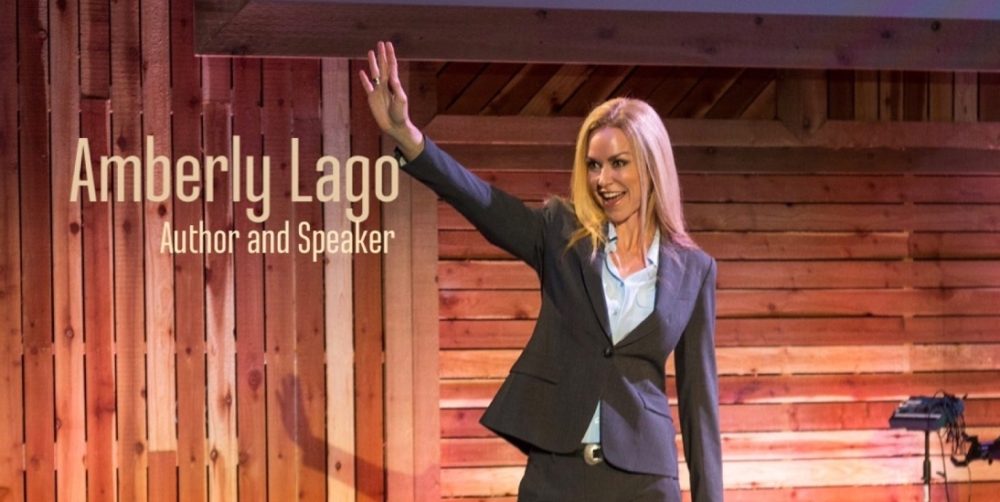
Interview | Author Amberly Lago

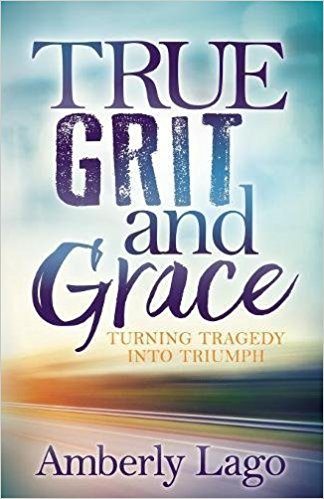
True Grit and Grace: Turning Tragedy into Triumph

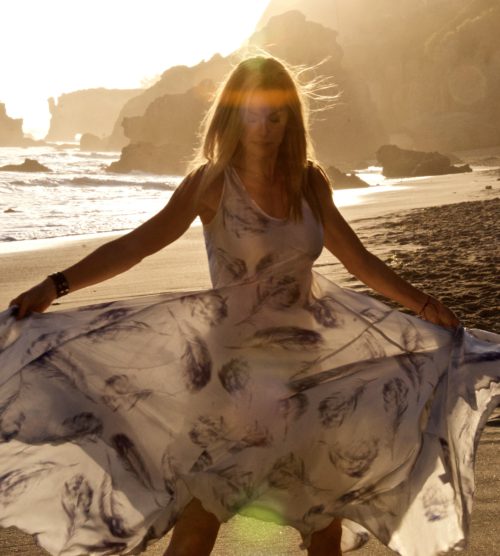
Former athlete and professional dancer Amberly Lago suffered a horrific motorcycle accident in 2010, which severed her femoral artery and shattered her right leg almost beyond repair.

Despite her debilitating, life changing injuries, Amberly has transformed her life and is now a fitness trainer and motivational speaker, inspiring thousands with her resilience and ability to thrive.  

In her remarkable memoir, ‘True Grit and Grace’, this Texas girl instills hope to keep moving forward by sharing the tools and strategies that have worked for her.

The determination, defiance and gratitude she demonstrates encourages readers to find resilience in their own difficulties. By refusing to give up, Amberly has admirably commited herself to regaining her active lifestyle, thereby proving it is possible to hit rock bottom and still find the strength to get back up.


1. Amberly, could you please tell us how your disability affects you and how you continue to cope with ongoing, chronic pain?

Following my motorcycle accident in 2010, I was diagnosed with Chronic Regional Pain Syndrome. CRPS is known as “the suicide disease” because it causes constant chronic pain. It’s ranked highest on the pain scale and has no known cure. When I was first diagnosed, I was told I’d be permanently disabled and wheelchair-bound.

At first I lived in denial and pretended nothing was wrong. Behind my smile, I was dying inside from physical and emotional pain. Everything I read about CRPS left me feeling hopeless. Still, I continued moving forward, despite the feeling of a vice grip on my foot and battery acid through my veins. I tried every kind of treatment for my pain, including a spinal stimulator, nerve blocks, ketamine infusions, Eastern and Western medicine, and anything that claimed it could bring me relief.

It wasn’t until I accepted the fact that I had CRPS and what I call my “new normal” that I began to show myself the self-love and self-compassion I needed to start to feel better. I wish I could tell you I found some magic pill or movement that relieves my pain, but the truth is, every day is different, and so are my pain levels. What works some days doesn’t always work the next, so I just keep trying, and doing, and praying.

When I am in pain, I go through my list of helpful tools. There is no particular order.

I practice mindfulness, meaning I do whatever I can to stop thinking about and focusing on my pain. I surround myself with positive people. No more doggy downers, only puppy uppers!

I count my blessings and practice gratitude.

I give myself permission to rest on a flare day and remember that I am doing exactly what I need to do. I am recovering.

I eat an anti-inflammatory diet.

I am on a sleep schedule (and yes, this means that I have an alert on my phone that tells me when it’s bedtime).

I am still learning to meditate.

I breathe deep breaths.

I pray.

I do everything I can to be of service to others. When you focus on the well-being of others, your self-pity disappears as you improve the quality of someone else’s life.

Then I repeat. Instead of allowing my pain to make me bitter, I do my best to appreciate everything I have, no matter how big or small. I will focus on the good in my life and let that be my medicine.

2. You endured incredibly trying times prior to your motorcycle accident, including parental divorce and sexual abuse. How has maturity and resilience helped you since your accident?

I learned from a young age to “cowgirl up” because at the time, there was no alternative. Dwelling on why reality wasn’t prettier wouldn’t have done a thing for me. It would have crippled me then, preventing me from achieving everything I wanted to and crippled me years later when I was actually crippled, preventing me from choosing nothing less than recovery. As weird as it may be to say this, I believe the pain and isolation I felt in those difficult times as a child were an ironic blessing of sorts. When you know from an early age that you’re on your own and can rely only and entirely on yourself, it’s as liberating as it is sad. But if you can take the sadness and self-pity out of it, then what you’re left with is a liberating sense of freedom—and, when trauma strikes, you don’t waste any time looking for someone to bail you out.

3. How and why did you choose to ignore and defy the doctor who abruptly told you that you would never function normally within society, not walk again?

Call it my stubbornness or my love of a good challenge or being in complete denial, but I wanted, more than anything, to chase after my daughter like a mother should and be free to do the things that make my heart sing, like hiking and exercise. Just because my body was “broken” on the outside, I was still the determined athlete on the inside. I learned to truly listen to my body and to be the healthiest I could be, despite my circumstances. We may not get to control what happens to us, but we can control how we react to it. So, getting on with my life was a series of three steps up (to the degree that I could take steps) and six steps back, both physically and emotionally. Every one of my surgeries, that totaled 34, I viewed as bumps in the road. I couldn’t think of them as anything but that. If I had, I would have given up. And nothing, not even a doctor’s advice, could get me to do that. Although I love my doctors, I had to think for myself when it came to my own health and happiness.

4. Understandably, you experienced severe depression following your accident. What was the turning point for you?  And how do you find strength and energy to turn such despair into positivity?

Somewhere in between surgeries number 28 and 34, I mentally spiraled into a deep, dark depression. I could feel myself giving up and giving in to the pain, and in that moment, I thought about my beautiful children, my family, my friends, and my clients, and realized I had better make a decision. I could go down the road of despair or down the road of peace and happiness. I immediately threw myself into a place of gratitude for all I did have in my life. Every time a negative thought crept into my mind, I replaced it with something I was grateful for. I threw myself into physical therapy and stayed active with my fitness clientele. Even though I couldn’t physically train them at first, I could still create their exercise plans and coach them over the phone. Being of service really took me out of my despair and gave me a sense of purpose and a strong feeling of connection.

5. Complex Regional Pain Syndrome (CRPS) is also often referred to as “the suicide disease” due to the fact so many sufferers take their own lives. How did you overcome the odds and move forward in order to achieve your goals and live life to the fullest?

My heart sank the first time I learned I had what is known as the suicide disease. When I found out I had an incurable disease that would leave me in constant chronic pain, I defaulted to denial; it took me years to accept that I am a woman with a disability. It wasn’t until I completely accepted my disability that I could begin to heal—not only physically, but emotionally and spiritually as well. I focus on what I can do and don’t get caught up in past accomplishments. I celebrate small victories along the way, whether being able to walk up the stairs on my own or walk on the beach with my family. I only look back to see how far I have come. I connect to my higher power every day and pray. Instead of letting my chronic pain detour me from my endeavors, I use it as a tool to connect me with others going through challenges and am reminded that I am not alone on this journey.

6. Throughout the book, you discuss the need for hope, acceptance and gratitude — to be thankful for all you have rather than looking to the past and what you have lost. Do you feel this is the key to getting the most out of life?

At first I was so caught up in my past accomplishments that I couldn’t live fully in the present moment. I went from being a dancer, athlete, and fitness trainer to fighting just to stand upright for a few seconds at a time. I was so embarrassed of my scars and tried to pretend that nothing was wrong with me. Allowing others to see my scars crushed me. Slowly, however, my perspective changed and I took ownership of my story. I then viewed my scars as battles I had won. Instead of looking down at my leg in anguish, I looked at it as a blessing. I still had my legs. Once I embraced my imperfections and learned self-acceptance, I truly began to heal and be comfortable in my own skin.

Without the traumas and heartbreaks of life I wouldn’t be able to serve the way I do now. It’s not about circumstances but about what you decide to do with them. I focus on what I am grateful for and don’t leave any room for self-pity. I make my purpose bigger than my problems.

As Albert Einstein said, “There are only two ways to live your life. One is though nothing is a miracle. The other is though everything is a miracle”. I believe in miracles.

7. Your role as a wellness coach and motivational speaker involves supporting, inspiring and advising others. Why is this so important and how does helping other people through their difficulties benefit you personally?

I wanted more than ever to get back to my passion, which is working with people, but I did wonder who would want to train with me. I felt broken. I trained fitness competitors, boxers, and CHP officers for years—and then I found myself on crutches. I now needed my clients more than they needed me. I needed to get back to work. I needed to give my life purpose above and beyond trying to walk again. Purpose was what would save me mentally, psychologically, spiritually—and, for that matter, physically. Purpose was what would get me on my feet and, someday—as I prayed—running again. I did whatever I could to get myself stronger—and then came the miracle. Business began booming, and did so quickly because people saw me in the gym, in my wheelchair or on crutches, even pushing myself from station to station in a wheelchair. I became the trainer of encouragement who told people, Yes you can! and that was how I trained them. Speaking to groups of people, whether a gathering of youth or  business professionals, about overcoming obstacles is a way of connecting, and when people connect, magic happens. I believe we need to lift others up to be better ourselves.
8. What do you hope readers will take away from reading your book?

What I have learned in life is a series of choices we make regardless of our circumstances. I could either make the choice to give up and let my life be determined by my circumstances, or fight to create something positive out of my situation. My choice is to notice the gifts life offers, which are particularly plentiful when you look for them. I believe in seeing the good in every situation and learning something from it.

I believe we can have the life we have always imagined, even if our circumstances have narrowed our possibilities. My sincere wish is that my story will help each reader claim their own power and belief in themselves and their dreams, and find their own resilience to move forward and choose a life filled with laughter and love, even when things don’t go as planned. We can’t choose what life throws our way, but we can choose to be happy and live a full life, despite our circumstances. Through our trials, we can embrace our challenges, connect to our innermost resilience, and change our perspective on life. We are all strong, but together we are unstoppable!


I’d like to thank Amberly Lago for taking the time to answer my questions so considerately.

Please visit her website to learn more about her life and work as a motivational speaker.

TRUE GRIT AND GRACE: Turning Tragedy Into Triumph by Amberly Lago (Morgan James Publishing; April 17, 2018) – Available to buy now from Amazon.
Please follow me on Twitter and Facebook

Interview | Scott Watkin: SeeAbility

36-year-old Scott Watkin, an eye care and vision development officer with the charity SeeAbility, is one of this years deserving recipients of the British Empire Medal.

Scott, who has learning disabilities and the eye condition keratoconus, is recognised for his tireless work in the learning disability community.

A dedicated ambassador, Scott began his career co-chairing the learning disability partnership board on the Isle of Wight. This led onto an influential role as co-national director for learning disabilities within the Department of Health. He also lectures at the University of Hertfordshire, focusing on eye care, vision and equal rights. However, he notes his work with SeeAbility as a major milestone.


1. Scott, could you please tell Disability Horizons readers a little about yourself and your disability?

I was born with Williams syndrome which is a learning disability. Apparently I am one in ten thousand! Some of my muscles can be quite weak and my coordination can be not great at times.

I went to a special school and teachers never really paid attention to me, and it meant I didn’t really get the grades I wanted to get. I was bullied too which made learning very hard.

It also means I am more likely to have vision problems and actually I was diagnosed with keratoconus which I’ve had two corneal graftoperations on. I have quite a difficult daily routine involving eye drops and contact lenses.

2. How does your learning disability and eye condition affect you, and how have you found working with a disability?

My learning disability only shows when I’m nervous or worried about something, otherwise I’m a very confident person. I just need a bit of support to do my job and I’ve been really lucky to be supported well at SeeAbility.

My vision varies, some days it’s ok some days really poor. But I’m always ready to work!

3. What adjustments have you and/or your employer had to make in order for you to do your job effectively?

If I don’t know a journey, my manager will meet me in London and we will continue the journey together. I know my way from the IOW to London very well having made the trip many times.

If my vision is really poor, we put all my information on yellow paper in Arial 16pt font. This helps me to read it better.

When I first started working, I had lots of support to make steps in my job. But for me it’s just being able to talk to someone when I need to, and that’s the case at SeeAbility. If I don’t need that then I just get on with my job and carry on!

4. How and why did you get involved with the charity SeeAbility?

I first met Paula Spinks-Chamberlain (Director of External Affairs) at the Department of Health. SeeAbility supported me through my keratoconus and then I did some work as an ambassador. After that I was offered a job!

5. Could you please explain the role you play within SeeAbility?

I’m an eye care and vision development officer and I make sure people with learning disabilities get good eye care. I travel around the country giving training sessions to people with learning disabilities and carers. I need to make sure we lobby government to make sure they understand that eye care for people with learning disabilities is really important.

People with learning disabilities are much more likely to have sight problems than other people. Not only that, but they are the least likely to get the eye care they need. We are working so that eye care professionals make reasonable adjustments but what we really need is a national eye care pathway so that everyone with a disability can access a sight test.

6. You are also on the board of Learning Disability England. What are your aims and objectives in this capacity?

I try and make sure people with a learning disability have a voice. People with learning disabilities need the same access to services as everybody else.

It’s about setting the direction of learning disabilities in England. Lobbying government and challenging the social care cuts. I need to make sure we do what we say we are going to do.

7. Why is it so important to you to campaign for people with learning disabilities?

Firstly, people with learning disabilities are much more likely to have sight problems than other people. Not only that, but they are the least likely to get the eye care they need. We are working so that eye care professionals make reasonable adjustments but what we really need is a national eye care pathway so that everyone with a disability can access a sight test.

Secondly, people with learning disabilities deserve to have their voice heard. We deserve the same opportunities as everyone else as we have so much to offer. We just need the chances to shine.

8. What do you think are the main issues that require attention and improvement?

We need to stop the social care cuts and get a good eye care pathway down for people with learning disabilities so they can get the right eye care!

We need good annual health checks.

And to make sure the government take people with learning disabilities seriously and listen to what they want. For example, most people with learning disabilities want to work, and we just need employers to give us chance so we can achieve what others can have a good life.

9. Congratulations on being awarded a British Empire Medal in the New Year 2018 Honours list. How does it make you feel to be recognised for your achievements?

I never thought I’d be recognised in this way, it’s a real big honour. I’m glad my work is being recognised nationally because it’s really important. It sends a message to all the eye care professionals that I work with, they need to know how important eye care for people with disabilities is.

10. Finally, what tips would you offer anyone like yourself with a similar disability, who is seeking employment?

Don’t stop trying to find employment. Don’t be afraid to say you have a learning disability and it’s ok to ask for reasonable adjustments. You will have so many positives to bring to any role and don’t forget that, you are actually very reliable, more than other people!


I’d like to thank Scott Watkin for taking the time to speak with me.

My interview with Scott was originally published by Disability Horizons

Please follow me on Twitter and Facebook

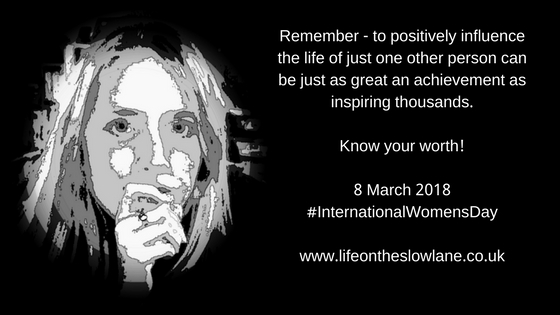
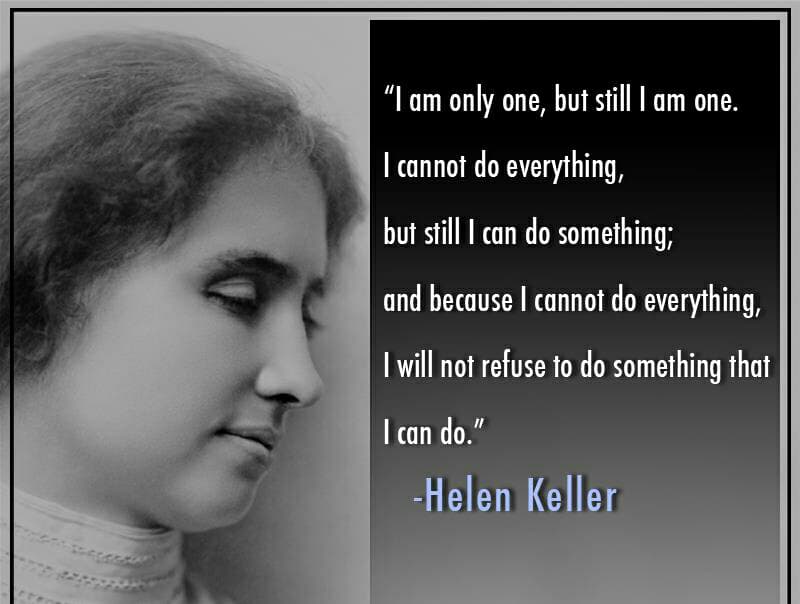
International Women’s Day 2018

Just a quick post today, to (belatedly) celebrate International Women’s Day 2018.

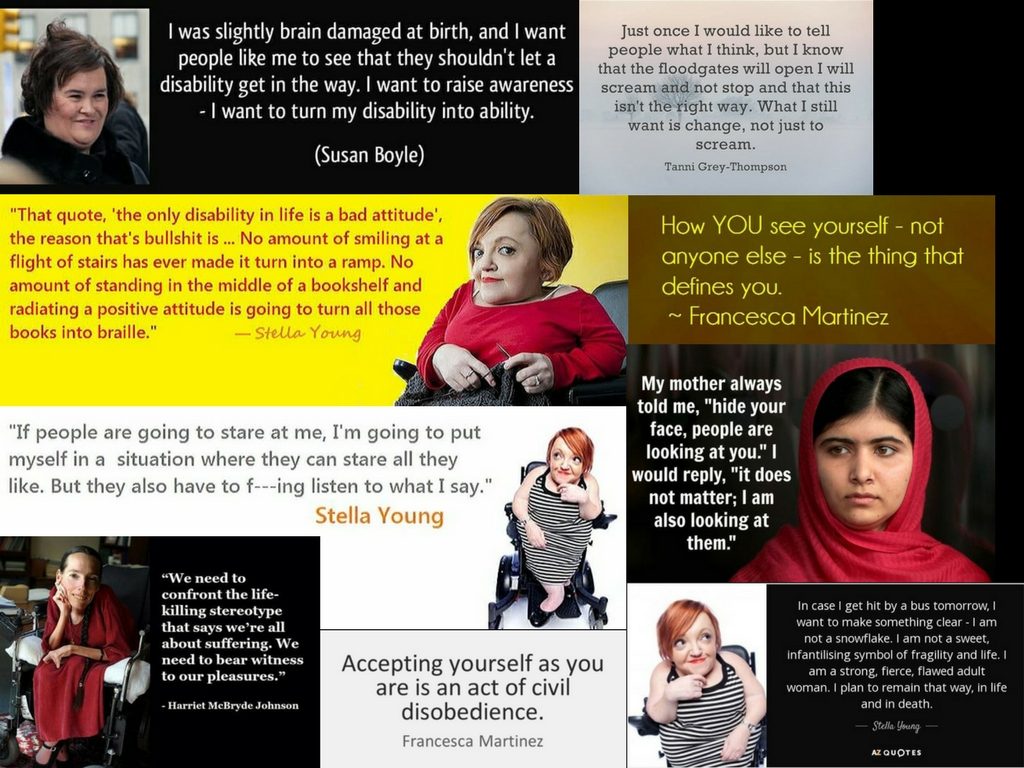
It is held on 8th March, every year. Here are a few quotes that resonate with me…

What does International Women’s Day mean to you?


This post comes to you a little late, since I spent Thursday 8th March in hospital having an operation – fun, fun!

I’m now on the mend and planning future blog posts.

What topics would you like me to cover?

If you have any ideas or suggestions, I would be grateful if you would leave a comment.


Please follow me on Twitter and Facebook

Interview | ‘The Undateables’ Steve Carruthers

“It is a life-changing experience.        Embrace it!”


The Undateables is a Channel 4 TV show featuring people with a variety of disabilities, all of whom are looking for love.

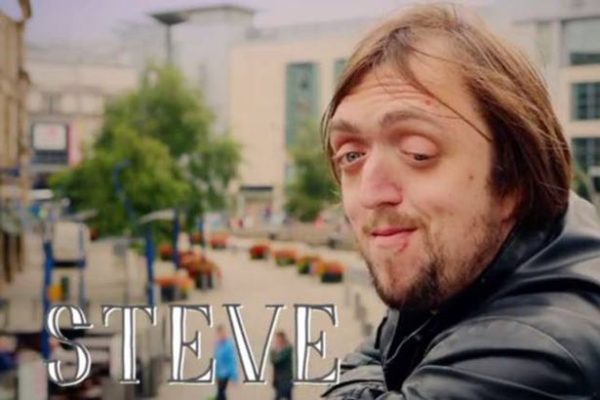
Steve Carruthers, who has Crouzon syndrome (a genetic condition affecting the shape of the face and head), was a participant on series two, back in 2013. Though romance did not blossom with his date, the experience gave him much needed confidence.

Following his appearance, Steve – now 36, from Manchester – soon met the love of his life Vicky, through social media. Vicky had in fact seen Steve on the show and decided to contact him.

The Undateables screened Steve’s romantic proposal and the couple later married in 2015.

1. Steve, why did you apply to The Undateables and, what reservations did you have?

I initially applied for a different show called ‘Beauty and the Beast: The Ugly Face of Prejudice’. As a result, I was approached to appear on series one of ‘The Undateables’, but I declined as it had never been on TV and I didn’t get the gist of the show. After series one ended, I was approached again but this time it was by my good friend Adam Pearson, who worked with the team to find participants for the show. He convinced me to give it a chance as he said it would help me with my confidence and outlook as I had a negative outlook on life after the loss of two of my siblings. I was a bit reserved and concerned that after being on the show, more people would make fun of my appearance. But, in doing the show, my outlook changed to a positive one and allowed me to help other people in a similar position.

2. How were you treated throughout the production process?

The whole team was incredibly nice, supportive and understanding. Everything was treated with care and compassion.

3. What response have you received following your appearances?

Like all things with TV, there are negative people who see disability as something to mock and joke about. But the positives outweighed the negatives in a huge way. People are so kind and understanding. I found that it [the show] helped educate people about disability. It also helps with how we perceive ourselves and how society perceives us to.

4. The show has been accused of being insensitive and exploitative. The title in particular is widely criticised. What do you think?

The show itself really is everything you see (believe it or not). It is exactly how dates are in real life – you have moments of silence, awkwardness and moments of hope. The show’s titles show cupid shooting the [prefix] ‘Un’ off, leaving the word ‘dateables’. The point of this is to prove we are all dateable, and that we [disabled people] have the same experiences on dates as everyone else does.

5. What would you say to anyone who is considering applying to the show?

My advice to anyone applying for or appearing on the show is to go into it with an open mind. There will be those who will say [derogatory] things, but overall the positives more than outweigh the negatives. It is a life-changing experience. Embrace it! The positive message you’re putting out there helps others as well as yourself. The show has had a huge impact and gives so many people, like me, much needed confidence. Those who watch the show have gained so much more understanding of different disabilities too.


I’d like to thank Steve for taking the time to speak with me.

You can watch his original appearance on the show here.

Images courtesy of The Undateables and The Sun


Please follow me on Twitter and Facebook