Wench Wars | Disney Villains

1, 2, 3, 4, I declare a WENCH WAR!!

Daily, we’re bombarded with news stories of sadness, badness and madness.

Sometimes, you just need a little escapism and light-relief to raise a smile. What better way than a Disney villains showdown with the cleverest of clever little wenches, Miss Lucy-Lu Hudson!

I’m already battling it out with fellow MD’er, Mitch (twodoughnuts), in a series of ‘Top 5’ blog posts.

So far, we’ve debated our favourite songs and actors. I apologise in advance for Mr Twodoughnuts ~ he’s so very young and uncultured!

Mitch’s Top 5 Songs (bleurgh!)

My Top 5 Songs (yay!)

Mitch’s Top 5 Actors (meh)

My Top 5 Actors (fine choices, indeed!)


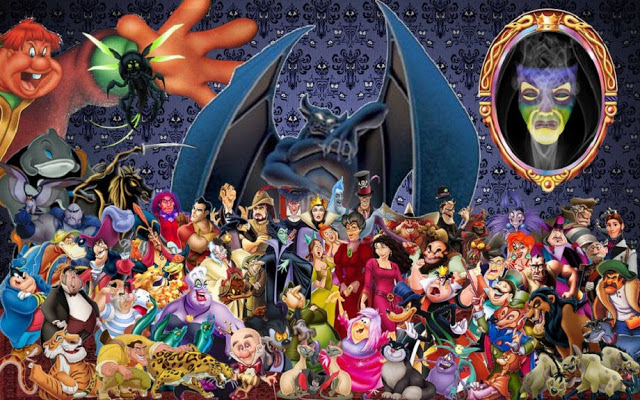
So, my wise wench of a friend, Lucy, kicked things off with her pick of the Top 5 Disney villains (damn, she’s good!)

Here, I attempt to take her down with my comeback (well, it is a wench war!) Though, I freely admit, I think she’s got this first round in the bag.

Let us know what you think…!

Top 5 Disney Villains

1. Chernabog, Fantasia (1940)

This is without doubt the darkest and most menacing sequence in Disney history. I was only three or four when I first saw Fantasia. I swear, even at that age I thought it was one hell of a trippy film!

The demonic Chernabog (funky name, right?), based on Slavic folklore, is God of the Night. He is the representation of pure evil, with fearsome wings that form the peak of Bald Mountain, which leers ominously over the village below.

As night descends, the delighful Mr Chernabog unleashes hellish realms and summons sinful spirits to watch them dance maniacally. He then throws them into the mountain’s fiery pit before a new day dawns. Well, that’s not nice at all is it!

I’m flipping glad I don’t live in that village!

How is this a kids film, seriously?!

2. Claude Frollo, The Hunchback of Notre Dame (1996)

I was eight when this was released. To this day, it’s one of my Mum’s favourite Disney films. But call me crazy, I think it’s all a bit much for kids of that age, with hard-hitting, mature themes including religion, sin, lust and genocide!

(Sorry folks, there are no happy-clappy, ‘bibbidi bobbidi boo’ moments in The Hunchback of Notre Dame!)

From Disney’s ‘Cinderella’

I’ll be honest, it still freaks me out. Not least because of the lack of magical element so typical of animated Disney features. Okay, so there are talking gargoyles, but hey, they needed something to lighten the mood a little!

Frollo, Paris’ Minister of Justice (oh, the irony), is the first Disney villain to attempt infanticide, having almost drowned a newborn, only to be stopped by the archdeacon who accuses the corrupt official of murdering the baby’s innocent gypsy mother. To atone for his sin, Frollo begrudgingly agrees to raise the child as his own. He cruelly names the baby Quasimodo, meaning ‘half-formed’. (Dave would have been a better choice, surely?!)

The manipulative Frollo hides Quasi away in the bell tower, excluding him from society, telling him he will never be accepted by the world due to his unusual physical appearance. What an ass!

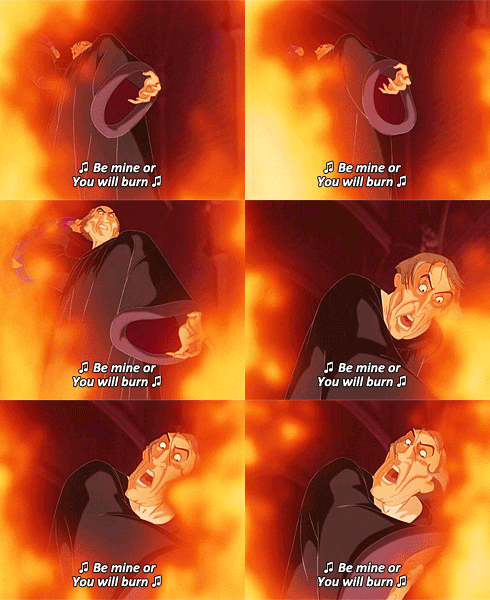
Unlike other Disney Villians – often magical and mythical – Frollo the super-creep is so threatening and unnerving because he is such a realistic representation. He is, after all, just a man. A pervy old man (oi, Esmeralda, be mine or you can burn!) fuelled by power, skewed religious motives and a licentious desire for busty babe Esmeralda.

3. Evil Queen, Snow White and the Seven Dwarfs (1937)

She’s the original diva bitch, driven by vanity, and all credit to her, she’s got one hell of a pout going on!

I can’t help but be on the side of the Evil Queen who so easily outwits squeaky-voiced, simple Snowy (never trust a girl who shares a house with seven old men. Methinks she’s not quite as pure as snow!).

Yes, she’s gone to all the effort of transforming into a horrifyingly wretched old wench. But y’know, needs must!

If THAT poked it’s head through your front window and tried to tempt you with a juicy red apple, would you willingly take a bite? Or would you tell the interfering, hook-nosed, eye-bulging wrinkly to buggar off?!

I rest my case. Snowy, it’s your own bloody fault, love!

4. Professor Ratigan, Basil the Great Mouse Detective (1986)

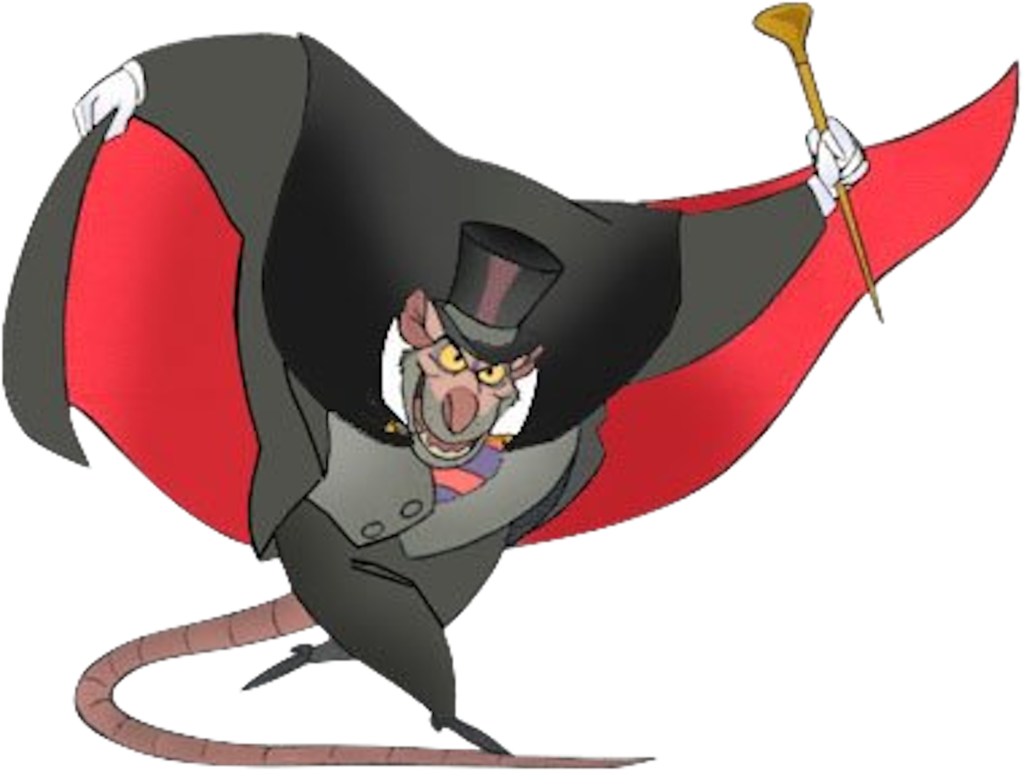
Arch-nemesis to the famous mouse detective Basil of Baker Street, crimimal mastermind Ratigan is a comically ruthless brute. For one thing, he is voiced by horror legend Vincent Price (Michael Jackson’s Thriller, anyone?!).

A status-obsessed professional crime lord, his ultimate ambition is to overthrow the mousey monarch and proclaim himself “supreme ruler of all MOUSEDOM”. Aim high, I say! 

Unflinchingly wicked, conniving and with no morals, it is revealed in his singy-songy dance number that he previously drowned widows and orphans. What a pleasant chappy! 

Ratigan declares himself to be a “superior mind”, yet is angered when called a rat by intoxicated minion Bartholemew, despite the fact he is indeed a rat. The clue’s in the name, dude! 

https://youtu.be/8UQg4zb9dsA

His extravagantly ostentatious appearance conceals an intimidatingly feral visciousness. Though generally maliciously cheerful, calm and composed, his manacingly savage violence is unleashed in a shocking final showdown with heroic Basil.

5. Mad Madam Mim, The Sword in the Stone (1963)

“I find delight in the gruesome and grim
‘Cause I’m the magnificent, marvelous
Mad Madam Mim” ~ A bit morbid there, love!

The eccentric, shape-shifting Mim is a proper tricksy wench witch, and rival to the legendary wizard Merlin. We’re introduced to the purple-haired hag when young Arthur, in the form of a bird, mistakenly flies into her not-so-classy abode. Having declared his alliance to the all-powerful Merlin, Mad Madam Mim attempts to “destroy” the boy. Seems fairly reasonable to me!

For all her arrogance and mischievousness, I can’t help but root for the haggered old biddy. I mean, for one thing, she has purple hair! (I remember, as a young kid, being fascinated with an elderly neighbour who had a purple rinse. Super cool!)

The villainous Mim is LOUD, bat-shit crazy and pessimistic yet playful. A ditzy and deceitful game-player, she repeatedly cackles, “I win, I win” – as do I when defeating Mr twodoughnuts at ‘Blog Wars‘.


Thanks for reading!

International Women’s Day

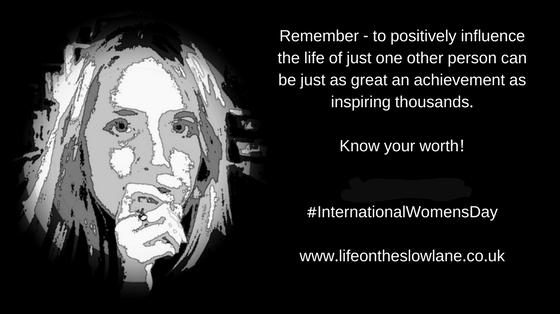
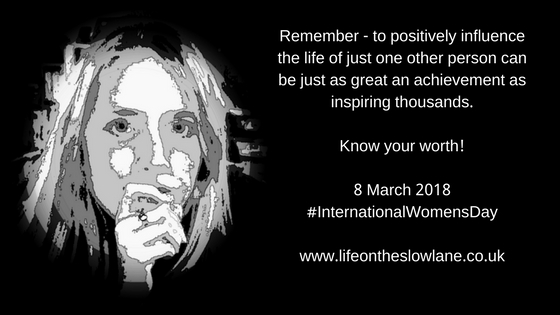
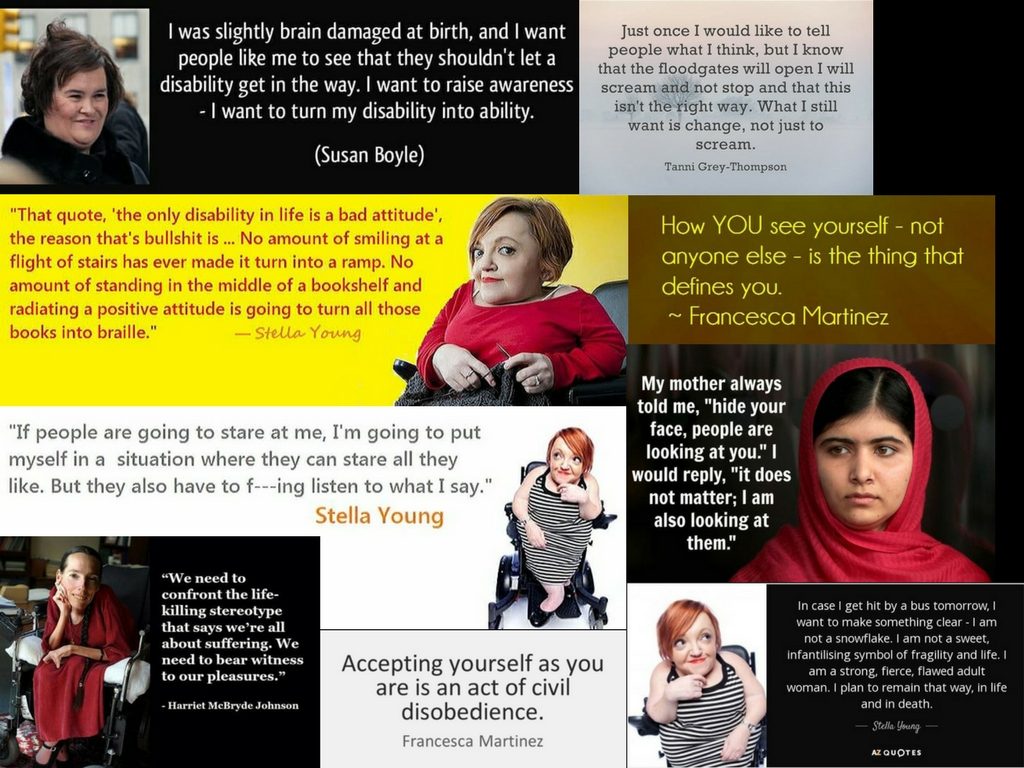
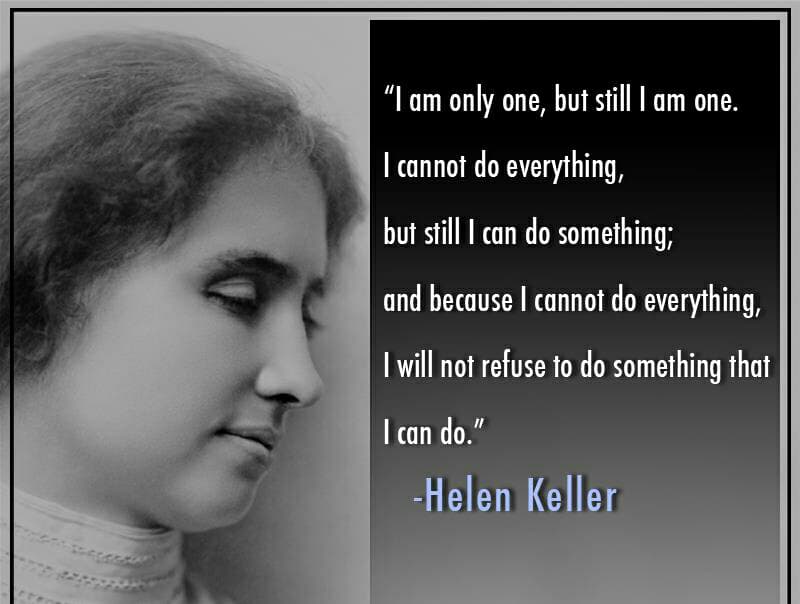
To celebrate #InternationalWomensDay, here are some motivational words of wisdom from just a few of the many inspiring women throughout history.

These women advocate equality, inclusion and disability awareness.

Above: Deaf-blind American author and political activist, Helen Keller (1880 – 1968).

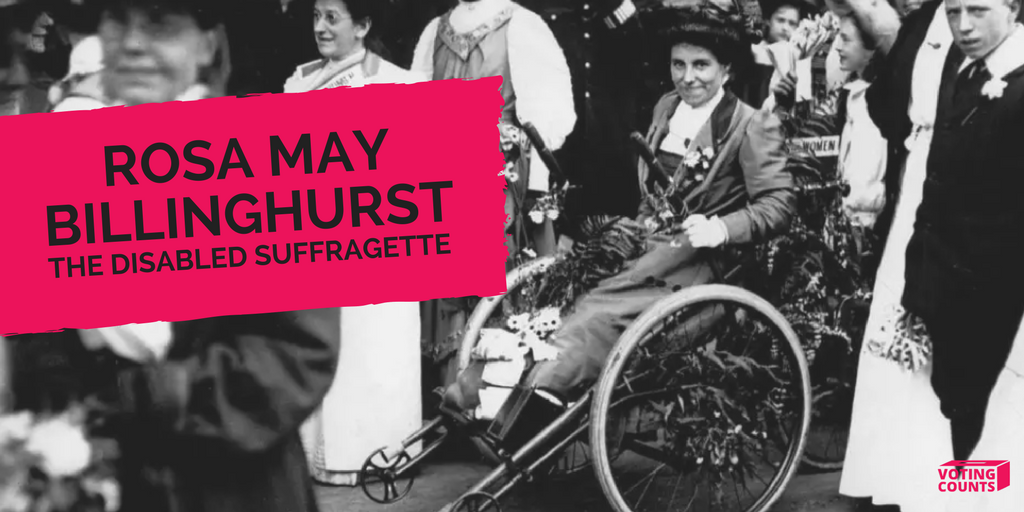
Above: Rosa May Billinghurst (1875 – 1953), was a women’s rights activist known as the “cripple suffragette”. She suffered polio as a child and, as a result, was left unable to walk.


What International Women’s Day Means to Me

Light is often shone on independent career women and high-profile personalities; celebrities, public speakers and so-called ‘world changers’.

Of course, these women deserve our respect and applause. But I’d like to also draw attention to the “ordinary” every-woman.

These are the women we are not aware of. We don’t know their names or their stories. These are the women behind the scenes who just get on with life, however challenging.

The single mum’s.

Those living with debilitating conditions and struggle to get out of bed each morning.

Those caring for multiple family members, who don’t have the option to go on holiday or pursue a career.

Women who are relied upon by disabled children and elderly relatives, and have no support or recognition.

Many suffer and struggle in silence. They simply get on with their lives without any fuss or complaint. These women deserve to be celebrated too!

They play a vital role in society – one that takes endurance, tenacity, strength of character and sheer grit. It takes a special kind of person to achieve this.

So remember, you don’t need to change the world to deserve respect and recognition. Being loved unconditionally, appreciated and making a difference to just one person is EVERYTHING!


Related Blog Posts:

International Women’s Day 2018

Interview | The Trailblazing Women of Muscular Dystrophy UK

Valentine’s Special: Part 1

Disability & Dating ~ Q&A
Four women with different forms of muscular dystrophy answer questions on body confidence, dating, sex and relationships…

*Names have been changed

1. Do you identify as a sexual being?

Becky, 22, SMA Type 2: “Of course! I have fully functioning sexual organs and like anyone else, I have sexual desires. Having a physical disability, like mine, does not affect either of those.”

Amy, 30, Congenital Muscular Dystrophy: “Yes, most definitely. We all have wants and desires regardless of our physical abilities.”

Sarah, 27, SMA Type 2: “I’ve always felt like a sexual being and desired an intimate relationship. However, throughout my teenage years and thereafter, I didn’t imagine anyone would want that type of relationship with me, so I relied on myself for any sexual needs.”

Laura, 24, Limb Girdle MD: For years I actually didn’t see myself as a sexual being because I hated my body and I truly believed that no one would ever want to be with me. It wasn’t until I reached my twenties and craved intimacy that I actively searched for a sexual partner.
2. How does your body confidence (or lack of) affect your sex life?

Becky, 22, SMA Type 2: “I would say that my lack of body confidence is the only thing that affects my sex life. From the age of 16, I’ve struggled with social anxiety which stems from the dislike of my body and the way my disability has ‘deformed’ it. I have such a fear of rejection that I have missed many opportunities to start relationships (casual and serious). Therefore, my sex life has been affected. This issue was actually one of the reasons my last relationship ended. I pushed away my partner to the point that he couldn’t deal with my constant queries and need for reassurance. I was a nightmare!”

Amy, 30, Congenital Muscular Dystrophy: “Body confidence issues and insecurities definitely held me back from experimenting sexually. I’ve only had one sexual partner and he is my fiancé of the past 7 years, despite having two previous long-term relationships beforehand.”

Sarah, 27, SMA Type 2: “I have very low body confidence and some days I really hate how I look. But it has never really affected my sex life. I always find the first encounter with someone new quite stressful and it gives me a lot of anxiety at the thought of someone seeing my wonky body. But no guy has ever said anything negative – quite the opposite!

I’m now in a long-term relationship with someone who fully understands my body hang-ups. He’s patiently trying to improve my body confidence and even if I don’t believe it, it’s pretty awesome having someone telling me I’m beautiful at least once a day.”

3. Have you tried online dating? What are your biggest concerns/challenges when it comes to dating? Do you disclose your disability?

Becky, 22, SMA Type 2: “All my dating experience has been via online apps. Every date I’ve been on has actually been really positive and I’ve met some nice people. As most girls/guys find, it can be hard to distinguish who is genuine or not when talking to people online, and it can also be hard to figure out their intentions. This can be even harder when a disability is involved, but I choose to disclose my disability in my bio. I only write a short sentence, usually something sassy like, ‘yes, I do use a wheelchair’. I also make sure I show at least one full-body photo. This relieves the anxiety of telling someone and also means that whoever messages me already knows about my disability. However, I do sometimes receive disrespectful or patronising comments but I love challenging them.”

Amy, 30, Congenital Muscular Dystrophy: “Most of my dating experiences have been using online platforms. Coming from a sheltered upbringing, meeting people at bars and clubs just didn’t seem realistic. I actually prefer online dating as it forces potential dates to see the best of you (unlike face-to-face where they often judge you on your disability).

I did go through a rough patch with dating sites, whereby if I mentioned in my profile the fact I am a wheelchair-user, most guys would open with, “Hi, I’m not being a dick but can you still have sex?”

I do believe sex is part of a healthy relationship but when guys put so much emphasis on that and that alone, it leads me to think they all want the same thing. For this reason I stopped disclosing my disability in my profile, and told them only after chatting for some time. Some accused me of leading them on, but to me this suggested they have a major issue with dating someone with a disability.”

Sarah, 27, SMA Type 2: “I’ve been dating a long time. Excitingly, I got my first boyfriend at school (Year 7), and I thought I was winning. It lasted a whole 3 days and we didn’t even get as far as holding hands.

It wasn’t until I moved away to university that I wanted to date, so I started to try online apps. During those 4 years, I only had a handful of dates and none went anywhere – although I did eventually get my first kiss aged 18.

I really started to date when I moved to London. I met all my dates online and I was quite surprised how many people wanted to go out with me. Most didn’t progress beyond the first date, though some were a lot more successful. I did feel vulnerable but that’s normal for anyone meeting someone they’ve talked to over the internet.

I made my disability obvious on my profile. I’m not saying it should be, but it can be a big deal for potential partners, and I didn’t want to waste my time with guys who couldn’t deal with it. My most successful dates never mentioned my disability in messages, it was just accepted.”

Laura, 24, Limb Girdle MD: I never had the confidence to approach guys in a conventional way. And so all my dating experience has been initiated online. It’s somehow easier to get to know people online before meeting in person. That way, they aren’t immediately confronted with my disability (which I think tends to intimidate most able-bodied guys). However, I have always included photos of myself in my wheelchair on dating profiles.

4. What frustrates you most about dating?

Becky, 22, SMA Type 2: “The most frustrating thing I find is effort. That sounds terrible but when talking to someone new, it takes a while to answer questions they may have and inform them correctly. This then comes with the fear of scaring them away or being rejected because of it.”

Amy, 30, Congenital Muscular Dystrophy: “Not knowing when best to disclose my disability and the anxiety over their reaction. As for the date itself, I worried about them seeing me struggle with something physical as I don’t want to be perceived as weak.”

Laura, 24, Limb Girdle MD: Honestly, the rejection! Online dating can be brutal, particularly for girls in wheelchairs! It takes a lot of determination to pick yourself and try again. But the effort does pay off in the end.”

5. What do you look for in a potential partner? Do you actively seek an able-bodied/disabled partner/someone with a similar disability to your own?

Becky, 22, SMA Type 2: “In a potential partner I look for someone who is open-minded and doesn’t take life too seriously. Someone who is honest, empathetic and obviously gives good cuddles! I wouldn’t say I actively seek an able-bodied person but dating somebody with a disability as severe as mine obviously adds difficulties.”

Amy, 30, Congenital Muscular Dystrophy: “I’ve always wanted a partner who has some form of disability. I have always valued and sought the emotional support and connection it would offer. It wasn’t until I stopped looking that I found someone who fit the bill completely. It was important to me that I found someone who could understand me.”

Sarah, 27, SMA Type 2: “While I have dated disabled people, my preference was always for someone without a disability. In particular, I didn’t want to date someone with care needs like myself. I think alone time with a partner is really essential and I wouldn’t want to be in a situation where a carer always had to be around.”
6. What were/are your biggest concerns prior to losing your virginity?

Becky, 22, SMA Type 2: “Apart from the typical concerns, I had additional worries. Positioning was the main one. I was worried about discomfort and being considered ‘boring’ due to my physical limitations. I was also concerned that the person I lost my virginity to wouldn’t be patient with me.

I had no idea what positions were possible and so trusting the person to be patient with me was a must. Being vulnerable was also a concern. When I’m in bed, I have no escape, meaning that anyone could easily take advantage of me.”

Amy, 30, Congenital Muscular Dystrophy: “My biggest concerns were not being able to do certain positions without my partner doing most of the work, and being unable to sexually satisfy him due to my muscle weakness.

Now several years on I’ve realised sex is more about creativity and trust, with those two things you can achieve almost all your sexual desires. Plus it isn’t all about intercourse. My only concern remaining is that my partner may one day prefer an able-bodied girl and get tired of thinking outside the box to make certain sexual activities possible.”

Sarah, 27, SMA Type 2: “I think my biggest concern was the uncertainty and not knowing my body’s limitations. I had no idea if I’d be able to get into a good position to have sex. I was also concerned whether I’d find the right person who would be patient enough to work together with me.”

7. Do you think your first sexual experience was more challenging/awkward purely because of your disability?

Becky, 22, SMA Type 2: “I would actually say no. For anyone, having sex for the first time is awkward. It’s all new feelings and sensations that no one can prepare for and sharing something intimate and new with someone. The only challenge I had was finding an easy position, due to my lordosis, but I was prepared for that.”

Amy, 30, Congenital Muscular Dystrophy: “It was more awkward purely due to my anxiety over what their reaction would be to my limitations in the bedroom. We didn’t talk beforehand, which I regret as it may have helped me relax, but I was embarrassed by the things I thought I would struggle with regarding intercourse in particular.”

Sarah, 27, SMA Type 2: “It was definitely more challenging and awkward. Looking back, I regret it happening when it did and with who. Despite dating quite a few different people prior to losing my virginity, I didn’t think any guy would want to have sex with me. When he did, I felt like I couldn’t say no because I didn’t think I’d get the opportunity to experience it again. I was lucky though that it was his first time too.

The whole thing was awkward. In an attempt to be romantic, he picked me up off the sofa and carried me to the bedroom but the flat corridors were super tight so he whacked my head on the door a few times. Then my floppy, bendy limbs made it difficult for him to get me undressed. The awkwardness carried on until I was re-dressed and back in my wheelchair.”

8. What are the most common misconceptions you have faced?

Becky, 22, SMA Type 2: “The main one is that I can’t have sex, full stop. On dating apps and on nights out, I am constantly asked if I can have sex. The sad thing is, some people are genuinely shocked when they learn that I can. Another misconception is that sex with a disabled person can be boring. Or that the disabled person is fragile and can be broken. These are both totally inaccurate.”

Amy, 30, Congenital Muscular Dystrophy: “That I am asexual because I’m a wheelchair-user or I have no sensation and therefore there’s nothing in it for me. I AM sexual, I do enjoy sex in a loving relationship (never been a one night stand kind of girl) and I CAN feel!”

Sarah, 27, SMA Type 2: “While online dating, I was often asked if I could have sex. Quite a few people I dated assumed I was paralysed and so I they would question if I had any sensation.”

9. When having sex, how do you overcome the physical limitations associated with your disability?

Becky, 22, SMA Type 2: “I overcome physical limitations by being honest with my partner. I’m always upfront with what I may need help with but also what I don’t need help with. It’s good to talk about challenges that may arise but also not to dwell on them. I sometimes just find it easier to mention things when actually getting into it. Talking and worrying too much can ruin the mood completely.”

Amy, 30, Congenital Muscular Dystrophy: “I did a lot of research into sexual positions for wheelchair-users. This coupled with knowing my own body’s limitations gives me a good sense of my capabilities in bed. In the areas I knew I’d struggle, my adaptive personality takes over and we just get creative using the ceiling track hoist. Oral, mutual masturbation, sensual massages etc are just as satisfying as intercourse.”

Sarah, 27, SMA Type 2: “I think having the right partner is key. If you’re not comfortable with them, it makes overcoming obstacles really difficult. You need to be with someone who you can be fully open with about your desires and that person needs to be willing to work within your limitations.”

10. In terms of sexual intercourse, what can’t you do that you wish you could?

Becky, 22, SMA Type 2: “There are some positions I wish I could do that are off-limits. The majority are adaptable but taking the lead would be fun. I can do that to some extent but not completely. Being spontaneous is also something I wish I could do – being able to jump into bed with someone without the whole process of hoisting and undressing. Also, having privacy and secrecy is something I’d like.”

Amy, 30, Congenital Muscular Dystrophy: “I can’t do certain positions unaided because my trunk muscles are too weak for me to be on top. I get frustrated at times with the restrictions of the ceiling hoist. But there are loads of other positions, so I don’t feel I miss out just because 1one or two are not possible.”

Sarah, 27, SMA Type 2: “There’s so much I can’t do, but the main thing I wish I could do isn’t a sexual thing. I really wish I could roll over by myself and give my boyfriend a hug and a kiss in bed without him having to help. In the past, I did feel like I was missing out on things but with the right partner, I don’t anymore. We’re in a really happy and loving relationship and even if I can’t do much in bed we still have a great time!”

Laura, 24, Limb Girdle MD: Obviously, as a full-time wheelchair-user there are things I can’t do, like doggy-style and being on top. But I find that you just have to be creative, have fun and laugh through the awkwardness! I do so wish I could masturbate but I don’t have the strength in my hands.”

11. What advice would you offer to other disabled people who are sexually inexperienced?

Becky, 22, SMA Type 2: “Don’t over-think things. It can be easy to think about all the difficulties you may face or embarrassing moments you may have but don’t let that have a hand in you missing out on sexual relations. On the other hand, make sure you trust whoever you’re intimate with. Even if it’s a one night stand, ask some trigger questions to get an idea of how they will treat you. But honestly, just have fun. Sex is great and everyone deserves to experience it.”

Amy, 30, Congenital Muscular Dystrophy: “Communication is essential. Think outside the box, use props for support and be open-minded. Practice, practice, practice and have fun.”

Sarah, 27, SMA Type 2: “Get used to having to communicate your needs, don’t just expect your partner to guess what you can and can’t do in bed. It’s also important to communicate what your likes and dislikes are. But probably my most important piece of advice is, don’t rush into things. There’s so much pressure on people to lose their virginity that it can make you feel like a loser if you haven’t had sex. It’s not for other people to dictate when the right time is. If someone comes along who wants to have sex with you, don’t do it just because you think you should.”

13. Are there any particularly funny sexual episodes you’d like to share?

Becky, 22, SMA Type 2: “My ex and I always struggled to find time alone together, due to the fact I share a room. We had to take advantage whenever possible, especially during the honeymoon period! We had a few spare minutes in my van (an advantage of having tinted windows!) and so I started giving oral as he unbuttoned my shirt. Suddenly he told me that my PA was getting closer and quickly sat in the passenger seat, making sure he was decent. He totally forgot that I couldn’t button my shirt back up until he looked back at me, his eyes wide, as my PA opened the door. He quickly moved in front of me, blocking me from her view as he buttoned me back up. We just pretended that nothing had happened and the PA still doesn’t realise!”

Amy, 30, Congenital Muscular Dystrophy: “My first time was in a hotel room in Birmingham. Little did we know the walls were paper thin and a family with young children were next-door. The following morning, I overheard the parents complain of a couple going at it so loudly the night before, it kept their kids up! I was mortified while my partner thought it was hilarious.”

Sarah, 27, SMA Type 2: “My boyfriend and I were on the sofa watching TV when my PA said she was popping out for a couple of hours. Clearly we wanted to make the most of this time alone. While he could undress me just fine, the re-dressing was slightly challenging. When my PA came back she said, ‘what the hell has happened to you clothes?!’”

Laura, 24, Limb Girdle MD: “Me and my then partner tried to use the hoist so that I could be on top. But as soon as he released the straps, I fell on top of him like a sack of potatoes and squashed him. But we laughed a lot!”


Coming Soon: Disability & Dating ~ The Boys!
Interview | Kat Pemberton

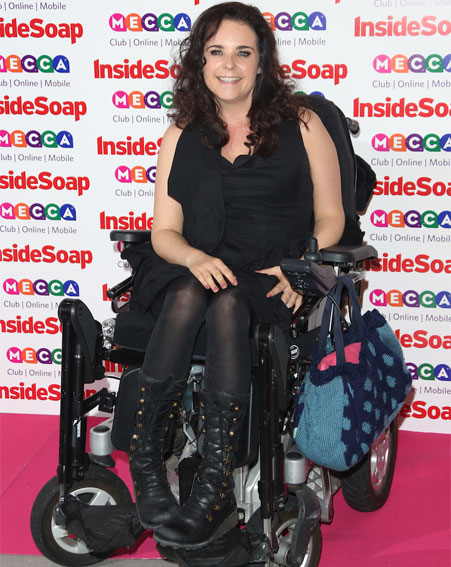
Image description: photograph of Kat Pemberton in her powered wheelchair.

“My life is so much more than my disability!”

Kat Pemberton is a successful Vlogger, disability activist and model for Zebedee Management.

The 21 year-old who has Spinal Muscular Atrophy Type 2, moved from the Ukraine to England at the age of 6. She currently lives in Bradford, Yorkshire with her Mum and younger sister.

Kat was good enough to talk with me about life with a disability, her experience as a physically disabled model, her growing YouTube channel and the issues she campaigns for.


Spinal Muscular Atrophy

1. Kat, please tell us about your disability and how it affects you.

I was diagnosed with Spinal Muscular Atrophy type 2 when I was only a year old. This is a genetically inherited, progressive muscle-wasting condition.

I was told that essentially my spinal cord doesn’t communicate with my muscles properly. This means that over time my muscles slowly lose any strength they once had.

SMA2 affects all my muscles. This limits my mobility and my breathing. I’ve never had the ability to walk but I used to be able to crawl until around the age of 10. I’m now non-ambulant and a full-time wheelchair user.

When I was younger, I was often in and out of hospital because I struggled to fight off infections. A common cold would often develop into something much more serious. As a result, I was unable to attend school and was home-tutored instead.

I guess I’ve had quite an unconventional, drama-filled life, but I don’t know any different. This is my normal.

Life as a disabled Model

2. How did you become a model and what does this mean to you, as a young disabled woman?

I’ve always enjoyed being creative and experimental with my style. Not only did Instagram provide a platform for that creative outlet, it also encouraged me to express my style and share my life and experiences with people who are leading similar lives.

When I was younger, I had never seen anyone with a disability in the fashion world, and so I never imagined that someone like myself, with a physical disability, could be a model.

Zebedee Management

One day, Instagram suggested that I follow Zebedee Management. After scrolling through to find out more about them, I quickly fell in love with what they’re all about and instantly knew I wanted to be a part of their family.

I applied after attending a fashion show hosted by Zebedee Management, and was then invited to attend a shoot. I never imagined myself as a model but being accepted by Zebedee has given me a massive confident boost!

Joining Zebedee as a disabled model has made me proud to be able to represent young disabled women, like myself, in the media. This opportunity has enabled me to empower and act as a role model for the younger generation.

Campaigns

I feel privileged to have worked on three wonderful campaigns, all of which are very special to me.

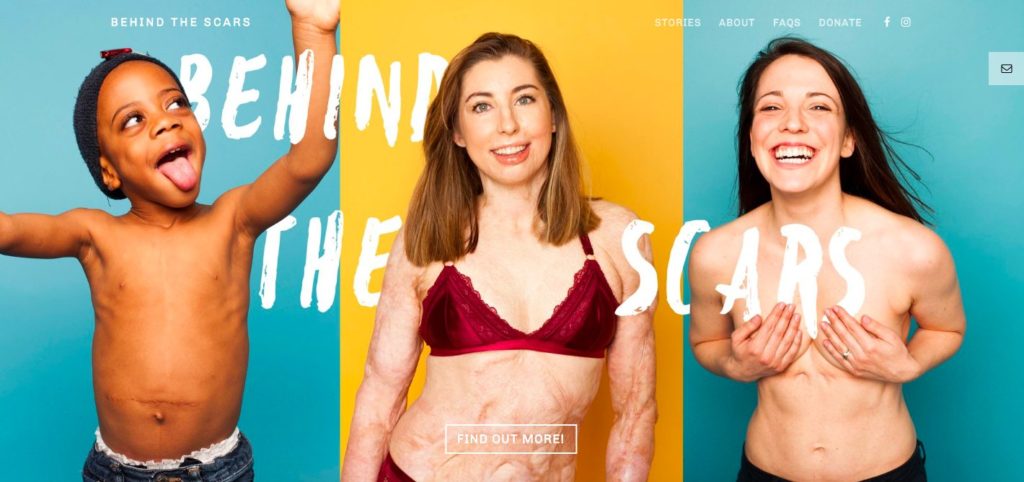
Image description: campaign photography, by Sophie Mayanne, for the #BehindTheScars project.

In February 2018, I got to work with photographer Sophie Mayanne on the Behind The Scars project.

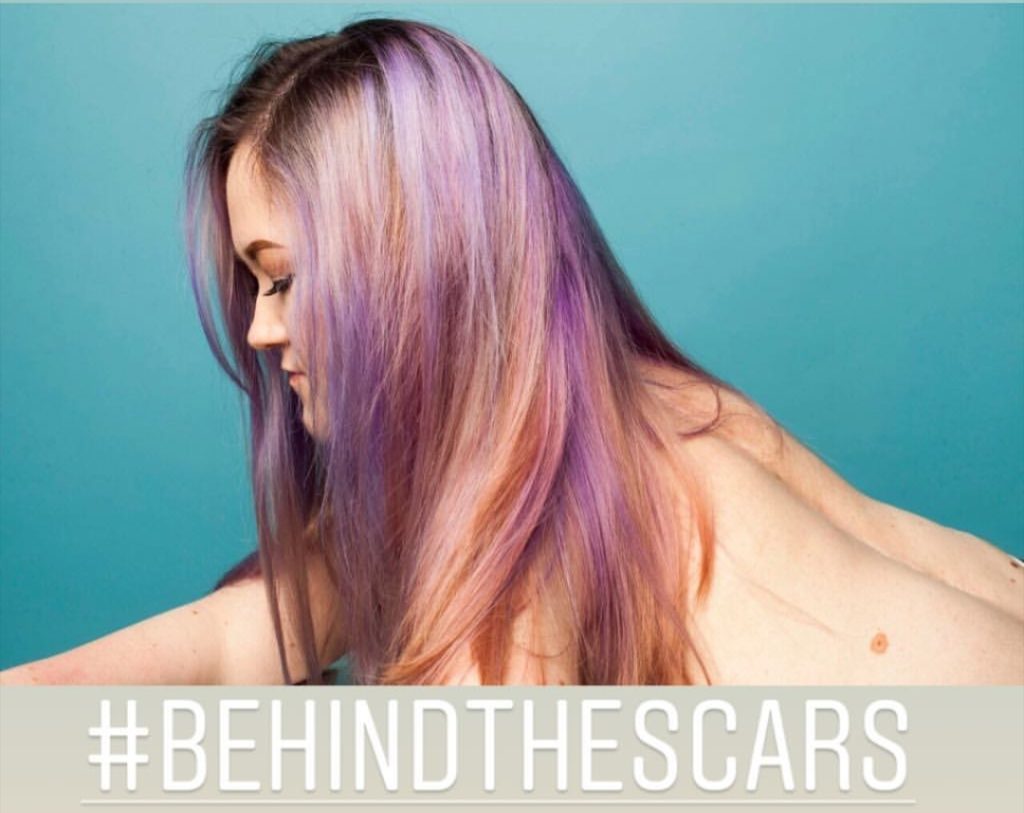
I’ve made it my mission to embrace and love my body after years of self-loathing. It was therefore a really special experience for me, especially to have found the confidence to bare all on camera and share my scoliosis story.

Image description: campaign photo of Kat Pemberton. #BehindTheScars

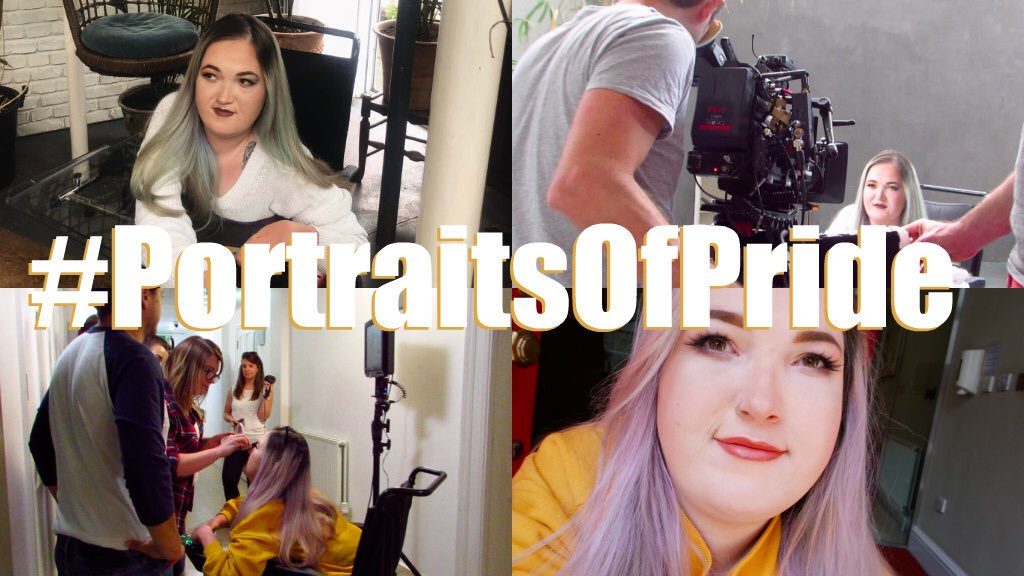
I also participated in the amazing Portraits of Pride campaign for HSBC, who sponsored London and Birmingham Pride.

Image description: a collage of images depicting Kat’s experience with the #PortraitsOfPride campaign.

I was fortunate to be chosen as one of their ambassadors, and to work alongside seven very talented people. The four LGBTQ+ campaigners, including myself, were partnered with four incredible artists who painted our portraits. The portraits were then displayed throughout the UK during the Birmingham, London and Brighton Pride weekends.

Image description: a portrait of Kat Pemberton, painted for the #PortraitsOfPride campaign.

Our portraits went on to be sold at auction and all proceeds went to LGBTQ+ charities.

Visibility, diversity and inclusion is so important, and I’m so proud to be able to share my perspective and represent those with disabilities in the LGBTQ+ community. Unfortunately I do believe that we are underrepresented and I’d love to improve this by talking about my sexuality more.

It is only two years since I came out, so I’m still learning about myself and the community. I’m very fortunate that my Mum accepts me and my sexuality, although my family back home in the Ukraine are not yet aware.

YouTube Vlogger

3. Kat, could you please tell us about your Youtube channel?

Image description: Kat’s YouTube banner.

I started vlogging because I wanted to share the highs and lows of my life, as a young disabled woman living with SMA2. Not only that; I also wanted to raise awareness of the fact that my life is actually pretty ordinary for a 21 year-old woman, despite being a full-time wheelchair user. I live at home with my Mum, younger sister and our dog named Khloe Kardashian. I love to go out shopping, clubbing, meeting friends and traveling.

I was inspired to start my own Youtube channel after I became obsessed with other vloggers whilst in hospital. Back in 2012, I was subscribed to many of the famous ‘Brit crew’ content creators, such as Zoe Sugg and Louise Pentland. I found myself watching their YouTube channels for hours and I always knew it was something I wanted to pursue.

I’m proud to be a disabled creator and put the platform to good use by sharing my experiences. I hope my contribution offers a realisitic and informative insight into what life is like with a disability, and that society learns to understand us (disabled people) better.

Image description: a collage of screenshots from Kat’s YouTube videos.

I love the YouTube community and feel like it’s a second family. I can definitely see myself working in the media in the future.

I also love that YouTube allows viewer anonymity. Anyone can observe my vidoes without needing to engage with me directly, thereby eliminating any potential awkwardness.

Some people are curious to ask disability-related questions but are often too shy or afraid to do so. They might be scared of saying something that may come across as inappropriate, or they may not know how to address topics appropriately.

I’m open to discussing most topics, however taboo they might seem. For me, it’s about trying to encourage people to interact and engage with me and my videos, as I love to educate, inform, raise awareness and simply chat with curious folk!

Disability Activist

4. You describe yourself as a disability activist. What are the issues that are most important to you?

I grew up feeling super self-conscious about my disability, to the extent I would actually try to ignore it in the hope that one day everything would be ‘normal’. But when you think about it, what is ‘normal’, anyway?

I believe that we should embrace our differences, encourage acceptance and celebrate diversity in all its forms!

I think that society in general still interacts with us (disabled people) in a very condescending and neglectful manner. People are either sweeping us under the rug, or using us as tokens of diversity and not really accepting or understanding our lifestyles. It’s 2018 and frankly, it’s tiring!

I’ve been involved with a number of opportunities, such as speaking on ITV national News about my short film, which I released last year with the help of Fixers UK. I also attended an event in London with Fixers UK, where I spoke to sponsors about my film and promoting disability awareness.

https://www.youtube.com/watch?v=A_Bp9kFNim8)

Following that, I modelled for the BooHoo ‘All Girls’ campaign to promote diversity in society.

Image description: Kat Pemberton modelling for the Boohoo #AllGirls diversity campaign.

I have also presented talks, and held workshops with students and tutors in schools and colleges. As well as participating in panels at the WoW festival, I recently took part in a discussion for BBC 5 Live about how disability can be better represented in the fashion and beauty industry.

Image description: Kat speaking at the WoW festival.

I’d like to thank Kat Pemberton for taking the time to answer my questions.
Twitter, Facebook, Instagram, YouTube

Tricia Downing | Paraplegic, Sports Woman & Novelist

Fiction novel ‘Chance for Rain’ shows disability experience for what it is: another version of the human experience

Tricia Downing is recognized as a pioneer in the sport of women’s paratriathlon, and as the first female paraplegic to finish an Iron distance triathlon. She has competed both nationally and internationally and represented the United States in international competition in five different sport disciplines: cycling (as a tandem pilot prior to her 2000 accident), triathlon, duathlon, rowing and Olympic style shooting. She was also a member of Team USA at the 2016 Paralympic Games.

Tricia Downing

Tricia featured in the Warren Miller documentary, ‘Superior Beings’ and on the lifestyle TV magazine show, ‘Life Moments’.
Additionally, she is founder of The Cycle of Hope, a non-profit organization designed for female wheelchair-users to promote health and healing on all levels – mind, body and spirit.
Tricia studied Journalism as an undergraduate and holds Masters degrees in both Sports Management and Disability Studies.
She currently lives in Denver, Colorado with her husband Steve and two cats, Jack and Charlie.

Visit Tricia: www.triciadowning.com


Love and disability: Do the two actually go together? In the eyes of 32 year-old Rainey May Abbott, the uncertainty runs high. But with a little arm twisting, this paralympic skier embarks on an adventure that takes her completely out of her comfort zone…

Tricia Downing: “Rainey May Abbott came to me one night as I was drifting off to sleep and wouldn’t leave me alone – until I got up and started to write.”

“I never intended to write a fiction novel. My first book, the memoir, ‘Cycle of Hope’, was a feat in itself for me. I never had enough confidence in myself that I could write and publish a book. Fortunately, my expectations were reasonable and I really had only one goal with that book; to share the complete story of my accident with those who attended my motivational speeches and were intrigued enough to want to know more after hearing me speak on stage for an hour.”

“On September 17, 2000 I sustained a spinal cord injury. At the time, I was a competitive cyclist and was out on a training ride with one of my friends when a car turned into our path. My training partner barely missed the car, as I hit it square on. I was launched off my bicycle, landed on my back on the windshield, and fell to the ground. I was paralyzed on impact.”

“I was 31 at the time, and just beginning to get my stride both professionally and personally. The accident turned my life upside down. I had to learn to live life from a wheelchair, use my arms instead of my legs, create a new body image and not only accept myself despite my disability, but to believe others would accept me too.”

“Will anyone actually love me if I have a disability?”

“Fortunately my question was answered only four years after my accident when I met the man who would become my husband. However, I have found through talking to many other women in my position, that this concern is not only real, but seems to be pervasive in the disability community. Is it possible to find love when you don’t fit the mold of the typical woman regarded as beautiful in our society?”

“When I imagined Rainey in my dreams that night, I knew her plight and I could empathize with her fear when it came to relationships. And with that, the story of ‘Chance for Rain’ was born. So too was my desire to see more disabled characters in literature.”

“I think,  so often many people with disabilities feel invisible. We aren’t seen on the cover of magazines, in the movies or books. Unless, of course, we’re the tragic character or overly inspirational and defying all odds.”

“My goal with Rainey was to show that she could have a normal existence while embodying a fear that is not unique to women with disabilities. I think at one time or another, every woman has grappled with her body image or desirability. Rainey just happens to have another layer of complexity to her: her life is not as common as the popular culture ideal.”

“I hope my novel will give readers a new perspective on disability, love and relationships as I continue what I hope to be a series of stories featuring characters with different disabilities, navigating the ordinary, complex, and the unknowns of life and love.”


Chance of Rain

Elite athlete Rainey Abbott is an intense competitor, but inside she feels a daunting apprehension about her chances of finding true love. Her life as a downhill skier and race car driver keeps her on the edge, but her love life is stuck in neutral. A tragedy from her past has left her feeling insecure and unlovable.
Now that she’s in her thirties, Rainey’s best friend Natalie insists she take a leap and try online dating. Rainey connects with ‘brian85’ and becomes cautiously hopeful as a natural attraction grows between them. Fearful a face-to-face meeting could ruin the magic, Rainey enlists Natalie to scheme up an encounter between the two whereby Brian is unaware he is meeting his online mystery woman. Rainey is left feeling both guilty about the deception and disappointed by something Brian says.
When they finally meet in earnest, Rainey’s insecurities threaten to derail the blossoming romance. As she struggles with self-acceptance, she reveals the risks we all must take to have a chance for love.

‘Chance of Rain’ by Tricia Downing is now available to buy from Amazon

Interview | Author Amberly Lago

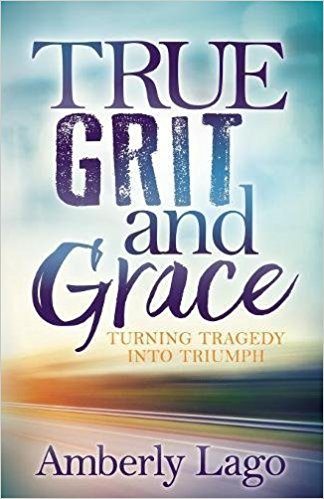
True Grit and Grace: Turning Tragedy into Triumph

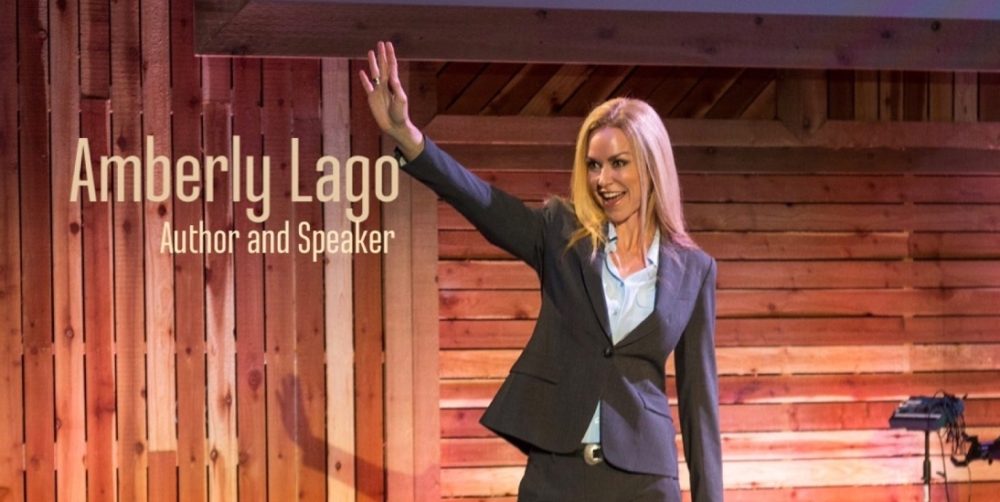
Former athlete and professional dancer Amberly Lago suffered a horrific motorcycle accident in 2010, which severed her femoral artery and shattered her right leg almost beyond repair.

Despite her debilitating, life changing injuries, Amberly has transformed her life and is now a fitness trainer and motivational speaker, inspiring thousands with her resilience and ability to thrive.  

In her remarkable memoir, ‘True Grit and Grace’, this Texas girl instills hope to keep moving forward by sharing the tools and strategies that have worked for her.

The determination, defiance and gratitude she demonstrates encourages readers to find resilience in their own difficulties. By refusing to give up, Amberly has admirably commited herself to regaining her active lifestyle, thereby proving it is possible to hit rock bottom and still find the strength to get back up.


1. Amberly, could you please tell us how your disability affects you and how you continue to cope with ongoing, chronic pain?

Following my motorcycle accident in 2010, I was diagnosed with Chronic Regional Pain Syndrome. CRPS is known as “the suicide disease” because it causes constant chronic pain. It’s ranked highest on the pain scale and has no known cure. When I was first diagnosed, I was told I’d be permanently disabled and wheelchair-bound.

At first I lived in denial and pretended nothing was wrong. Behind my smile, I was dying inside from physical and emotional pain. Everything I read about CRPS left me feeling hopeless. Still, I continued moving forward, despite the feeling of a vice grip on my foot and battery acid through my veins. I tried every kind of treatment for my pain, including a spinal stimulator, nerve blocks, ketamine infusions, Eastern and Western medicine, and anything that claimed it could bring me relief.

It wasn’t until I accepted the fact that I had CRPS and what I call my “new normal” that I began to show myself the self-love and self-compassion I needed to start to feel better. I wish I could tell you I found some magic pill or movement that relieves my pain, but the truth is, every day is different, and so are my pain levels. What works some days doesn’t always work the next, so I just keep trying, and doing, and praying.

When I am in pain, I go through my list of helpful tools. There is no particular order.

I practice mindfulness, meaning I do whatever I can to stop thinking about and focusing on my pain. I surround myself with positive people. No more doggy downers, only puppy uppers!

I count my blessings and practice gratitude.

I give myself permission to rest on a flare day and remember that I am doing exactly what I need to do. I am recovering.

I eat an anti-inflammatory diet.

I am on a sleep schedule (and yes, this means that I have an alert on my phone that tells me when it’s bedtime).

I am still learning to meditate.

I breathe deep breaths.

I pray.

I do everything I can to be of service to others. When you focus on the well-being of others, your self-pity disappears as you improve the quality of someone else’s life.

Then I repeat. Instead of allowing my pain to make me bitter, I do my best to appreciate everything I have, no matter how big or small. I will focus on the good in my life and let that be my medicine.

2. You endured incredibly trying times prior to your motorcycle accident, including parental divorce and sexual abuse. How has maturity and resilience helped you since your accident?

I learned from a young age to “cowgirl up” because at the time, there was no alternative. Dwelling on why reality wasn’t prettier wouldn’t have done a thing for me. It would have crippled me then, preventing me from achieving everything I wanted to and crippled me years later when I was actually crippled, preventing me from choosing nothing less than recovery. As weird as it may be to say this, I believe the pain and isolation I felt in those difficult times as a child were an ironic blessing of sorts. When you know from an early age that you’re on your own and can rely only and entirely on yourself, it’s as liberating as it is sad. But if you can take the sadness and self-pity out of it, then what you’re left with is a liberating sense of freedom—and, when trauma strikes, you don’t waste any time looking for someone to bail you out.

3. How and why did you choose to ignore and defy the doctor who abruptly told you that you would never function normally within society, not walk again?

Call it my stubbornness or my love of a good challenge or being in complete denial, but I wanted, more than anything, to chase after my daughter like a mother should and be free to do the things that make my heart sing, like hiking and exercise. Just because my body was “broken” on the outside, I was still the determined athlete on the inside. I learned to truly listen to my body and to be the healthiest I could be, despite my circumstances. We may not get to control what happens to us, but we can control how we react to it. So, getting on with my life was a series of three steps up (to the degree that I could take steps) and six steps back, both physically and emotionally. Every one of my surgeries, that totaled 34, I viewed as bumps in the road. I couldn’t think of them as anything but that. If I had, I would have given up. And nothing, not even a doctor’s advice, could get me to do that. Although I love my doctors, I had to think for myself when it came to my own health and happiness.

4. Understandably, you experienced severe depression following your accident. What was the turning point for you?  And how do you find strength and energy to turn such despair into positivity?

Somewhere in between surgeries number 28 and 34, I mentally spiraled into a deep, dark depression. I could feel myself giving up and giving in to the pain, and in that moment, I thought about my beautiful children, my family, my friends, and my clients, and realized I had better make a decision. I could go down the road of despair or down the road of peace and happiness. I immediately threw myself into a place of gratitude for all I did have in my life. Every time a negative thought crept into my mind, I replaced it with something I was grateful for. I threw myself into physical therapy and stayed active with my fitness clientele. Even though I couldn’t physically train them at first, I could still create their exercise plans and coach them over the phone. Being of service really took me out of my despair and gave me a sense of purpose and a strong feeling of connection.

5. Complex Regional Pain Syndrome (CRPS) is also often referred to as “the suicide disease” due to the fact so many sufferers take their own lives. How did you overcome the odds and move forward in order to achieve your goals and live life to the fullest?

My heart sank the first time I learned I had what is known as the suicide disease. When I found out I had an incurable disease that would leave me in constant chronic pain, I defaulted to denial; it took me years to accept that I am a woman with a disability. It wasn’t until I completely accepted my disability that I could begin to heal—not only physically, but emotionally and spiritually as well. I focus on what I can do and don’t get caught up in past accomplishments. I celebrate small victories along the way, whether being able to walk up the stairs on my own or walk on the beach with my family. I only look back to see how far I have come. I connect to my higher power every day and pray. Instead of letting my chronic pain detour me from my endeavors, I use it as a tool to connect me with others going through challenges and am reminded that I am not alone on this journey.

6. Throughout the book, you discuss the need for hope, acceptance and gratitude — to be thankful for all you have rather than looking to the past and what you have lost. Do you feel this is the key to getting the most out of life?

At first I was so caught up in my past accomplishments that I couldn’t live fully in the present moment. I went from being a dancer, athlete, and fitness trainer to fighting just to stand upright for a few seconds at a time. I was so embarrassed of my scars and tried to pretend that nothing was wrong with me. Allowing others to see my scars crushed me. Slowly, however, my perspective changed and I took ownership of my story. I then viewed my scars as battles I had won. Instead of looking down at my leg in anguish, I looked at it as a blessing. I still had my legs. Once I embraced my imperfections and learned self-acceptance, I truly began to heal and be comfortable in my own skin.

Without the traumas and heartbreaks of life I wouldn’t be able to serve the way I do now. It’s not about circumstances but about what you decide to do with them. I focus on what I am grateful for and don’t leave any room for self-pity. I make my purpose bigger than my problems.

As Albert Einstein said, “There are only two ways to live your life. One is though nothing is a miracle. The other is though everything is a miracle”. I believe in miracles.

7. Your role as a wellness coach and motivational speaker involves supporting, inspiring and advising others. Why is this so important and how does helping other people through their difficulties benefit you personally?

I wanted more than ever to get back to my passion, which is working with people, but I did wonder who would want to train with me. I felt broken. I trained fitness competitors, boxers, and CHP officers for years—and then I found myself on crutches. I now needed my clients more than they needed me. I needed to get back to work. I needed to give my life purpose above and beyond trying to walk again. Purpose was what would save me mentally, psychologically, spiritually—and, for that matter, physically. Purpose was what would get me on my feet and, someday—as I prayed—running again. I did whatever I could to get myself stronger—and then came the miracle. Business began booming, and did so quickly because people saw me in the gym, in my wheelchair or on crutches, even pushing myself from station to station in a wheelchair. I became the trainer of encouragement who told people, Yes you can! and that was how I trained them. Speaking to groups of people, whether a gathering of youth or  business professionals, about overcoming obstacles is a way of connecting, and when people connect, magic happens. I believe we need to lift others up to be better ourselves.

8. What do you hope readers will take away from reading your book?

What I have learned in life is a series of choices we make regardless of our circumstances. I could either make the choice to give up and let my life be determined by my circumstances, or fight to create something positive out of my situation. My choice is to notice the gifts life offers, which are particularly plentiful when you look for them. I believe in seeing the good in every situation and learning something from it.

I believe we can have the life we have always imagined, even if our circumstances have narrowed our possibilities. My sincere wish is that my story will help each reader claim their own power and belief in themselves and their dreams, and find their own resilience to move forward and choose a life filled with laughter and love, even when things don’t go as planned. We can’t choose what life throws our way, but we can choose to be happy and live a full life, despite our circumstances. Through our trials, we can embrace our challenges, connect to our innermost resilience, and change our perspective on life. We are all strong, but together we are unstoppable!


I’d like to thank Amberly Lago for taking the time to answer my questions so considerately.

Please visit her website to learn more about her life and work as a motivational speaker.

TRUE GRIT AND GRACE: Turning Tragedy Into Triumph by Amberly Lago (Morgan James Publishing; April 17, 2018) – Available to buy now from Amazon.

Please follow me on Twitter and Facebook

International Women’s Day 2018

Just a quick post today, to (belatedly) celebrate International Women’s Day 2018.

It is held on 8th March, every year. Here are a few quotes that resonate with me…

What does International Women’s Day mean to you?


This post comes to you a little late, since I spent Thursday 8th March in hospital having an operation – fun, fun!

I’m now on the mend and planning future blog posts.

What topics would you like me to cover?

If you have any ideas or suggestions, I would be grateful if you would leave a comment.


Please follow me on Twitter and Facebook

My Top 10 Disabled Celebs | The Girls

The Girls:

My latest article for Disability Horizons showcases my pick of the top 10 disabled FEMALE celebrities. Because, in the wise words of Beyonce, girls run the world!

*Last year, Disability Horizons compiled their top 10 disabled celeb’s, including both men and women. To avoid repetition, I have not included any of the women from that previous article.


There is a great deal of ongoing discussion and debate around the inclusion and representation of disabled people within the media. Put simply, there is not enough diversity. Still, in 2017, the vast majority of British ‘celebrities’ are able-bodied.

However, we are seeing the emergence of more and more disabled people on our television screens and in the public eye. But, how many can you name? When contemplating this very question, I realised that most of those who immediately came to mind were male – Stephen Hawking, Warwick Davies, Alex Brooker, Adam Hills, Ade Adepitan and Jonnie Peacock, to name a few.

So what about the ladies?…


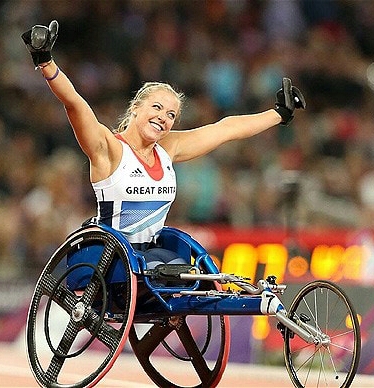
Hannah Cockroft MBE

Hannah, who has cerebral palsy, suffered two cardiac arrests within 48 hours of birth, which affected two parts of her brain. She was left with balance, mobility and fine motor impairment.

But this has most certainly not held her back. She is a gold medal-winning Paralympic wheelchair racer and 10 times world champion. In 2012 she became the first Paralympian to break a world record in the London Olympic Stadium for the 100 metres T34.

In 2014 she won the Sport Relief edition of Strictly Come Dancing with professional dancer Pasha Kovalev. That same year she launched 17 Sports Management Limited, a company representing disabled athletes.

Hannah continued her reign of success at the 2016 Paralympics in Rio where she won three gold medals.

Katie Piper

The victim of a vicious acid attack in March 2008, Katie has endured more than 250 surgical procedures to date. She suffered full-thickness burns (where both layers of the skin are destroyed) and had to wear a face mask for 23 hours every day. She also swallowed some of the sulphuric acid, damaging her throat, and was blinded in her left eye.

In 2009, the former model shared her horrific ordeal in the Channel 4 documentary Katie: My Beautiful Face. She also established the Katie Piper Charitable Foundation, which supports those with severe burns and disfigurement injuries.

In addition, she is now a successful author, television presenter, magazine columnist and philanthropist. An inspiration to many, Katie married in 2015 and is currently expecting her second child.

Cerrie Burnell

Cerrie was born with no right forearm and is severely dyslexic. Since childhood, she has always refused to wear a prosthesis or hide her disability.

An all-round entertainer, Cerrie is an accomplished actress, singer, playwright, children’s author and TV presenter. Between 2002-2008, she appeared in Holby City, Eastenders, Grange Hill, The Bill and Comedy Lab. She then transitioned to presenting, working on The One Show, The Wright Stuff and CBeebies (Jan 2009 – April 2017).

But her first appearance on children’s television was met with controversy. Some claimed that the presence of someone with a physical disability like hers could scare young viewers. In response, Cerrie spoke candidly about her disability and how it’s important that children are exposed to differences, for which she was widely applauded.

She now regularly speaks out in favour of diversity and the inclusion of disabled people in the media. In fact, she recently took part in the Channel 4 documentary Diverse NationShe’s since reached an even wider audience by presenting all the swimming events for the Channel 4 and the 2012 Paralympics.

Named by The Observer as one of the top 10 children’s presenters of all time, Cerrie has also been declared, by The Guardian, as one of Britain’s 100 most inspirational women.

A supporter of many charities including body-confidence organisation Body Gossip, Cerrie now wants to focus on writing more children’s books and acting.

Francesca Martinez

Critically-acclaimed stand-up comedian Francesca Martinez first became prominent playing Rachel Burns in Grange Hill (1994-8). Since, she has starred in BBC shows Holby City, Doctors and Extras.

But it’s not her acting that she’s most well known for, it’s her comedy. With a self-deprecating sense of humour, Francesca, who has cerebral palsy, describes herself as “wobbly”. In 2000 she became the first female to win the prestigious Daily Telegraph Open Mic Award at the Edinburgh Festival. She was also named one of the 50 funniest acts in British comedy by The Observer.

Also a campaigner and activist, Francesca has organised many charity shows and is a patron of several charities, including Evenbreak, which helps pair disabled people with inclusive employers. She’s also an outspoken opponent of government welfare reform, in 2012 launching the campaign War on Welfare (WOW), which called for an end to disability benefit cuts. She later secured the first parliamentary debate for disabled people by disabled people.

In 2013 she won the Public Affairs Achiever of the Year Award and the following year was named one of Britain’s most influential women.

Her recent sell-out comedy tour was followed by a best-selling book, both titled WHAT THE **** IS NORMAL?! She is currently working on a feature documentary of the same name.

Cherylee Houston

Screen and theatre actress Cherylee was diagnosed with Ehlers-Danlos Syndrome type III (EDS) at the age 23. She has appeared in Doctors, The Bill, Holby City, Emmerdale and Little Britain.

Her most recent role is that of Izzy in Coronation Street, which she has played since 2010, and is the soap’s first disabled character to be played by a disabled actor.

Aside from acting, Cherylee established the Manchester-based youth project TripleC, which aims to make drama accessible to all. She has spoken out about a number of political issues too, including the Conservative cuts to disability benefits and the representation of disability in the media. She also continues to raise awareness of EDS.

Anne Hegerty

Better known as The Governess in the award-winning ITV quiz show The ChaseAnne has a form of autism. In 2005, after watching a documentary about Asperger’s Syndrome and identifying with the symptoms, Anne told her doctors she believes she has the disability. It took two years for her to be officially diagnosed, during which time she lost her job as a proof-reader, due to her inability to multi-task.

Unable to pay her bills, Anne was confronted by bailiffs on New Year’s Day in 2008. She later sought advice and assistance and is to this day in receipt of Disability Living Allowance. Around the same time, her social worker encouraged her to audition for The Chase and even paid her travel costs to get there.

She is now a highly successful television personality and professional quizzer, have participated in Mastermind, Fifteen to One and Brain of Britain. Anne also talks candidly about her life with Asperger’s Syndrome and how it affects her.

Jess Thom

Jess, a comedian and public speaker, was diagnosed with the neurological condition Tourette Syndrome in her early twenties, and also uses a wheelchair. She’s most widely recognised for her memorable appearance on Russell Howard’s Good News in October 2015. The interview garnered much attention and has subsequently been viewed more than 600,000 times on Youtube – you can check it out in our article on 10 awesome disability-related videos.

In 2010 she co-founded Touretteshero, a blog that documents what it’s like living with Tourettes, featuring articles and videos. Its first production, Backstage in Biscuit Land (2014), met with critical acclaim. It has since toured nationally and internationally.

She has appeared on various television and radio programs including The Late Late Show, This Morning and Fry’s Planet Word. In 2013 she also delivered a TED talk about the misconceptions of Tourette’s and the creative potential of tics. While admitting her Tourette’s presents challenges and has been met with discrimination, she prefers to “celebrate [its] creativity and humour.”

Jess is an outspoken advocate and campaigner for disabled people’s rights. Her work often draws attention to the environmental and social barriers that prevent inclusion. An opponent of the medical model of disability, Jess insists her Tourette’s is a source of creativity, her wheelchair allows her freedom, and she is disabled not by her body but by the inaccessible environment.

Libby Clegg

Libby is a Scottish Paralympic champion sprinter, having won gold and broken records. She has a deteriorating condition Stargardt’s macular dystrophy, leaving her with only slight peripheral vision in her left eye. She is registered blind and is an ambassador for the Royal Blind Charity.

She has represented Great Britain in the T12 100m and 200m races at the 2008 Summer Paralympics, and the T11 100m and 200m in 2016 at the Paralympic Games in Rio. She is also the 2012 IPC European Champion and 2013 IPC World Champion.

As if she isn’t busy enough, Libby is also a course tutor and ambassador for Ability Training (ability-training.com), offering accredited disability specific awareness courses for sports coaches and fitness professionals.

Along with her beloved guide dog Hattie, she is helping to educate dog owners on the importance of nutrition and health. Libby raises awareness of the essential part guide dogs play in the lives of those with visual impairment.

She was recently honoured in the 2017 New Year’s honours service when she was appointed MBE for her contribution to sport.

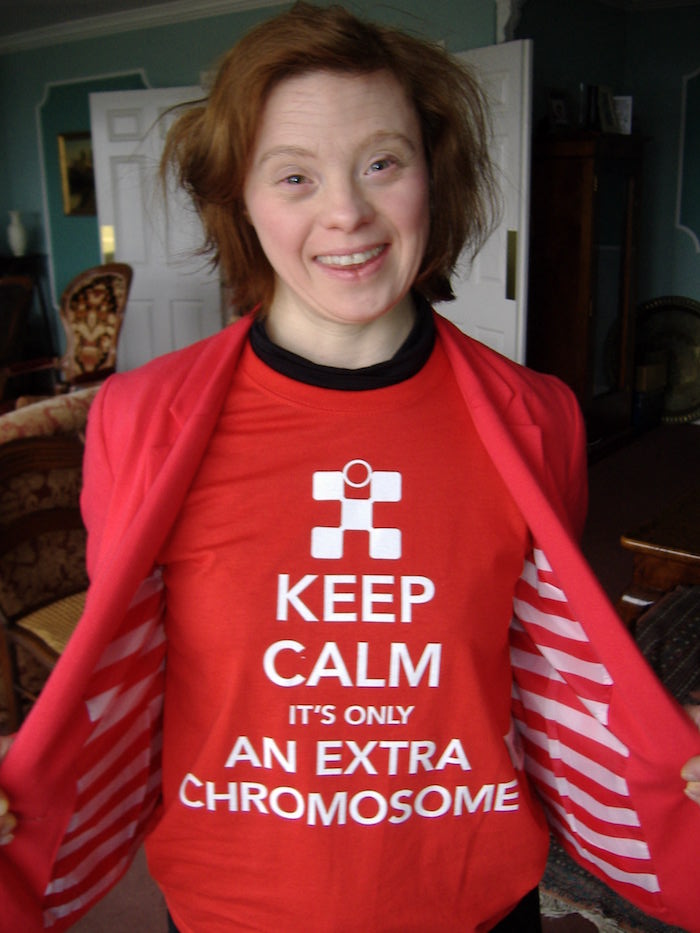
Sarah Gordy

Award winner Sarah, who has Down’s Syndrome, is best known for her role as Lady Pamela Holland in the 2010 BBC TV series Upstairs Downstairs. She has also appeared in Holby City, Call the Midwife and Doctors, as well as various short films, radio dramas, commercials and many theatre productions.

She most recently portrayed Orlando Quine in the BBC series Strike: The Silkworm, based on the books by J.K. Rowling.

She is an ambassador for Mencap and patron of Circus Starr, a performance group that does shows for disabled children. When not acting, she volunteers at her local British Heart Foundation charity shop.

Genevieve Barr

Star of the latest Maltesers advert, Genevieve was born deaf. Having never learned sign language, she lip reads, and is, in fact, a professional lip-reader for different organisations.

She had a major role in the 2010 BBC drama The Silence, and the previous year played a deaf nurse in the Channel 4 comedy, The Amazing Dermot. Following her Bafta and International Emmy Award nominations for The Silence, she went on to act in the BBC3 drama series The Fades, and Shameless on Channel 4.

A freelance disability consultant and public speaker, Genevieve works with the charities Hear the WorldAction on Hearing Loss and AFASIC – a charity for children with speech, language and communication difficulties. She also runs courses and workshops for disabled actors.


What do you think of my choices? Who would be in your top 10?

Please leave a comment and share this blog post if you enjoyed it.

Interview | Author Janine Shepherd

Here is my latest interview, with Janine Shepherd, for Disability Horizons.


Janine Shepherd: A Broken Body is not a Broken Person

Former elite athlete and celebrated author, Janine Shepherd shares her inspirational story in the best-selling memoir, Defiant: A Broken Body is not a Broken Person.

It chronicles her journey following a tragic accident that cut short her bid to compete in the 1988 Calgary Winter Olympics.

Partially paralysed and suffering life-changing injuries, Janine made the courageous decision to let go of her former life and face adversity head-on, creating a new dream for herself.

Here I speak to Janine about her journey, the challenges she has faced and how she’s reinvented herself and her outlook.

Hit by a truck in 1986 during a bicycle ride in Australia’s Blue Mountains, Janine was not expected to survive. Told by doctors that she would never walk again, nor have children, she spent the next few years rehabilitating her permanent disabilities and defying all the odds.

A mother of three, best-selling author, public speaker, aerobatics pilot and the first female director of the Civil Aviation Safety Authority, Janine speaks candidly and with humility about how and why she reinvented herself and changed her self-perspective.


Janine, please tell us about your disability and how it continues to affect you.

The accident gave me severe spinal cord injury – I broke my neck and back in six places. After extensive surgery and rehabilitation, there was just about enough nerve connectivity to be able to learn to walk again, albeit with a significant limp.

Now, in addition to significantly wasted lower leg muscles, I have limited feeling from the waist down and chronic bladder and bowel dysfunction. I also have to self-catheter a lot, which results in regular urinary tract infections. Your readers might agree that these issues are possibly the worst part of living with spinal cord injury.

‘Janine the machine’ is how you referred to your old self – the elite cross-country ski racer. Do you feel this remains a true representation of your character? If not, how would you now define yourself?

Even though I felt that my body was ‘broken’ after my accident, I realised that my spiritual essence and mental toughness remained unchanged. I soon learned that being ‘Janine the machine’ had less to do with athletic prowess than unshakeable determination and persistence. Recognising that gave me the strength to reinvent my life in a most remarkable way.

Following the accident and being unable to walk, you focused on learning to fly. In your book, you state: “I had to find something to replace what I had lost in my accident”. Why was it so important to set yourself such an ambitious goal?

We often define ourselves by things outside of us – our jobs, our relationships, the roles we play in life. When we lose those things, who we are and everything we believed in is challenged. When we experience such immense loss in life, whatever form it may take, it is very easy to slip into despair, which is what happened when I got home from the hospital. Flying filled me with so much joy and gave me the inspiration and hope that I really could rebuild my life in an unlikely and extraordinary way.

The feeling of despair was almost inevitable. You state that you suffered depression on returning home after a six-month stay in hospital. How did overcome this?

I overcame the despair by throwing myself into flying as well as my physical therapy. At first, this was more discipline than it was a spiritual or emotional triumph. I simply interrupted the pattern of depression by charting progress on all fronts, no matter how incremental it may have been from one day to the next. This helped to refocus my life and channel my depression elsewhere. Hope and application proved to be powerful antidotes to depression.

You discuss your choice to keep fighting versus letting go and accepting not only your body but also the circumstances. This led you to stop asking “why me?” but rather, “why not me?” Why was it so essential to change your perspective?

Before my accident, I had led a very narrow life in that all of my friends were athletes of some sort. In hospital, I met so many other people, whom I would normally not have met. This opened my eyes to the fact that I wasn’t alone on this journey.

Even though we came from very different walks of life, we experienced similar struggles with acceptance and recalibrating how to live life post-recovery. Equally important, we had in common the typical hopes and dreams of anyone for a ‘normal’ life once we left the spinal ward.

You have faced great adversity on a number of occasions. Having rebuilt your life following your accident, you then later experienced the upheaval of divorce and financial ruin. What gave you the strength to once again thrive and persevere despite these challenges?

I developed a philosophy very early on in my days as an athlete called ‘loving the hills.’ One of my racing advantages was that I took on the climbs my competitors dreaded with a passion. That not only made me physically stronger but mentally tougher as well.

This proved to be more than just a training philosophy; it became my choice as a way seeing and living life. Ski races and life experiences are both full of hills; loving them not only gave me a competitive edge but also developed my resilience. So when faced with a life challenge that, metaphorically, looks insurmountable, I take that on as just another ‘hill’. Loving it, not fighting it, teaches me the lessons I need in order to grow into a wiser and more compassionate person.

One of the themes of your book is the concept of disability. You emphasise the importance of believing in the power of potential and adopting a defiant mindset, so that one may not be defined by their physical limitations. Can you share your outlook on disability?

I went from being a gifted, multi-sport athlete to having to relearn how to walk. So, it took me years to finally and fully accept that I am a woman with a disability. At first I felt embarrassed by many aspects of my spinal cord injury, bladder and bowel dysfunction.

However, as I look back and see how much I have achieved, despite my challenges, and how much I have overcome, I feel like the aspect of loss in my life is no longer something to try to hide. Instead, I’m proud of being able to acknowledge my disability and put my energy into making the best use of my gifts.

Despite your many life-altering setbacks, you write with great humour, humility and encouragement. How have you managed to maintain such a positive and empathetic attitude? And do you feel that humour is important in maintaining a healthy outlook?

I absolutely feel that being able to laugh at life is an essential part of the healing process. I tell others not to take life too seriously or you’ll cloud the experience. There are so many documented mental and physical health benefits of laughter. Humour helps me to deal with chronic pain, something that remains a part of my life on a day-to-day basis.

You state that the loss of your athletic career and your physical limitations ultimately allowed you the freedom to embrace life’s potential and infinite possibilities. This is a remarkably refreshing and open-minded viewpoint. How have you ensured that you are defined by your accomplishments rather than your broken body?

I believe that life is about loosening our grip on the things that we feel entitled to. Many of the ancient teachings state that this only leads to suffering. When we let go of the life that we feel we should have, we gain the freedom to see the world through new eyes, and create a more ideal life we can only then envision. This is the gift that comes from realising that life is not about having it all, but loving it all, even the painful parts.

Finally, what do you hope readers will take away from your memoir?

I believe that each of us serves both as companion and as mirror to those we meet along the way. When we accept that we are not alone on our journey, and just how precious and short it is, we become open to seeing the world from a perspective of love and hope.

We then understand that, despite the inevitable life challenges, we always have the choice to reinvent our lives and embrace the new with a sense of wonder and joy. My sincere wish is that my story helps each reader better connect with his or her defiant human spirit. And, that doing so serves to foster the pursuit of the uniquely rich, extraordinary life that awaits every one of us.


I would like to thank the wonderful Janine Shepherd for speaking with me.

Please follow me on Twitter and Facebook

Interview | Samantha Renke

Actress, TV Presenter & Disability Campaigner

Here I interview actress, presenter and disability campaigner Samantha Renke. She reveals all about growing up with a disability and her dreams of becoming an actress despite brittle bone disease. She also discusses her involvement with Parallel London 2017.

Here is the link to the interview, originally posted by Disability Horizons.


Parallel London

The 3rd September sees the return of Parallel London, a mass-participation race for people of all abilities. Feature writer Carrie Aimes speaks to disabled actress Sam Renke, ambassador for Parallel London, about why the event is so important and why you should get involved.

Despite her disability, 31 year-old Samantha Renke moved to London five years ago to pursue her long-held dream of becoming an actress. Now a familiar face to many, she has since starred in an award-winning film, music videos, webisodes as well as the popular Maltesers television advert. The former teacher is also a columnist, disability campaigner and charity worker.

As if all this is not enough to keep her busy, Samantha was recently appointed ambassador for Parallel London. Here, we learn more about the rising star and her involvement with Parallel London, the world’s first fully-inclusive, fully accessible mass-participation event.

Life & Disability

1. Would you please tell us a little about yourself, your disability and how it affects you?

I was born in Germany to a German mother and British father. We moved to the UK when I was a baby. I studied French, German, Sociology and European Studies at the University of Lancaster before completing my PGCE in Secondary Education at the University of Cumbria.

Following this, I worked as a high school teacher for a number of years. I was also a trustee for the Brittle Bone Society for 6 years, supporting people with my condition, Osteogenesis Imperfecta (brittle bones).

I am a full time wheelchair user and my bones break very easily. I’ve had around 200 fractures starting in my mother’s womb! I get fatigue and have some breathing difficulties. I do have a PA to help me with day-to-day tasks, which is my saving grace and allows me to live my life to the fullest.

After moving to London in 2012, my debut role was playing Alice Gardiner, a mischievous disabled girl who absconds to London in the film Little Devil. I won best actress and the film won Best Film in the Diversity of Arts category at the LA Diversity Film Festival. From there, I got an agent at Visable People and have appeared in a number of projects since.

I still love my charity work and I am patron of Head2Head, a multi-sensory theatre group. I am also affiliated with some other well-known charities, such as SCOPE. I love writing and have a regular column in Posability magazine and write regular blogs for the Huffington Post.

Maltesers TV Advert

2. People may know you best from the popular Maltesers TV adverts, which aired during the Paralympics. Why did you want to be part of that, and what response did you receive?

I think it’s any actor’s dream to be part of a national commercial as it’s certainly great exposure. More than that, I knew the concept was revolutionary and I felt so excited about the positive impact the advert would have.

Apart from some online trolling, the response has been phenomenal. Every day, without fail, when I leave my flat in East London I am recognised. People want my autograph and selfies. The lovely thing is that my disability is not the reason people stare at me now.

Celebrity Status

3. You’re a celebrity who happens to have a disability. What does this mean to you, and what challenges have you faced?

I always loved drama at school and attended a number of after-school drama clubs. However, one of my teachers took me to one side and told me not to get my hopes up of being cast in an acting role. I suppose at that time, 15 years ago, she had a point – the representation of disability within the media was non-existent. Nevertheless, this was heart-breaking to hear and I dropped all of my classes.

But after being a teacher for a couple of years, I knew I wanted to pursue my passion again. I hope my story encourages more people who have disabilities to get involved in TV, film and presenting. I’d like to think that when I have my own family, my children will follow their dreams, no matter what anyone else says.

Parallel London Ambassador

4. You were recently made an Ambassador for Parallel London. How did you come to be involved with this event?

My amazing friend Daniel White and his daughter Emily, who run the awesome blog the Department of Ability, introduced me to the Parallel team and the rest is history. It is a total love affair!

5. Can you tell us more about what Parallel London is and what it means for disabled people?

Parallel London is a fully-inclusive and accessible fun run and free family festival held at the iconic Queen Elizabeth Olympic Park. Open to all ages and abilities, there are no cut-off times and no barriers to involvement.

Parallel’s inaugural event took place on 4 September 2016. We hosted over 3,000 participants, of which, 41% declared themselves as having a disability. 5,500 people attended our family festival showcasing all different types of inclusive and accessible attractions. This year it is being held on the 3rd September.

6. Why is it so important to you to be involved with such an event?

Being part of a team and having people around you who love and support you for you is so important. As a child I did not get involved in anything as much as I would have liked, and this left me feeling isolated a lot. Parallel is all-inclusive, no matter what your ability. I think this is just amazing.

7. Is there any insider information you, as ambassador, can exclusively reveal to Disability Horizons readers?

Expect some surprises! I’m going to be getting my burlesque on with the amazing Folly Mixtures and their all-inclusive Burlexercise master class. So get your feather bowers ready.

My good friend Stephen Dixon from Sky News will also be at the event presenting for Sky and hosting with yours truly. He has told me that, regardless of the weather, he will be wearing his short shorts!

8. How can we all get involved with Parallel London?

Parallel London is taking place at Queen Elizabeth Olympic Park on the 3rd September. There’s a 10km, 5km, 1km, 100m and the Super Sensory 1km walk, cycle, push or run – whatever you want to do. It’s for all ages and abilities and everybody can be running side-by-side. You can get sponsorship for any charity or cause that matters to you – so why not give it a go?!


For more information on Parallel London visit www.parallellondon.com. You can also find out all the latest information about the event by following Parallel London on Twitter.

Please follow me on Twitter and Facebook