My Search for a New Wheelchair

My Quantum 600 powered wheelchair, which has been my legs for almost 8 years, is gradually falling to pieces. I have patched it up no end with DIY repairs, and attempted to keep it going for as long as possible. But the electrics are now failing and so the chair is becoming unreliable. Consequently, I have no option but to start the search for a replacement.

As the wheelchair-users out there will know, this is never a simple task! It is a BIG decision, not least because wheelchairs are so ridiculously expensive. More so than a new car!

Throughout my life, I have had no choice but to privately fund all my wheelchairs – both manual and powered – since those offered by wheelchair services are wholly inadequate for my needs (and I suspect, most people’s).

So before committing to a purchase, I need to be absolutely certain that the wheelchair I opt for will be the right one for me.


My new wheelchair must:

– Have rise and tilt
– Be as compact as possible for indoor use
– Be durable outdoors as I live rurally


I have an appointment with my local wheelchair services on Friday 16th February. So I’m hoping they will be able to offer some useful advice and guidance, along with a voucher towards the cost.

A representative from Motus Medical has already visited my home to demo two mid-wheel drive (MWD) chairs:

– The Quickie Salsa M2 Mini
– The Quickie Jive M

I found the Quickie Salsa M2 Mini to be an ideal size (the base is only 52cm wide, with a turning circle of 110cm). However, when tested outdoors over gravel and uneven terrain, it did not perform particularly well.

The Quickie Jive M was too large for the contours of my home (overall width 62-66cm). Furthermore, I felt that it didn’t compare well with my current Quantum 600 in terms of outdoor ability.

So that’s two tried, tested and crossed off the list!

I will continue to keep you updated, following Friday’s appointment.

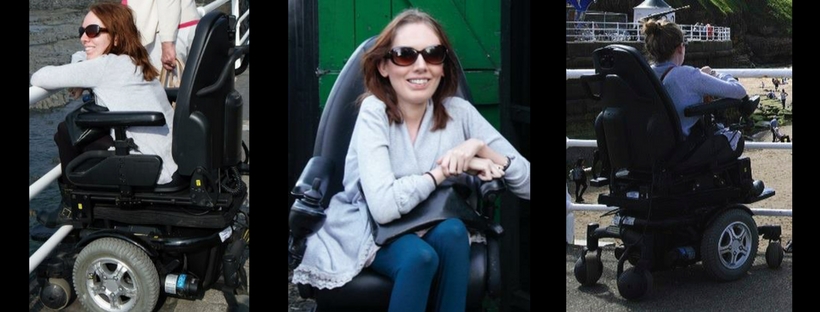
Me in my current Quantum 600 powered wheelchair

Muscular Dystrophy | A Guide for Parents

About Me

– Disability blogger from the UK
– I have a rare, progressive condition: Ullrich congenital muscular dystrophy
– Born in 1988, with ‘floppiness’ and dislocated hips
– Slow rate of progression: I didn’t start to walk until 19 months of age. Prior to that, I ‘bum-shuffled’
– Able to walk very short distances, wearing custom-made leg splints, until age 10
– Fell over a lot as a child
– Never able to walk up or down steps or stairs
– I am now completely non-ambulant and use a powered wheelchair
– Contractures in all joints (knees, hips, elbows, wrists)
– Severe ‘S’ shaped scoliosis (curvature of the spine), which has not been surgically corrected
– Education: I attended mainstream school, then continued onto college (A-Levels) and later university, completing a degree in Art & English Literature


Diagnosis

Learning your child has a neuromuscular condition can, of course, be distressing and concerning.

In some cases, there may be a family history of the condition, whereas for others, like me, it could appear completely ‘out of the blue’.

I am the only member of my family with any form of muscle-wasting condition.

So, when I was diagnosed with congenital muscular dystrophy, aged 4, following a muscle biopsy, my parents were venturing into the unknown.

It was 1992. There was no Internet, no Google, and no one to relate to.

For us, muscular dystrophy was new and unheard of.


How and When to Tell Your Child

It may be beneficial to talk to other parents of children with a similar condition. If this is something you think might be helpful, ask your care advisor or neuromuscular consultant.

There is no right or wrong answer! Only you can decide what is best for your child.

It is important to consider siblings, as they should be included in any discussions you have as a family. However, I would strongly advise against telling siblings more about the condition than the affected child. Any information you choose to share with your children should (in my opinion) be fair and equal, regardless of age gaps.

When deciding if, when and how to tell your child of their diagnosis, consider:

– Their age
– Their own awareness of their disability        – Emotional maturity
– Your ability to fully answer any questions they might have

From my personal perspective, I recommend an open and honest policy from the very beginning.


I received a diagnosis of congenital muscular dystrophy at age 4. This was specified as Ullrich CMD many years later.

I was always aware of my disability and limitations. I recognised that I was different from my peers – unable to walk, run and climb steps. I also looked different – I was very thin as a child, had joint contractures and scoliosis, causing asymmetry of the torso.

My parents told my siblings and I of the term muscular dystrophy, meaning that my muscles are much weaker than those of other children. At that stage, this was all the information I needed.

For many years, when other children would ask the inevitable question, “what’s wrong with you?”
I would simply answer, “I’ve got muscular dystrophy, so I can’t walk like you”.

Ullrich Congenital Muscular Dystrophy

Infancy

Do your research: These days, there are many reliable resources of information. Ask medical professionals including consultants, physiotherapists and occupational therapists. I also recommend reaching out to those directly affected, such as other parents and adults with muscle-wasting conditions. Try social media and search for groups to join.
Always trust your instincts! Aware of my delayed progression as a baby, my mother sought medical help and was told she was an “over-reactive mother”. Thankfully, she persisted and met with a neuromuscular specialist, who almost immediately identified my condition.


Starting School

– Starting school can be daunting for any child. But for a child with muscular dystrophy, this transition can be even more challenging.
– There is no reason why a child with a muscle-wasting condition shouldn’t attend mainstream school. However, you must consider your child as an individual and decide whether or not you feel this would be best for them. Indeed, your child may have a preference. Some may elect to attend a school for special educational needs.
– I suggest making several visits to shortlisted nurseries or schools. Check all areas for accessibility. Meet with staff and the SEN team.
– It is essential to ensure staff are fully aware of your child’s needs and abilities. Meet with the special educational needs co-ordinator (SENCo) well in advance. If possible, meet and introduce your child to teachers and support assistants. This will help them feel more at ease when their first day of school arrives.
– Ask your child’s physiotherapist and/or occupational therapist to visit the school and meet with staff to share their knowledge and expertise.
– Be positive, be optimistic, be encouraging. BUT don’t make promises you can’t keep: As your child grows and interacts with other children, they will become increasingly aware of their differences. They may ask why they can’t stand, walk or run like their friends. Furthermore, if your child has a progressive form of muscular dystrophy, they may wonder if their symptoms will get worse as they get older.

I was able to walk short distances until the age of 10. We were never given any information or guidance. We weren’t advised if or when my ability to walk would come to an end. I would therefore often ask my parents, “will I always be able to walk or will I have to use a wheelchair?”

I appreciate why many parents may be reluctant to overshare and reveal what the future may hold, for fear of scaring their child. However, I feel it is important to be open and honest. If you’re unable to answer their queries, say so.

Knowledge and preparation is power!


Teen Years

– For most children with muscular dystrophy, the biggest changes occur during puberty.
– Growth puts extra strain on weakening muscles.
– If able to weight-bear, your child could lose this ability resulting in the need for a wheelchair.
– It is likely your child will accept and embrace mobility aids and equipment more than you. Children are very adaptable. For me personally, using a wheelchair was a great relief. A wheelchair offers mobility and freedom.
– Growth also leads to contractures. Regular physiotherapy helps to maintain flexibility and movement.
– If untreated, spinal curvature (scoliosis) will progress, resulting in asymmetry of the torso, a tilted pelvis, pressure sores and discomfort.
Scoliosis, along with muscle deterioration, impacts on respiratory function. If your child feels overly tired, naps during the day, or experiences regular headaches, particularly on first waking, you must see a specialist respiratory consultant. It might be necessary to introduce nocturnal noninvasive ventilation.
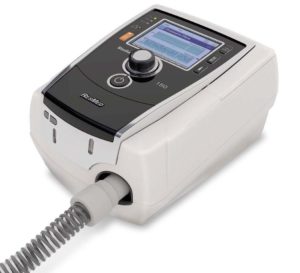
Noninvasive ventilation (NIV) comes in the form of either a CPAP or BiPAP machine (usually the latter).
Bilevel positive airway pressure (BiPAP): a face mask is worn, and air is delivered from a machine through a tube to support breathing.
– Other respiratory equipment your teenager may benefit from, especially when ill: Nebuliser and cough assist machine (seek advice and information from your respiratory consultant and respiratory physiotherapist).

BiPAP Machine
NIV Face Mask


Other Family Members

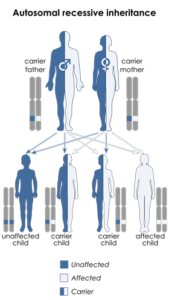
Some forms of muscular dystrophy are inherited. This can obviously be a concern if relatives are planning families of their own.

A few years ago, my brother and his wife decided they wanted to have children. Because of my condition, they sought genetic counselling, taking with them a copy of my medical record.

It was determined that my brother is highly likely to be a carrier, while his wife is highly unlikely. Once pregnant, they were offered a test which involved inserting a needle into the developing embryo to ascertain if the baby would be born with muscular dystrophy. They decided against this due to the invasive nature of the procedure.

They now have two children. Neither have muscular dystrophy.


Accepting and Adapting

As a parent, it is natural for you to focus all your energy into your children. Raising a child with muscular dystrophy brings with it many more challenges. This can impact on your health and relationships. It is therefore crucial to take good care of yourself too.

Remember, it is okay to cry, scream and shout! I’m sorry to say, battles are never ending and you will need to fight for your child throughout their life.

It’s good to talk: whether you choose to confide in relatives, friends, fellow parents of disabled children, or healthcare professionals – don’t bottle up your feelings, concerns and frustrations. This will negatively affect the wellbeing of you and your family.

Make time for yourself:

what time?!”, I hear you say.

I fully appreciate that caring for a disabled child is a full-time job. But you must seek some form of relief. Even if it is just meeting with friends once a week for coffee. You need space. Your child needs space too.


*Disclaimer* The purpose of this post is to offer support and advice from my personal perspective, having lived with Ullrich congenital muscular dystrophy for over 3 decades.


Follow Me!

Instagram

Twitter

My First Ceiling Hoist

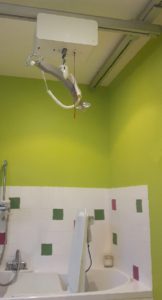
As some of you may know, my very first ceiling track hoist was *finally* fitted on Monday 11th December.

I now have a straight track in my bedroom and a separate H-frame in my ensuite bathroom.

Why I need a ceiling hoist

I am 29 and completely non-ambulant due to Ullrich congenital muscular dystrophy. Being rather petite, I have always been manually transferred (yes, lifted by family and carers) rather than hoisted. This method has always been preferable since it’s much quicker and frankly less faff. But, we’re all getting older and more frail.

I live with my parents who are both in their 60s. They are my primary source of support, though I do employ a carer part-time. My mother underwent a full knee replacement in August 2017, and is therefore limited in how much she is able to help me. Consequently, we have reached a stage where a ceiling hoist is a necessity.

A long and frustrating process!

Back in October 2016, Mom was told she needed a full knee replacement. The following Spring, my only carer announced she would be leaving within the next few months to pursue a career as a paramedic. With this in mind, I contacted my local community occupatinal therapy team to request an assessment. I was told they’re vastly understaffed and, with an extensive waiting list, I would need to be in a terminal condition in order to be seen. I appreciate their predicament, I really do, but I was unwilling to be fobbed off so easily.

I was instructed, over the phone by an OT I had never met, to “camp out”, meaning I should wash, dress and be toileted on my bed. Yes, for a prolonged and indefinite period of time, I should go without a shower and simply not wash my hair. (Due to my physical limitations and my wheelchair, there’s no way I could wash my hair over the sink).

Disgusted at her casual disregard, I asked my neuromuscular consultant to issue a letter of support. On receipt of this, an OT suddenly found time to visit me in my home for an assessment. Following this, representatives from Prism Medical and TPG DisableAids attended separately to advise, measure up and draw plans. Both rep’s then submitted quotes to the purse holder at County Council who, of course, approved the cheapest option.

NB: A portable hoist was trialled but proved unusable with the layout of my room and the type of bath in situ.

Prism Medical

We were expecting Prism to arrive at 9am on 24th October 2017, as arranged. Having waited over an over with no sign of anyone, I called only to be told they weren’t coming because of a “technical issue”.

To cut a long story short, Prism claimed they couldn’t connect the track from my bedroom to that in my ensuite bathroom. This is despite consulting with occupational therapists and agreeing to do the job. Prism also claim they left telephone messages for both myself and the OT’s, on the previous Friday, to inform us that they wouldn’t be attending. Neither I, nor the community OT’s received any messages. I call bullshit!

Dad even removed the partition above the bathroom door in preparation.

Later, I learnt that Prism have similarly disappointed several others, resulting in formal complaints being issued against them. So when the purse holder at County Council told me she would renegotiate with Prism rather than approve funding for TPG to carry out the work, I insisted otherwise.

Having to fight for your rights and basic needs is, unfortunately, very much part and parcel of having a disability. ‘Tell, don’t ask!’ This is my motto. In my experience, if you are not clued-up and assertive, those in authority simply fob you off.

TPG DisableAids

Thankfully, Funding was approved after a different OT, accompanied by the rep from TPG, visited to discuss and re-evaluate the situation.

Rather than trying to connect the single rail in the bedroom to the H-frame in the ensuite bathroom, it was decided that two separate hoists would be best.

My carer had by then handed in her notice and would be leaving at the end of the month. I was seriously starting to worry the hoist would not be in place before Christmas.

But much to my relief, TPG (who, compared to Prism, were infinitely more professional and efficient throughout) booked in for the 4th December.

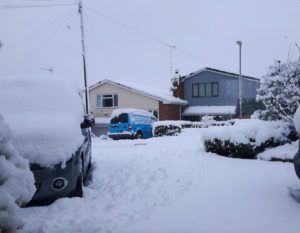
Then, just my luck, we were hit by the worst snow in 7 years! It was like flipping Narnia.

I tried to remain optimistic though in reality I knew there was no way TPG would be able to make the journey from Hereford. And they didn’t.

So, it was third time lucky, on the following Monday that the long-awaited ceiling hoist was installed. I no longer need to worry about hiring new carers as lifting is not an issue. Furthermore, the pressure is off Mom – literally! And, the thing I am perhaps the most happy about – my dealings with community OTs and the County Council are over.

For now at least…


(Apologies for the poor quality of the images. All were taken by myself on a Samsung S5!)

Life Update: Part 2

Carers and my first ceiling track hoist


Hey everyone, hope you’re all well.

As promised, here are the developments following on from my previous life update

Care

Having re-advertised for a part-time carer to replace my current PCA, I interviewed seven applicants, plus one who’s interested in ad-hoc cover. All were enthusiastic, though as any employer will know, things often change in the days that follow.

There was only one no-show which actually isn’t bad at all compared to my previous attempts to recruit new carers.

One of the seven ladies later asked to be a backup as she decided she couldn’t do every weekday. From the six remaining, I invited three to shadow, knowing that at least one would change their mind. I was right; they did.

The first was a no-show (yes, another)! After I contacted her to ask if she was going to attend, she simply replied, “I forgot”. Needless to say she was scrubbed from the list.

Number two messaged me a few days before shadowing, to say she had reconsidered and felt there weren’t enough hours. This left me with one applicant.

Thankfully she did show up. Seemingly reliable and keen to take on the role, I offered her the job on a trial basis from Monday 30th October.

My current PCA is leaving in December to pursue a career as a paramedic. So, fingers crossed all goes well with the newbie…

Ceiling track hoist

To my surprise, I was contacted a couple of weeks ago by Prism Medical to arrange a date for installation. Finally, after waiting for so long and constantly pushing the matter, I would get the much needed ceiling hoist on Tuesday 24th October.

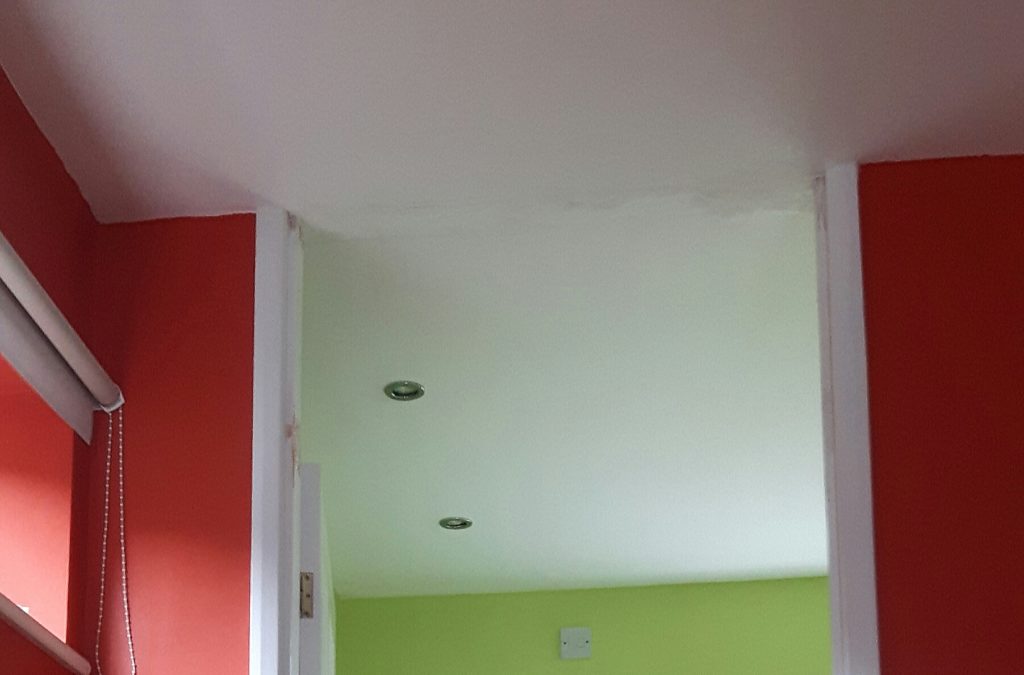
In preparation, my Dad had to remove the glass intersection above my bathroom door to allow through-access.

Before:

After:


When the day arrived, we cleared the room and waited for the workmen to arrive, as expected, at 9am. An hour later and still no sign. Becoming impatient, I called Prism Medical but was told they wouldn’t be coming due to a technical issue.

What?! What technical issue?

Prism Medical claim they left a voice message, on the previous Friday, explaining they couldn’t connect the single rail going from my bed to the bathroom door, with the H-frame in the bathroom. We received no voice message. They also claim to have contacted the Community OT’s. They too have had no calls or messages from Prism.

A rep from Prism previously visited my home to take measurements, draw up plans and provide quotes. They then corresponded with a Community OT (or so I’m told) and agreed to install the ceiling track hoist. Yet despite all this, they have suddenly decided they’re unable to carry out the work. Excuse my language, but what the actual fuck?!

As you might expect, the remainder of Tuesday was spent on the phone: trying to get hold of an occupational therapist, complaining to and about Prism Medical, and negotiating with County Council Equipment Services.

I’m hoping to get funding approval for TPG to do the work, as they too had sent out a rep to provide a quote.

Naturally the County Council opted for the cheaper quote from Prism. That’s worked out really well, hasn’t it!

Final Thoughts

Today is Thursday 26th October. There has been no notable progress since Tuesday. Essentially, I am back to square one – harassing the OT’s daily to ensure my case is not ignored. Unless you constantly pursue the issue yourself, frankly nothing happens.

I am so angry and disappointed with the whole cock-up, though sadly not overly surprised. In my experience, unless you’re prepared to self-fund, this is the service (or lack thereof) you can expect!

I will be putting in a formal complaint and am seriously considering writing to my local MP. If we allow companies and organisations to get away with such failures and blatant disregard, nothing will change.

So, once again the saga continues. I will keep you updated – *Keep an eye on Twitter and my Facebook page*


Thank you so much to each and every one of you who has offered advice and support!

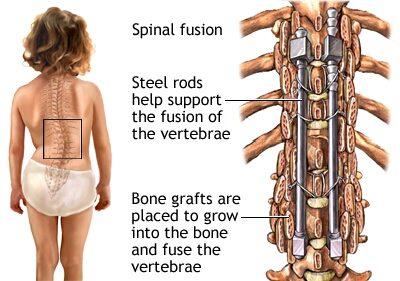
Scoliosis | Why I Chose NOT To Have A Spinal Fusion

In my latest piece for Muscular Dystrophy Trailblazers, I explain how and why I chose NOT to have a spinal fusion.


My Experience

Aged four, I received a general diagnosis of congenital muscular dystrophy. Many years later, this was specified as Ullrich congenital muscular dystrophy.

Aged nine, I was offered corrective scoliosis surgery.

At the time, I had no idea why I was going to see this new doctor. To me, it was just another appointment.

There was no faffing around; this guy was straight to the point!

He firmly asserted that I needed an operation to prevent further decline of my spinal curvature.

I was horrified to hear of the graphic details, lengthy recovery period, and how it could even prove fatal.

Bear in mind, we’re going back more than 20 years – the whole procedure was very different to what it is today.

Of course, as an adult I now appreciate that with any surgical procedure, doctors are obliged to inform the patient of every potential risk and outcome, including death. But this was pretty shocking and unexpected news to take in at a young age.

How I Made My Decision

As a child, I attended annual outpatient appointments at Birmingham Heartlands Hospital, where I saw a paediatric neuromuscular Consultant.

My parents and I were never given a prognosis, nor any indication regarding if or how my condition might progress. Life expectancy was never discussed and no doctor could tell if I would, in time, come to rely on a wheelchair. We were very much in the dark, living day-to-day.

Frankly, these appointments frustrated and bored me to tears! We would wait hours to see the doctor, and leave knowing nothing more than we did before.

I have, in all honesty, learnt infinitely more as an adult through my own research and from others living with muscular dystrophy.

My point here is that my parents and I had nothing on which to base our decision. Or rather, my decision.

It is now more than 20 years since I was told I needed a spinal fusion. This was pre-Google and pre-social media.

We weren’t put in contact with anyone who had experienced the operation. So, other than a brief verbal overview from the Consultant, we had no other information or point of reference.

After leaving the appointment in a state of shock, my parents told me that ultimately the choice was mine. I decided I didn’t want to put myself through such an ordeal. I was, at that age, considerably more able than I am now, and none of us had any reason to think I would deteriorate as severely as I have.

Do I Regret My Decision?

At the time, it was, or at least seemed the right decision. I was able to weight-bear, finding clothes wasn’t an issue, I was pain-free, and did not require any inhalers, medication or respiratory support.

The procedure back then was much more invasive, and the recovery extremely lengthy compared to what it is today.

My condition was stable, I was happy and relatively able. Under those circumstances, the disadvantages outweighed the potential advantages.

However, I do often wonder how different my life, body and health might be had I said yes to a spinal fusion.

No one predicted that just a year after the offer was made, aged 10, I would become completely non-ambulant within a very short space of time. Had I any indication that this might occur, my decision may have been different.

Though my scoliosis was considerable, the ‘S’ shaped curve is now much greater. Consequently, my respiratory function is significantly affected and basic comfort is a distant memory.

On bad days, when I’m in pain and struggling for breath, or when I’m ill for months (yes, months) with respiratory infections; I do regret forgoing my one opportunity to correct my skeletal deformity.

But, what’s done is done, and cannot be undone. I’m stuck with me! I can’t change past decisions. I simply have to make the best of what I have and keep moving forward.


I’d love to hear about your experiences with scoliosis and spinal surgery.

– Have you turned down corrective surgery?

– Have you had a spinal fusion? If so, how has your life changed as a result? Is it better or worse?

1 Year Old Today! | Blogiversary

It’s now been one year since my blog, Life on the Slow Lane, was created. I finally bit the bullet on 5th October, with my first (proper!) post going live on 11th October.

As you can see from that first shabby entry, back then I lacked a specific objective. I just wanted to get going after contemplating blogging for many months prior.

Over time I have (I hope) managed to focus the aims and purpose of my blog.

I now concentrate primarily on disability issues, specifically those relating to muscular dystrophy. Here I share my thoughts and experiences, having lived my entire life with Ullrich congenital muscular dystrophy.


Blogging opportunities

Over the past twelve months, I have been extremely fortunate to write for other notable publications including Muscular Dystrophy Trailblazers, Disability Horizons and Limitless Travel.

Life on the Slow Lane has enabled me to interact with many other disability bloggers. The amazing Simply Emma generously invited me to guest-blog for her, which I did in May and July. Then more recently I collaborated with the lovely Gemma over at Wheelescapades.


My blogging highlight of the year

A particular highlight for me was the overwhelming response I received for the piece I wrote about my life with UCMD. The fact that it is an especially personal and exposing piece makes the positive feedback all the more touching. To date, this, my most popular blog-post has been viewed over 11,700 times.


Final thoughts

Admittedly, it’s been challenging and time-consuming. I have so many thoughts and ideas, yet not enough time to execute them all.

I often feel like I’m playing catch-up, mistakenly comparing myself to other much more established disability bloggers.

I’m not a big fan of computers and otherwise avoid them if at all possible. Initially, I had no clue how to even set up a blog, let alone edit and customise one.

I realise many of my peers are adept with design software, graphics and managing websites. But I’m just not. Computers are in no way of any interest to me. I’m old school! So this, along with social media, is something I have had to familiarise myself with.


Blogging goals for the next year

• Continue to upload regular posts
• Reach a wider audience and increase my readership
• Raise awareness of Ullrich congenital muscular dystrophy
• Meet other like-minded disability bloggers


Thanks to you

I’d like to thank each and every person out there who has read any of my articles. I truly appreciate your feedback and support!

As long as Life on the Slow Lane attracts an audience, however small, I will continue to write.

Get To Know Me | Interviewed by Wheelescapades

I recently collaborated with fellow disability and lifestyle blogger Gemma Orton, aka Wheelescapades, on a ‘20 Questions‘ blog post.

We initially got chatting on social media and found we had a few things in common ~ We’re both arty/crafty types, we have a mutual love for all things Disney, and we are both wheelchair users. Gemma has Spinal Muscular Atrophy Type 2 (SMA2), while I have Ullrich congenital muscular dystrophy.

To get to know each other even better, we gave each other free rein to ask 20 personal questions!

Here you can find my previous post, in which I interview Gemma.


And below are my answers to Gemma’s 20 questions…

1. What made you decide to write a blog?

I had been thinking about it for a long time, though it took me several months to begin. I wanted to do something productive and worthwhile but didn’t think anyone would care or be interested in what I have to say.
They say you should write what you know. I have been disabled since birth and so consider this my expert subject. However, disability isn’t a particularly popular or fashionable topic to blog about. I knew it would be a challenge and it has been. I do feel like I’m constantly playing catch-up and at times I wonder if it’s worth the time and effort. But when I receive positive responses from complete strangers, I am reminded why I’m doing it.

2. What do you want your blog to achieve?

I want to raise awareness of muscular dystrophy, particularly Ullrich congenital muscular dystrophy which is the rare and little-known form that I have. I want to share my thoughts and experiences, having lived my whole life as a physically disabled individual, in the hope that it may in some way help others.

3. What is the most difficult thing for you about having a disability?

Blimey, I could write a list! There are many challenges and frustrations. My condition is progressive and so the difficulties become greater with age. I think perhaps, for me, the most difficult thing about living with Ullrich congenital muscular dystrophy, is the limitations it inflicts. I am limited physically – I cannot run, dance, walk or even weight-bear. Just to be able to stand and support my own weight would make a world of difference! I am life-limited! Yes, UCMD is a life-limiting condition. I will not grow old or see my new baby nephew become an adult. Furthermore, my quality of life is limited. To put it briefly, when I am ill I’m REALLY ill. I have spent much time in hospital with respiratory related issues including repeated bouts of pneumonia, pleurisy, and a collapsed lung. I have literally lost months of my life to UCMD – housebound, unable to eat and reliant on non-invasive ventilation.

4. What is the biggest positive about having a disability?

The positives are much more light-hearted! Concessions, being able to skip to the front of the queue and designated parking (although disabled bays are often occupied by sports cars lacking a blue badge!)

5. If you could only eat one food for the rest of your life what would it be?

Hmm, tricky! I do like variety. I guess I’d have to choose… mash potato?! That way I could always mix it up by adding herbs from the garden (or is that cheating??)

6. An apocalypse is imminent, you have 30 minutes to prepare, what 3 items do you pack?

Well, I guess if the apocalypse is coming then it doesn’t really matter as we’re all doomed anyway?! But, I think I would still pack a bottle of Lucozade (I live on it! Purely for the energy boost), my dog and my family!

7. When making tea would you pour the milk or water in first?

Water!

8. What is your favourite way to relax?

I like to shut myself away, snuggle up in bed or on the sofa, and listen to music or watch a good film.

9. If you could interview any human, dead or alive, who would it be and what would you ask?

Wow, I really don’t know. God! (who I don’t believe in – what a cop-out) He has a lot to answer for.

10. What would be your dream job?

I’m one of those people who never knew what they wanted to do. I’ve never been career focused or academically ambitious. All I ever wanted was to have kids! But, if I could be absolutely anything, I think I’d be a dancer. I’ve always loved everything about dance. And yes, I’m a huge Strictly fan!

11. You’ve just won 10 million pounds (congratulations!), what 3 things would you do with the money?

Sort my family out – erase any debts and buy them homes, cars and whatever else they might need or want. Make sure my closest friends are comfortable! Buy a holiday home(s). And finally, a home for myself, FULLY adapted!

12. Where in the world would you most like to visit and why?

Australia. For as long as I can remember I have always wanted to visit Australia. The snakes are a little off-putting but still, that’s where I’d head to first. Closely followed by America. I’d absolutely love to do a road trip – Route 66!

13. What one thing would you change about yourself?

Only one?! Again, I could write a list. Buy I’d have to say my body. It doesn’t work too well and I’m flipping uncomfortable in it!

14. If you could play any part in a film, past or future, real or fiction, who would you be?

Men get all the really great roles! So, if I were male I think I’d play the Joker in The Dark Knight. How much fun would that be! Since I’m not a man, I’d play… I don’t know!! Maybe one of the sisters in A League of Their Own (1992) or Uma Thurman’s roles in either Pulp Fiction or Kill Bill.

15. If there was a pill that would freeze you at your current age and you could live forever as you are now, would you take it? And why?

Nope, definitely not. I wouldn’t want to live forever. It would get pretty boring after a while! Plus outliving all my family and friends would be hell.

16. If you could trade lives with one person for an entire day who would it be and why?

My brother. He has the life I’ve always wanted. He is physically fit, handsome, funny, charming, popular, successful and he has a lovely wife, baby and home. Of course I don’t resent him for it and I want nothing more than for him to be healthy, happy and fulfilled. But to experience his life for just one day would be bliss. I’d never ask for anything else.

17. If you could time travel, where would you go?

Good question. There are so many periods throughout history that I’d like to visit. But it would be great to go back around 50 years, when my parents were kids and my grandparents were young. I never knew my maternal granddad who died when I was a baby. So I’d especially love to meet him.

18. If you were made Queen and allowed to pass one new law, what would it be, and why?

Argh, the pressure! I have no good answer to this. So I think I’ll just say longer sentences and harsher punishments for serious crimes. There really is no deterrent in this country.

19. What personal trait has gotten you in the most trouble?

Voicing my opinion and failing to filter! Over the years I have become more outspoken and more impassioned about certain issues. I tend to over-analyse and question everything. Oh and I am rather stubborn. If I believe something in something, I won’t budge.

20. As a child, what did you wish to become when you grew up?

Just happy I guess. As I said before, I never had a particular job or career in mind. I’ve considered various options and ideas over the years. But all I ever really wanted was a home and a family of my own. That’s it. Not much to ask, eh?

I don’t think it is.


I really hope you enjoyed this collaboration with Wheelescapades. Let me know in the comments.

I’d also love to hear from you and find out how you would answer these questions!


To keep up to date with Gemma, go and check out her blog and connect with her on social media.

https://wheelescapades.com/

https://twitter.com/gemmaorton

https://www.instagram.com/wheelescapades/

https://www.facebook.com/wheelescapades/

Life Update ~ Carers, Hoists and OT’s

Hi folks, I hope you are all healthy and happy.

I feel like it’s been a while since I blogged about the goings-on of my day-to-day life. Not a particularly exciting post, granted. But I thought it might be useful to share these ‘goings-on’ with you, as I’m sure there are some of you facing similar struggles.

I have for the past few months been occupied with life crap – specifically, disability-related life crap – which has meant that blogging has unfortunately had to take a backseat.

Righty right, I’ll try and keep it brief…

Care

As some of you may know, I live with my parents who are my primary source of support. I do have a part-time carer who I employ, but otherwise my Mom (yes, I say Mom vs Mum) is my main caregiver. Sadly she herself suffers with progressive osteoarthritis, and following exploratory surgery in October, it was decided that she needed a full knee replacement.

This in fact took place on Sunday 20th August, although it wasn’t until a couple of months ago that Mom was given a date for surgery. However, prior to this I had to put in place provision for my care needs. This involved recruiting a second carer and ensuring I have all the equipment I would need.

For the past 4 months I have searched for a second carer. I advertised everywhere and anywhere – newspapers, news agents, local shops and the post office, job sites, Facebook and so on. The response has really surprised and frustrated me – so many no-shows, let downs and people failing to read or understand the basic job specification.

I ask very little of applicants. I don’t request references, qualifications, experience or even a CRB/DBS (criminal records check). I interview informally in my own home, and with employees I am flexible, easy going and more than fair, taking into consideration their individual circumstances.

However, despite the fact I am completely non-ambulatory, I have never used a hoist. Thus far, family and carers have always preferred to lift me manually as it’s much quicker and frankly less faff! I’m only tiny – approximately 5 feet tall and 5.5 stone in weight. So until very recently, it has always suited to go without a hoist.

Understandably this is off-putting to potential applicants. But, every carer I’ve ever employed has openly admitted that working for me is a breeze compared to any other job they’ve had, and that for them the lifting is a non-issue. Nevertheless, I appreciate that most would prefer not to lift – that’s fair enough.

Hoists

With this in mind, I instigated the process of applying for a ceiling track hoist to be installed in my ground-floor bedroom/ensuite bathroom. I will need a H-frame in the bathroom and a short track from my bed to the bathroom.

Not a huge ask really, particularly as I have never received any support in the way of equipment. Everything I have – wheelchairs, bed, bath lift etc. has been self-funded. The post-code lottery is a very real and unjust thing, people! But that’s a topic for another day…

Dealing with Community Occupational Therapists

I contacted the community Occupational Therapists, explained the situation and requested a needs assessment. I was initially fobbed off with the excuse that they’re vastly understaffed and that I would need to be terminally ill in order to qualify. When I asked how they suggest I manage after Mom’s operation, the OT replied that I should “camp out” and be dressed, bathed and toileted on my bed!

Disgusted at her casual disregard, I asked how she would feel having all her personal care needs carried out on the bed she sleeps in. “Oh well, this is the situation we’re in. It can’t be helped”, was her insensitive response.

I then contacted my neuromuscular consultant who wrote a letter of support. On receipt of this letter, the OT’s suddenly found time to carry out a needs assessment in my home – shocker! (It’s not what you know, but who you know, right!?)

Following this, two reps – one from TPG, the other from Prism Medical – came and measured up in order to provide quotes for the ceiling hoist. I have since learned that the second quote is unusable, which frankly is no surprise, as he clearly had no clue what he was doing; at one point asking to see the gas meter. Even the OT who accompanied him questioned his experience.

In the meantime I have been issued with a portable hoist, though it has taken many weeks to receive a usable sling. Rather than measuring me, then visiting me in my home with a variety of slings to try, the OT’s insisted on sending one at a time. After much harassment from me, a community OT finally conceded and actually attended to properly assess me for a sling.

Honestly, they complain that they have a backlog of work and no time, and yet they waste so much. The sling issue could have been carried out in one appointment. Simple, done, move on. But instead, they chose to drag it out for weeks simply because they wouldn’t visit or listen to the patient.

And now…

Today is Sunday 10th September, and no further progress has been made with the ceiling hoist. Yet again I will have to chase the OT’s, otherwise nothing will ever happen. Sad but true.

I had taken on a second carer who began shadowing at the beginning of August. She was very enthusiastic, supportive and accommodating – said all the right things. Then whilst on my way to visit mom in the hospital, two days after her surgery, I received a message from the new carer, who was due to work that evening. She issued a stream of excuses as to why she couldn’t (translate: wouldn’t) do the job.

Until then, my current carer had always been present. Essentially it turns out she was happy to come and get paid to watch someone else do the job. She just didn’t want to have to do any work herself. Now I know why she’s had so many jobs!

So, as it stands I am managing as best I can with my one part-time PCA, though she is planning to leave in late October to train as a paramedic; thus posing yet another obstacle.

Having realised how long this post is, I think I will leave it there for today, though there is much more to tell. Suffice to say, the saga continues…

Suprapubic Catheters (SPC)

Have you ever looked at a disabled person and wondered how they go to the loo?

I am physically disabled (Ullrich congenital muscular dystrophy) and have, in fact, asked this question myself many times over the years. As a wheelchair-user unable to weight-bear, toileting was always my biggest obstacle. Believe me, I’ve tried every method, technique and contraption available. But if you can’t stand or transfer, HOW do you do it?

Most wheelchair-users require the assistance of at least one other person to hoist, transfer or manually lift them. From experience, I can tell you this is time consuming and challenging enough when in your own, fully adapted, accessible home. When out and about, going to the loo can be an absolute nightmare!

Public facilities for disabled people are vastly inadequate. Bathrooms are barely big enough to accommodate a manual wheelchair, let alone a powered wheelchair plus carers and the necessary room to maneuver. They are often used as storage cupboards, occupied by cumbersome baby-changing equipment and the litter covered floors are filthy. This lack of consideration and basic adaptions in disabled toilets means that many are forced to lay on these dirty floors in order to be dressed and undressed. It is degrading and wholly undignified.


In October 2011, after careful consideration, I elected to undergo medically unnecessary surgery (on the NHS) to insert a suprapubic catheter (SPC).

I have always had full sensation and an otherwise healthy, fully-functioning bladder. Despite a lifetime spent severely restricting fluid intake and holding the need to urinate, I thankfully never suffered from urinary tract infections. I was not physically incontinent, rather socially or environmentally incontinent, since public toilets fail to meet my practical needs.


Following many requests for information and advice, I have written about my personal experience with a suprapubic catheter. Please refer to the document below, which you are welcome to download and print as required.

*Disclaimer* This is my experience only, and in no way represents that of any other person(s). 

Suprapubic Catheters – My Experience

Please feel free to ask questions and leave comments! 

My Life with Ullrich Congenital Muscular Dystrophy

Allow me to introduce myself.

I’m Carrie, born in 1988 with the rare, genetically-inherited condition Ullrich congenital muscular dystrophy.

“What’s that?”, you ask. Let me explain…

The congenital part means that it is present from birth. Ullrich is just one subtype of congenital muscular dystrophy. It is also progressive and life-limiting, meaning that symptoms become gradually worse over time.

There are, according to the muscular dystrophy UK website, over 60 forms of muscular dystrophy. The severity is wide-ranging.

In recent years, I’ve learnt that the number of people, worldwide, living with muscular dystrophy, is far greater than I previously thought. Social media has introduced me to many – some of whom I’m fortunate to call friends.

Through discussions with fellow MD‘ers, I’ve realised that our symptoms and experiences differ significantly.

Despite what some medical professionals believe, there is no definitive check list! For example: ‘everyone with UCMD will be affected by X, Y, Z at this age, and they will not live beyond 40 years old‘. This is simply not the case.


A Brief Introduction to Muscular Dystrophy:

  • 70,000 people with MD in the UK
  • Affects 1-1000 people
  • Genetically inherited muscle wasting condition
  • Progressive
  • There is currently no cure for MD
  • There are many forms of MD – over 60
  • The most commonly recognised is Duchenne MD
  • UCMD is a type of congenital MD. It affects c.50% of the 400-500 people with CMD
  • UCMD is caused by the lack of a vital protein needed to support muscle cells.

 My Experience:

  • Born with dislocated hips and ‘floppiness’. At 2 weeks of age I was put in plaster for 12 weeks to realign my hips. 20161130_211543
  • I didn’t crawl, climb or walk at the normal rate. From around 7 months old, I ‘bum/belly shuffled’. I started to walk at 19 months old. My parents were very much aware that something wasn’t right, and so they pushed for a specialist referral. My mother was told by her GP that she was an “over-reactive mother”!
  • 4 years old – muscle biopsy performed by Dr Helen Roper at Birmingham Heartlands Hospital. I was diagnosed with congenital muscular dystrophy. 20161130_213022
  • My parents were told VERY little – only that I would experience overall muscle weakness but mental ability would not be impaired. Doctors didn’t know if or how my condition would progress, nor if it would stabilise following puberty. They didn’t know if I would ever need to use wheelchair.
  • I wore specially made leg splints as a child, enabling me to walk short distances around the house and school.
  • For longer distances, I used a ‘buggy’ or manual wheelchair.
  • I have never been able to walk up or down steps or stairs.

  • At age 7, I had my tendons released in both feet and ankles as they were turned inwards. Following the operation, my feet were held in position in plaster casts for 6 weeks.
  • I stopped walking quite abruptly at age 10. At the time, this was unexpected and incredibly distressing for both me and my family.
  • I became non-ambulant and started to use a powered wheelchair. We raised the money for my Jazzy Pride electric wheelchair through sponsored events, charitable donations, fundraisers and public appeals; my story was put in newspapers and school newsletters (this was pre-social media, folks!).
  • I then stopped wearing the leg splints as I was no longer walking. I could finally wear nice shoes!
  • From around 11 years of age, I began to wake every morning with debilitating headaches and nausea. Many years later, we learnt that this was due to a nocturnal build up of carbon dioxide in my body, having failed to effectively expire the waste gas during sleep.
  • From the age of 4, I had 30-60 minutes of physiotherapy once a week at school. This mostly involved stretches to maintain what flexibility I had, but physiotherapy came to an end when I turned 14. Literally, one week my physiotherapist was there, and without a word of warning, the next week she wasn’t. I was then told that if I wanted to continue with my physio, it would have to be carried out by parents or a carer.
  • Following a second muscle biopsy at around the age of 18, my diagnosis was narrowed down to Ullrich congenital muscular dystrophy. At the time, this really didn’t mean anything to me. I didn’t learn anything new and nothing changed. It wasn’t a case of; we’ve defined it as UCMD which means we can give you this treatment. There is no cure for muscular dystrophy. And so, I just carried on with my life as I had been.20161130_212939
  • I attended mainstream school before moving on to a Sixth Form College where I completed A-Levels in Fine Art, English Language and History. I then attended a local university, commuting everyday via taxi. After three years I achieved a BA (Hons) degree in Art and English Literature.
  • I have a significant ‘S’ shaped scoliosis (curvature of the spine). This became much more severe following the growth of puberty.
  • At around the age of 9, my parents and I were told I would need a spinal fusion to correct the scoliosis and prevent any further curvature. Again we were given very little information, no case study to refer to, and little time to make a decision. I do remember vividly how the seriousness of the operation was emphasised. In particular, “you could die!” stuck in my infant mind. In the end, we decided not to go ahead with the spinal fusion.
  • Scoliosis affects posture, balance, respiratory function and causes pain, discomfort, pressure sores and asymmetry of the torso.
  • It is very difficult to find clothes that fit because of my lumbar deformity.
  • Because of the scoliosis, my torso is squashed, and so too are my organs. This means that I become full, bloated and breathless after small quantities of food.
  • I have contractures of the joints & tightening of the tendons in my ankles, knees, hips, elbows and wrists.
  • Due to the weakness in my neck, I’m unable to lift my head from a pillow when lying flat.
  • I cannot sit myself up from a lying down position or support my own weight at all.
  • I’m unable to transfer independently, and at only 5.5 stone (77lbs) I’m usually lifted manually or otherwise hoisted.
  • I can’t turn or adjust my position in bed.
  • Because my movement is limited and I cannot exercise, I have poor circulation and very cold hands and feet. Corpse feet as I refer to them!
  • It is difficult for me to regulate my body temperature.
  • October 2011 – I opted to have a suprapubic catheter for practical reasons. I have no functional continence issues. Purely due to the severity of my contractures, muscle weakness and inability to transfer, there’s no other way for me to independently go to the loo. My SPC (suprapubic catheter) means that I no longer need the assistance of anyone else to carry out this personal task. Boys, don’t get me started – you don’t know how lucky you are!
  • I currently live with my parents in their house. I have a ground-floor bedroom and ensuite bathroom extension, built when I was 12 years old. My parents received a grant towards the cost but were means-assessed, and so they had to extend their mortgage in order to fund the excess! Prior to that, I had a bedroom upstairs which I accessed via a stairlift. Having lost the ability to walk at age 10, struggling up and down stairs and on and off the stairlift became impractical, hence the need for a ground-floor extension.
  • My parents remain my primary carers, although I also employ several part-time carers/PAs to assist with personal care throughout the week. This is council funded via Direct Payments.
  • As I have aged, my declining respiratory function has become the main cause for concern. Chest infections have become worse and more serious as a result.
  • A frequent hospital inpatient, I’ve had pneumonia more than five times, pleurisy twice and a spontaneous pneumothorax (collapsed lung) which required a chest drain.
  • Following a particularly bad bout of pneumonia in March 2012, I commenced nocturnal non-invasive ventilation. I use a Resmed Stellar 150 biPAP machine with the Resmed Swift FX Nano nasal mask.
  • NIV (non-invasive ventilation) ensures that oxygen and carbon dioxide levels are regulated. I no longer suffer from CO2 induced headaches or nausea.
  • Medication and treatments: BiPAP machine (NIV), Salbutamol inhaler, antibiotics on repeat prescription to treat chest infections, and I have a Nebuliser with saline and Salbutamol nebules to use when ill.
  • I now experience constant physical exhaustion and extreme fatigue.
  • Although my condition is progressive and life-limiting, there’s no way to determine exactly when my time is up. No doctor could predict what age I can expect to live to. As such, I prefer to put this to the back of my mind and try to live as ‘normal’ a life as possible. Whatever “normal” is!carrie-aimes-recent_with-permission


Doctors, though essential, cannot tell you how it feels to live with UCMD, or what day-to-day life is like. This is why I really appreciate the MD Facebook groups and the MDUK forum. People are free to talk openly with others who understand exactly what they’re going through.

If, as a child, I had known others living with the same condition as me, perhaps my life could have been enhanced with the benefit of shared knowledge.