Valentine’s Special: Part 2

Dating & Disability ~ Q&A
Four men with different forms of muscular dystrophy answer questions on body confidence, dating, sex and relationships…

*Names have been changed

1. Do you identify as a sexual being?

Dave, 38, Duchenne MD: “I absolutely identify as a sexual being. I actually have a very high sex drive and it’s an important driver in my life.”

Brian, 51, SMA: “Absolutely. I’ve always had what would be considered relatively high sex drive.”

Tom, 27, Unspecified Neuromuscular: “I wouldn’t describe myself as asexual, but I’m not a sexual being either really. The more my condition has progressed, the less sexual I’ve felt. Procedures like catheterisation and serious illnesses have made me feel like I’m not at home in my skin.”

Steve, 28, Duchenne MD: “I believe I’m a very sexual person because I get the cravings and intense visual thoughts that consume my mind.”
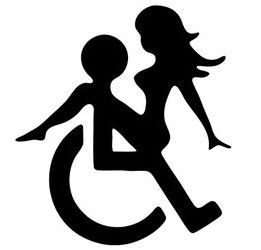
2. How does your body confidence (or lack of) affect your sex life?

Dave, 38, Duchenne MD: “My body confidence is quite good. I am aware of my limitations and the ways in which I don’t conform to the normal stereotype, but it doesn’t really bother me and I don’t think it restricts my sex life. Attraction is a very strange thing and you never know what others will find attractive. I’m sure some people will be turned off by my body, but equally someone will be turned on by certain aspects.”

Brian, 51, SMA: “It affected me more when I was younger. In fact, I remember one of the very first moments I realised I was different. On a family holiday whilst in my early teens, I was getting changed in the hotel room before going out for dinner. I saw my profile in the bedroom mirror and realised my body was not ‘typical’ – the scoliosis of my back and the thinness of my legs. This led to a lot of problems with body confidence, which I covered up with layers of fashion. It probably led to overcompensation with cultivating a colourful personality.”

Tom, 27, Unspecified Neuromuscular: “My body, especially naked, looks ‘weird’, which makes me self-conscious. I then feel less comfortable having sex because I’m aware of this. I prefer to be the clothed partner in general, because I fear losing control. I worry about things like unexpected bodily fluids. This makes me unable to relax and enjoy having sex.”

Steve, 28, Duchenne MD: “My body confidence doesn’t have anything to do with my sex life but I’m not confident about my body whatsoever.”

3. Have you tried online dating? What are your biggest concerns/challenges when it comes to dating? Do you disclose your disability?

Dave, 38, Duchenne MD: “I have tried online dating on and off, with a little success but mostly rejection. Every so often I would go through a period of giving up on ever finding anyone, but now I’m in a relationship. I’ve always been very upfront and open about my disability from the very beginning. It’s either going to be a problem for people or it isn’t. I don’t see the point of waiting to find out. Yes, that means I’ve had less interest, but at least I know when the interest is there it’s genuine and not going to disappear.”

Brian, 51, SMA: “I’ve dated using online methods and people I’ve met spontaneously. Being a heterosexual man, I don’t really have a type as such. I am interested in creative, intelligent and funny people. I am on my 2nd marriage and we’ve been together for 12 years. When I was younger, dating always felt more like a job interview than an enjoyable experience. I’ve been stood up, ignored and even worse. It was when I decided to change my attitude towards dating that I began to have more success. I tried to see it as a night out and an opportunity to get to know an interesting person with no expectations.”

Tom, 27, Unspecified Neuromuscular: “My wheelchair is a bit of a giveaway! I do have the conversation with potential partners about the ways illness affects me. I’ve tried online dating apps without much success. I’ve had the best luck with finding people online, becoming friends and then dating them. I worry that people would see me and think I’m not a long-term option because of my disability.”

Steve, 28, Duchenne MD: “My dating experiences have been heartbreaking and abusive. All the women I’ve dated in the past have taken advantage and cheated on me, all from meeting online. Dating online is horrible in my opinion because of the bad experiences that I’ve had.”

4. What frustrates you most about dating?

Dave, 38, Duchenne MD: “Having to take a leap of faith and share aspects of your life that are complicated, with someone that you barely know. It’s a big issue building trust with someone and I hate having to start from the beginning and get them used to what my life is like. With a disability like mine you can’t introduce it gradually. It’s a permanent feature of my life from day one. I also don’t like having to negotiate how to manage with carers when on a date, I usually have to discuss this with the person in advance. It’s a lot to deal with at an early stage.”

Brian, 51, SMA: “I hated the Darwinian nature of dating. A lot of potential dates would say one thing but then date a guy who was 6 foot 2 with an IQ of a house brick. Dating when you are disabled takes stubborn, single-minded determination and the motivation to press on is not always easy to find.”

Tom, 27, Unspecified Neuromuscular: “People play games. If you’re not interested in me because I’m disabled that’s fine – I’m tough enough to hear that – but I find it hard when people equivocate.”

Steve, 28, Duchenne MD: “A lot of women are not genuine, sincere, or empathetic. They have ulterior motives that make them selfish and heartless. Most of them don’t have any morality.”

5. What do you look for in a potential partner? Do you actively seek an able-bodied/disabled partner/someone with a similar disability to your own?

Dave, 38, Duchenne MD: “I do place some importance on looks – I have to feel physically attracted to them, and it is important to me that we can have sex. Because of my own limitations, that means the other person needs to be ‘able’ enough to compensate (recognising that I wont know whether they are until I ask someone). I do appreciate the irony of the discrimination, but this is purely a practical consideration! Beyond that, it’s all about personality. They have to be relaxed about the complexities of life, fun, and intelligent.”

Brian, 51, SMA: “I’ve dated both disabled and able-bodied women, and I’m sad to say I have faced as much prejudice from the disabled women as the able-bodied. I seem to be largely attracted to independent, strong, creative women with a sense of humour that matches my own. Body type is almost irrelevant.”

Tom, 27, Unspecified Neuromuscular: “I don’t actively seek out disabled or abled partners. The advantage of a disabled partner is them understanding where I’m coming from and us connecting on a level where we share these experiences. The advantage of a non-disabled partner would be their potential ability to help with hoisting me, which would enable us to do a lot more together than if we were reliant on PAs (personal assistants/carers).”

Steve, 28, Duchenne MD: “I don’t really have a preference. I look for women who are positive, upbeat and have similar interests to me. Whether they are physically disabled or not doesn’t matter to me.”
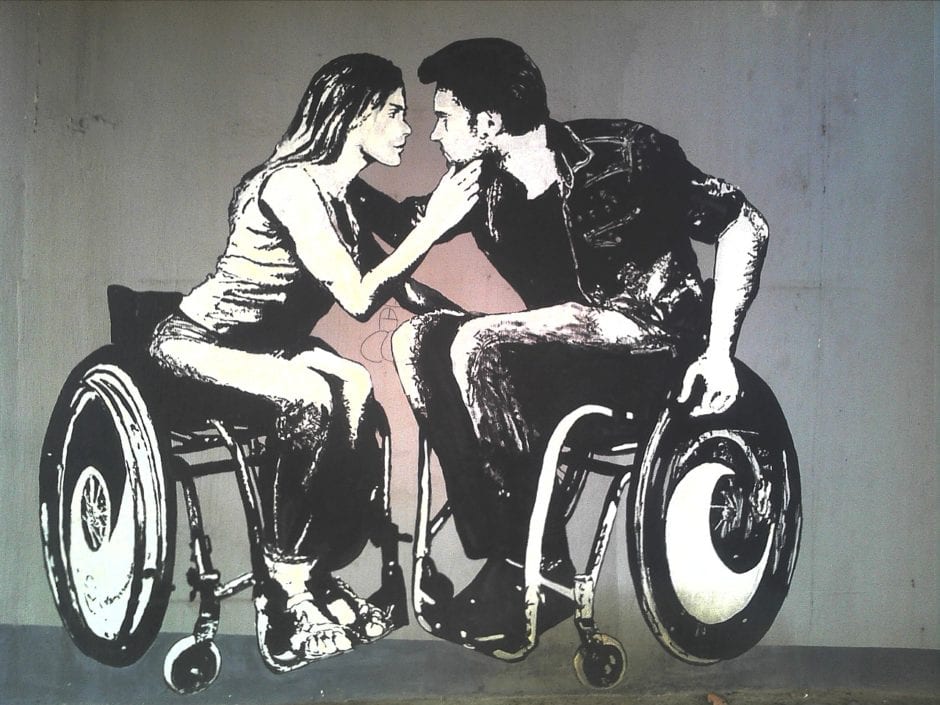
6. What were/are your biggest concerns prior to losing your virginity?

Dave, 38, Duchenne MD: “My biggest concern was doing it ‘right’ and not being embarrassed.”

Brian, 51, SMA: “My concerns before losing my virginity were always physically based. I was concerned that my shortening ligaments would mean I wouldn’t be able to physically have sex. I was concerned about the emotional effect on an able-bodied partner being with someone with a shortened lifespan.”

Tom, 27, Unspecified Neuromuscular: “Pregnancy, I guess. Disability didn’t really play into it much back then, but I was still ambulant at the time. I was using crutches and needed some support, but was a lot less reliant on a partner adapting the sex to my abilities.”

Steve, 28, Duchenne MD: “I was afraid I wouldn’t be able to satisfy her and would therefore be a disappointment.”

7. Do you think your first sexual experience was more challenging/awkward purely because of your disability?

Dave, 38, Duchenne MD: “No, I think it was awkward because it was my first time and I was a teenager. I think it helps that I was with someone else with a disability, and my own limitations were not as great back then.”

Brian, 51, SMA: “My first sexual experience was with a girl who had the condition Friedreich ataxia. Therefore neither my disability or hers was of much concern from a self-confidence point of view. It was more the logistics of finding a position that worked. There were a couple of occasions where she almost ended up stuck on the floor, naked with her legs straight up in the air after to try to transfer from her chair onto my bed by herself!”

Tom, 27, Unspecified Neuromuscular: “Not really, but my condition was far less progressed then.”

Steve, 28, Duchenne MD: “I was worried about my physical limitations and that made me more nervous than I probably would have been ordinarily. It was all over very quickly. I did not have fun. She called me prick and left, never to be seen again. So I don’t think she had fun either.”

8. What are the most common misconceptions you have faced?

Dave, 38, Duchenne MD: “I don’t really encounter many because I include in my profile that everything works in that department. It’s a bit disappointing to feel I have to do that. Sometimes people ask what I can do and I tend to answer quite frankly. I don’t really leave much room for assumptions.

One issue discussed in the disability community is that of devotees. I’ve had a mixed experience. Some are only interested in getting themselves off and see the disability as a fetish. But other devotees are simply attracted to you as a disabled person, in the same way that someone might be attracted to tall people. The important thing for me is to recognise that different people are attracted to different things. It is only a problem when that attraction is the only thing that interests someone about you, or becomes an obsession. My suggestion is to be careful but open-minded, in order to open up new and amazing experiences.”

Brian, 51, SMA: “The most common misconception would be amongst able-bodied women not realising I’m a sexual animal. They would then be shocked when I started flirting outrageously with them.”

Tom, 27, Unspecified Neuromuscular: “People assume that I’m willing to be their ‘try it and see’, or that I don’t have needs, preferences, or desires in bed because (from their perspective) I’m so desperate, I’d take whatever I can get. Alternatively, it just doesn’t cross their minds that no matter how hard I flirt, they fail to realise I’m hinting at us getting together.”

Steve, 28, Duchenne MD: “People have asked if I’m able to get an erection. I think many believe disabled people are asexual and incapable of having any sexual desire. But in reality that desire for me is extremely intense. Sometimes uncontrollable.”

9. When having sex, how do you overcome the physical limitations associated with your disability?

Dave, 38, Duchenne MD: “Largely by depending on my partner to do a lot of the movement, and to assist in moving me into the position that works for us. We have had to experiment with different positions that maximise the amount of mobility I have, and try different toys to make things a bit interesting. I use a mouthpiece ventilator so I can still kiss my partner.”

Brian, 51, SMA: “Imagination, open-mindedness and being as sexually generous as I can. Occasionally, technology helps with the periodic introduction of a sex toy.”

Tom, 27, Unspecified Neuromuscular: “I tend to remain clothed, be the active partner, and do things for the person I’m having sex with. I don’t feel comfortable expressing my own needs, desires, or preferences at all. My limitations are more psychological. In terms of paralysis and joint instability, we use a LOT of pillows jammed round me to support me in the right place, then I stay still, and my partner moves around me.”

Steve, 28, Duchenne MD: “Trial and error mostly. Where there’s a will, there’s a way! It’s fun to experiment with toys and household items too.”

10. In terms of sexual intercourse, what can’t you do that you wish you could?

Dave, 38, Duchenne MD: “There is quite a bit I cannot do that I would like to, such as being able to touch my partner without having to be moved in a specific way. I’ve managed to try everything although there are certain things like anal sex that we are yet to find a good position for. We are still working on that one!”

Brian, 51, SMA: “In terms of intercourse, I wish more positions were available to me as variety is the spice of life after all. The use of my hoist helps greatly and opens up positions I otherwise wouldn’t be able to reach.”

Tom, 27, Unspecified Neuromuscular: “I wish I could have easy sex, without loads of explanation and preparation – that would allow me to have a far more normal and enjoyable sex life.”

Steve, 28, Duchenne MD: “I wish I could do the ’69’ position – that looks fun! And penetrate her when she’s in a doggy style position. I’m only missing out a little bit though.”

11. What advice would you offer to other disabled people who are sexually inexperienced?

Dave, 38, Duchenne MD: “It’s really about finding out what you can do and building trust and communication with your partner. Experiment with everything and don’t let things go stale. Keep trying new things, new methods and techniques.”

Brian, 51, SMA: “Decide what you want, don’t put too much pressure on yourself, be stubborn and tenacious. Cast your net wide and use the assets you feel you do have such as compassion intelligence humour.”

Tom, 27, Unspecified Neuromuscular: “Get to know your body first. Learn to pleasure yourself, learn what you like and how you like it. Experiment with toys if you can – they can often substitute for grip and reach. The better you know your body the more likely you are to get what you want out of sex.”

Steve, 28, Duchenne MD: “Don’t get your hopes up! sex is over-hyped. To be honest, I prefer to play video games.”

13. Are there any particularly funny sexual episodes you’d like to share?

Dave, 38, Duchenne MD: “There have been a couple of times a PA (personal assistant/carer) has walked in at a terribly unfortunate moment when I am with a partner. I think sometimes they are just a little naive as to what we might be doing and knock and enter rather than knocking and waiting.”

Brian, 51, SMA: “I once had a nasty experience when my college girlfriend tried a new shade of permanent lipstick, ‘guaranteed to stay put all night’. Whilst dressing me, the morning care staff thought I had developed a nasty rash and called in the medical staff. Everyone stood around me deciding what was to be done about this nasty deep red rash on my penis. The college nurse produced some cortisone cream and when applied, she realised the mark was merely lipstick. This would have been embarrassing with one person in the room let alone three!”

Tom, 27, Unspecified Neuromuscular: “Nope!”

Steve, 28, Duchenne MD: “I know ’69’ is off limits for me because I tried it once. I can’t move around by myself when lay on a bed. So I was flat on my back and she sat on my face and almost suffocated me! All I could do was flap my hands around like a dolphin. She thought I was loving it and so just carried on.”

Click here for the GIRLS!

My Top 5 Actors

A while back, I was invited to write a guest post, by a strange young chappy named Mitch (twodoughnuts). The fool even gave me full access to his blog, including his password!

I was told I could write anything, as long as I didn’t “take the piss”.

Would I?! (Well, yes I seriously considered it for a moment).

Therein started what has been dubbed, by Mitch, ‘Blog Wars’.

I’m a bit of a music freak, and so I chose to share my ‘Top 5 Tunes’. Admittedly, some were thrown in there just to annoy Mr Twodoughnuts.

Let Battle Commence!

Mitch then tried (and failed) to win round #1 with his ‘Top 5 Tunes’ – poor attempt, man!

Now, the war continues as we present our ‘Top 5 Actors’. You can check out Mitch’s picks here.

Though it grieves me to say it, he’s set a pretty high standard on this one. It appears the boy has some taste after all.


1. Tom Hanks

‘Forrest Gump‘! Need I say more? I’ve seen it countless times but it still gets me. With universal appeal and timeless endurance, it’ll make you laugh, cry and wish you had a mate like good ol’ Forrest. Unless you’re Ross (A Life on Wheels) – Another strange boy who is not a fan of this frequently quoted classic. Sort it out, Ross!

“Mama always said, life is like a box of chocolates. You never know what you’re gonna get.” ~ Aint that the truth!

Double Oscar winner Hanks has a lifetime of much-loved films under his belt including, ‘The Green Mile‘ (if you haven’t seen it, check it out), ‘Philadelphia‘, ‘Cast Away‘, ‘Saving Private Ryan‘ (surely the best war film ever made?!), ‘Apollo 13‘, ‘A League of Their Own‘, ‘Toy Story‘, and ‘Big‘ (remember that famous piano scene?)

How can you not love the guy?!

2. Robin Williams

The LEGEND! A comedy genius, Robin Williams proved his worth as a serious actor as well as the go-to funny guy, with an insanely quick wit and animated energy to boot. This versatile entertainer lit up my childhood in cherished films such as ‘Aladdin‘, ‘Jumanji‘, ‘Hook‘ and ‘Mrs Doubtfire‘ – a role no one else could or should ever play. Pray they never try to remake it!

A true scene stealer, Williams had the rare ability to improvise like no other and appeal to any audience of any age.

His dramatic performances in ‘Dead Poets Society’, ‘Patch Adams’, ‘Good Morning, Vietnam’ and ‘Good Will Hunting’ (for which he deservedly won an Oscar – bloody great film!), mark him as an undeniable talent.

3. Matthew McConaughey

Okay, so the dude made some questionable choices throughout the early 2000s, and was somewhat typecast in crappy romantic comedies. But he’s certainly made up for it since, preferring more complex and intense roles such as protagonist ‘Killer Joe’ and troubled homicide detective Rust Cohle in the debut series of ‘True Detective’. If you’re into dark and disturbing, give these two a watch.

He then went on to play a supporting role in Scorsese’s ‘The Wolf of Wall Street’, in which he arguably stole the show from the lovely Leo with that whacky chest thumping scene.

In 2013, the charismatic Texan babe dropped 47lb (21kg) to star as defiant Aids patient Ron Woodroof in the biopic ‘Dallas Buyers Club’. For his brilliantly impressive portrayal, McConaughey won every award going as well as audience and critical acclaim.

4. Joaquin Phoenix

Have you seen ‘Walk the Line’? If not, why not? Even if you know nothing about Country music legend Johnny Cash (shame, shame!) it’s essential viewing if only for Joaquin’s dedicated, hard-knock cool performance.

Some might say method actor Phoenix is an acquired taste, having made some unconventional career choices. But you could never accuse the guy of being boring. He delves deep to create memorable, multi-layered, engaging and often quirky characters.

As Roman emperor Commodus in the epic ‘Gladiator’, Joaquin isn’t just the bad guy to Aussie Crowe’s hero. He’s vulnerable, damaged, desperate and played with sinister subtlety. Few actors his age could have pulled this off so convincingly.

Dark, brooding, intense and yes, a bit weird. I approve!!

5. Morgan Freeman

So, Barack Obama was the first black President of the USA, right? NOPE! It was Morgan Freeman who helped save the planet from being struck by a comet in ‘Deep Impact‘. Now that’s impressive!

He’s the super cool, laid-back veteran icon with a mellifluous and universally recognisable voice. The kind of dude you wouldn’t mess with, even in his latter years, and especially if you’ve seen his award-winning turn in ‘Million Dollar Baby‘, in which he whoops some ass.

For me though, Freeman will always be synonymous with ‘The Shawshank Redemption‘. Tim Robbins took the lead, but that film belongs to Morgan. It’s an effortless and understated performance. If you haven’t seen this film, where have you been? Do you live in a cave?!

So, that’s my Top 5 ~ Who would be on your list?

Most importantly, who do you think wins this round – Me or Mitch?? 


Related Blog Posts:

Wench Wars | Disney Villains

Valentine’s Special: Part 1

Disability & Dating ~ Q&A

Four women with different forms of muscular dystrophy answer questions on body confidence, dating, sex and relationships…

*Names have been changed

1. Do you identify as a sexual being?

Becky, 22, SMA Type 2: “Of course! I have fully functioning sexual organs and like anyone else, I have sexual desires. Having a physical disability, like mine, does not affect either of those.”

Amy, 30, Congenital Muscular Dystrophy: “Yes, most definitely. We all have wants and desires regardless of our physical abilities.”

Sarah, 27, SMA Type 2: “I’ve always felt like a sexual being and desired an intimate relationship. However, throughout my teenage years and thereafter, I didn’t imagine anyone would want that type of relationship with me, so I relied on myself for any sexual needs.”

Laura, 24, Limb Girdle MD: For years I actually didn’t see myself as a sexual being because I hated my body and I truly believed that no one would ever want to be with me. It wasn’t until I reached my twenties and craved intimacy that I actively searched for a sexual partner.

2. How does your body confidence (or lack of) affect your sex life?

Becky, 22, SMA Type 2: “I would say that my lack of body confidence is the only thing that affects my sex life. From the age of 16, I’ve struggled with social anxiety which stems from the dislike of my body and the way my disability has ‘deformed’ it. I have such a fear of rejection that I have missed many opportunities to start relationships (casual and serious). Therefore, my sex life has been affected. This issue was actually one of the reasons my last relationship ended. I pushed away my partner to the point that he couldn’t deal with my constant queries and need for reassurance. I was a nightmare!”

Amy, 30, Congenital Muscular Dystrophy: “Body confidence issues and insecurities definitely held me back from experimenting sexually. I’ve only had one sexual partner and he is my fiancé of the past 7 years, despite having two previous long-term relationships beforehand.”

Sarah, 27, SMA Type 2: “I have very low body confidence and some days I really hate how I look. But it has never really affected my sex life. I always find the first encounter with someone new quite stressful and it gives me a lot of anxiety at the thought of someone seeing my wonky body. But no guy has ever said anything negative – quite the opposite!

I’m now in a long-term relationship with someone who fully understands my body hang-ups. He’s patiently trying to improve my body confidence and even if I don’t believe it, it’s pretty awesome having someone telling me I’m beautiful at least once a day.”

3. Have you tried online dating? What are your biggest concerns/challenges when it comes to dating? Do you disclose your disability?

Becky, 22, SMA Type 2: “All my dating experience has been via online apps. Every date I’ve been on has actually been really positive and I’ve met some nice people. As most girls/guys find, it can be hard to distinguish who is genuine or not when talking to people online, and it can also be hard to figure out their intentions. This can be even harder when a disability is involved, but I choose to disclose my disability in my bio. I only write a short sentence, usually something sassy like, ‘yes, I do use a wheelchair’. I also make sure I show at least one full-body photo. This relieves the anxiety of telling someone and also means that whoever messages me already knows about my disability. However, I do sometimes receive disrespectful or patronising comments but I love challenging them.”

Amy, 30, Congenital Muscular Dystrophy: “Most of my dating experiences have been using online platforms. Coming from a sheltered upbringing, meeting people at bars and clubs just didn’t seem realistic. I actually prefer online dating as it forces potential dates to see the best of you (unlike face-to-face where they often judge you on your disability).

I did go through a rough patch with dating sites, whereby if I mentioned in my profile the fact I am a wheelchair-user, most guys would open with, “Hi, I’m not being a dick but can you still have sex?”

I do believe sex is part of a healthy relationship but when guys put so much emphasis on that and that alone, it leads me to think they all want the same thing. For this reason I stopped disclosing my disability in my profile, and told them only after chatting for some time. Some accused me of leading them on, but to me this suggested they have a major issue with dating someone with a disability.”

Sarah, 27, SMA Type 2: “I’ve been dating a long time. Excitingly, I got my first boyfriend at school (Year 7), and I thought I was winning. It lasted a whole 3 days and we didn’t even get as far as holding hands.

It wasn’t until I moved away to university that I wanted to date, so I started to try online apps. During those 4 years, I only had a handful of dates and none went anywhere – although I did eventually get my first kiss aged 18.

I really started to date when I moved to London. I met all my dates online and I was quite surprised how many people wanted to go out with me. Most didn’t progress beyond the first date, though some were a lot more successful. I did feel vulnerable but that’s normal for anyone meeting someone they’ve talked to over the internet.

I made my disability obvious on my profile. I’m not saying it should be, but it can be a big deal for potential partners, and I didn’t want to waste my time with guys who couldn’t deal with it. My most successful dates never mentioned my disability in messages, it was just accepted.”

Laura, 24, Limb Girdle MD: I never had the confidence to approach guys in a conventional way. And so all my dating experience has been initiated online. It’s somehow easier to get to know people online before meeting in person. That way, they aren’t immediately confronted with my disability (which I think tends to intimidate most able-bodied guys). However, I have always included photos of myself in my wheelchair on dating profiles.

4. What frustrates you most about dating?

Becky, 22, SMA Type 2: “The most frustrating thing I find is effort. That sounds terrible but when talking to someone new, it takes a while to answer questions they may have and inform them correctly. This then comes with the fear of scaring them away or being rejected because of it.”

Amy, 30, Congenital Muscular Dystrophy: “Not knowing when best to disclose my disability and the anxiety over their reaction. As for the date itself, I worried about them seeing me struggle with something physical as I don’t want to be perceived as weak.”

Laura, 24, Limb Girdle MD: Honestly, the rejection! Online dating can be brutal, particularly for girls in wheelchairs! It takes a lot of determination to pick yourself and try again. But the effort does pay off in the end.”

5. What do you look for in a potential partner? Do you actively seek an able-bodied/disabled partner/someone with a similar disability to your own?

Becky, 22, SMA Type 2: “In a potential partner I look for someone who is open-minded and doesn’t take life too seriously. Someone who is honest, empathetic and obviously gives good cuddles! I wouldn’t say I actively seek an able-bodied person but dating somebody with a disability as severe as mine obviously adds difficulties.”

Amy, 30, Congenital Muscular Dystrophy: “I’ve always wanted a partner who has some form of disability. I have always valued and sought the emotional support and connection it would offer. It wasn’t until I stopped looking that I found someone who fit the bill completely. It was important to me that I found someone who could understand me.”

Sarah, 27, SMA Type 2: “While I have dated disabled people, my preference was always for someone without a disability. In particular, I didn’t want to date someone with care needs like myself. I think alone time with a partner is really essential and I wouldn’t want to be in a situation where a carer always had to be around.”

6. What were/are your biggest concerns prior to losing your virginity?

Becky, 22, SMA Type 2: “Apart from the typical concerns, I had additional worries. Positioning was the main one. I was worried about discomfort and being considered ‘boring’ due to my physical limitations. I was also concerned that the person I lost my virginity to wouldn’t be patient with me.

I had no idea what positions were possible and so trusting the person to be patient with me was a must. Being vulnerable was also a concern. When I’m in bed, I have no escape, meaning that anyone could easily take advantage of me.”

Amy, 30, Congenital Muscular Dystrophy: “My biggest concerns were not being able to do certain positions without my partner doing most of the work, and being unable to sexually satisfy him due to my muscle weakness.

Now several years on I’ve realised sex is more about creativity and trust, with those two things you can achieve almost all your sexual desires. Plus it isn’t all about intercourse. My only concern remaining is that my partner may one day prefer an able-bodied girl and get tired of thinking outside the box to make certain sexual activities possible.”

Sarah, 27, SMA Type 2: “I think my biggest concern was the uncertainty and not knowing my body’s limitations. I had no idea if I’d be able to get into a good position to have sex. I was also concerned whether I’d find the right person who would be patient enough to work together with me.”

7. Do you think your first sexual experience was more challenging/awkward purely because of your disability?

Becky, 22, SMA Type 2: “I would actually say no. For anyone, having sex for the first time is awkward. It’s all new feelings and sensations that no one can prepare for and sharing something intimate and new with someone. The only challenge I had was finding an easy position, due to my lordosis, but I was prepared for that.”

Amy, 30, Congenital Muscular Dystrophy: “It was more awkward purely due to my anxiety over what their reaction would be to my limitations in the bedroom. We didn’t talk beforehand, which I regret as it may have helped me relax, but I was embarrassed by the things I thought I would struggle with regarding intercourse in particular.”

Sarah, 27, SMA Type 2: “It was definitely more challenging and awkward. Looking back, I regret it happening when it did and with who. Despite dating quite a few different people prior to losing my virginity, I didn’t think any guy would want to have sex with me. When he did, I felt like I couldn’t say no because I didn’t think I’d get the opportunity to experience it again. I was lucky though that it was his first time too.

The whole thing was awkward. In an attempt to be romantic, he picked me up off the sofa and carried me to the bedroom but the flat corridors were super tight so he whacked my head on the door a few times. Then my floppy, bendy limbs made it difficult for him to get me undressed. The awkwardness carried on until I was re-dressed and back in my wheelchair.”

8. What are the most common misconceptions you have faced?

Becky, 22, SMA Type 2: “The main one is that I can’t have sex, full stop. On dating apps and on nights out, I am constantly asked if I can have sex. The sad thing is, some people are genuinely shocked when they learn that I can. Another misconception is that sex with a disabled person can be boring. Or that the disabled person is fragile and can be broken. These are both totally inaccurate.”

Amy, 30, Congenital Muscular Dystrophy: “That I am asexual because I’m a wheelchair-user or I have no sensation and therefore there’s nothing in it for me. I AM sexual, I do enjoy sex in a loving relationship (never been a one night stand kind of girl) and I CAN feel!”

Sarah, 27, SMA Type 2: “While online dating, I was often asked if I could have sex. Quite a few people I dated assumed I was paralysed and so I they would question if I had any sensation.”
9. When having sex, how do you overcome the physical limitations associated with your disability?

Becky, 22, SMA Type 2: “I overcome physical limitations by being honest with my partner. I’m always upfront with what I may need help with but also what I don’t need help with. It’s good to talk about challenges that may arise but also not to dwell on them. I sometimes just find it easier to mention things when actually getting into it. Talking and worrying too much can ruin the mood completely.”

Amy, 30, Congenital Muscular Dystrophy: “I did a lot of research into sexual positions for wheelchair-users. This coupled with knowing my own body’s limitations gives me a good sense of my capabilities in bed. In the areas I knew I’d struggle, my adaptive personality takes over and we just get creative using the ceiling track hoist. Oral, mutual masturbation, sensual massages etc are just as satisfying as intercourse.”

Sarah, 27, SMA Type 2: “I think having the right partner is key. If you’re not comfortable with them, it makes overcoming obstacles really difficult. You need to be with someone who you can be fully open with about your desires and that person needs to be willing to work within your limitations.”

10. In terms of sexual intercourse, what can’t you do that you wish you could?

Becky, 22, SMA Type 2: “There are some positions I wish I could do that are off-limits. The majority are adaptable but taking the lead would be fun. I can do that to some extent but not completely. Being spontaneous is also something I wish I could do – being able to jump into bed with someone without the whole process of hoisting and undressing. Also, having privacy and secrecy is something I’d like.”

Amy, 30, Congenital Muscular Dystrophy: “I can’t do certain positions unaided because my trunk muscles are too weak for me to be on top. I get frustrated at times with the restrictions of the ceiling hoist. But there are loads of other positions, so I don’t feel I miss out just because 1one or two are not possible.”

Sarah, 27, SMA Type 2: “There’s so much I can’t do, but the main thing I wish I could do isn’t a sexual thing. I really wish I could roll over by myself and give my boyfriend a hug and a kiss in bed without him having to help. In the past, I did feel like I was missing out on things but with the right partner, I don’t anymore. We’re in a really happy and loving relationship and even if I can’t do much in bed we still have a great time!”

Laura, 24, Limb Girdle MD: Obviously, as a full-time wheelchair-user there are things I can’t do, like doggy-style and being on top. But I find that you just have to be creative, have fun and laugh through the awkwardness! I do so wish I could masturbate but I don’t have the strength in my hands.”

11. What advice would you offer to other disabled people who are sexually inexperienced?

Becky, 22, SMA Type 2: “Don’t over-think things. It can be easy to think about all the difficulties you may face or embarrassing moments you may have but don’t let that have a hand in you missing out on sexual relations. On the other hand, make sure you trust whoever you’re intimate with. Even if it’s a one night stand, ask some trigger questions to get an idea of how they will treat you. But honestly, just have fun. Sex is great and everyone deserves to experience it.”

Amy, 30, Congenital Muscular Dystrophy: “Communication is essential. Think outside the box, use props for support and be open-minded. Practice, practice, practice and have fun.”
Sarah, 27, SMA Type 2: “Get used to having to communicate your needs, don’t just expect your partner to guess what you can and can’t do in bed. It’s also important to communicate what your likes and dislikes are. But probably my most important piece of advice is, don’t rush into things. There’s so much pressure on people to lose their virginity that it can make you feel like a loser if you haven’t had sex. It’s not for other people to dictate when the right time is. If someone comes along who wants to have sex with you, don’t do it just because you think you should.”
13. Are there any particularly funny sexual episodes you’d like to share?

Becky, 22, SMA Type 2: “My ex and I always struggled to find time alone together, due to the fact I share a room. We had to take advantage whenever possible, especially during the honeymoon period! We had a few spare minutes in my van (an advantage of having tinted windows!) and so I started giving oral as he unbuttoned my shirt. Suddenly he told me that my PA was getting closer and quickly sat in the passenger seat, making sure he was decent. He totally forgot that I couldn’t button my shirt back up until he looked back at me, his eyes wide, as my PA opened the door. He quickly moved in front of me, blocking me from her view as he buttoned me back up. We just pretended that nothing had happened and the PA still doesn’t realise!”
Amy, 30, Congenital Muscular Dystrophy: “My first time was in a hotel room in Birmingham. Little did we know the walls were paper thin and a family with young children were next-door. The following morning, I overheard the parents complain of a couple going at it so loudly the night before, it kept their kids up! I was mortified while my partner thought it was hilarious.”

Sarah, 27, SMA Type 2: “My boyfriend and I were on the sofa watching TV when my PA said she was popping out for a couple of hours. Clearly we wanted to make the most of this time alone. While he could undress me just fine, the re-dressing was slightly challenging. When my PA came back she said, ‘what the hell has happened to you clothes?!’”

Laura, 24, Limb Girdle MD: “Me and my then partner tried to use the hoist so that I could be on top. But as soon as he released the straps, I fell on top of him like a sack of potatoes and squashed him. But we laughed a lot!”


Coming Soon: Disability & Dating ~ The Boys!

Interview | Kat Pemberton

Image description: photograph of Kat Pemberton in her powered wheelchair.

“My life is so much more than my disability!”

Kat Pemberton is a successful Vlogger, disability activist and model for Zebedee Management.

The 21 year-old who has Spinal Muscular Atrophy Type 2, moved from the Ukraine to England at the age of 6. She currently lives in Bradford, Yorkshire with her Mum and younger sister.

Kat was good enough to talk with me about life with a disability, her experience as a physically disabled model, her growing YouTube channel and the issues she campaigns for.


Spinal Muscular Atrophy

1. Kat, please tell us about your disability and how it affects you.

I was diagnosed with Spinal Muscular Atrophy type 2 when I was only a year old. This is a genetically inherited, progressive muscle-wasting condition.

I was told that essentially my spinal cord doesn’t communicate with my muscles properly. This means that over time my muscles slowly lose any strength they once had.

SMA2 affects all my muscles. This limits my mobility and my breathing. I’ve never had the ability to walk but I used to be able to crawl until around the age of 10. I’m now non-ambulant and a full-time wheelchair user.

When I was younger, I was often in and out of hospital because I struggled to fight off infections. A common cold would often develop into something much more serious. As a result, I was unable to attend school and was home-tutored instead.

I guess I’ve had quite an unconventional, drama-filled life, but I don’t know any different. This is my normal.

Life as a disabled Model

2. How did you become a model and what does this mean to you, as a young disabled woman?

I’ve always enjoyed being creative and experimental with my style. Not only did Instagram provide a platform for that creative outlet, it also encouraged me to express my style and share my life and experiences with people who are leading similar lives.

When I was younger, I had never seen anyone with a disability in the fashion world, and so I never imagined that someone like myself, with a physical disability, could be a model.

Zebedee Management

One day, Instagram suggested that I follow Zebedee Management. After scrolling through to find out more about them, I quickly fell in love with what they’re all about and instantly knew I wanted to be a part of their family.

I applied after attending a fashion show hosted by Zebedee Management, and was then invited to attend a shoot. I never imagined myself as a model but being accepted by Zebedee has given me a massive confident boost!

Joining Zebedee as a disabled model has made me proud to be able to represent young disabled women, like myself, in the media. This opportunity has enabled me to empower and act as a role model for the younger generation.

Campaigns

I feel privileged to have worked on three wonderful campaigns, all of which are very special to me.

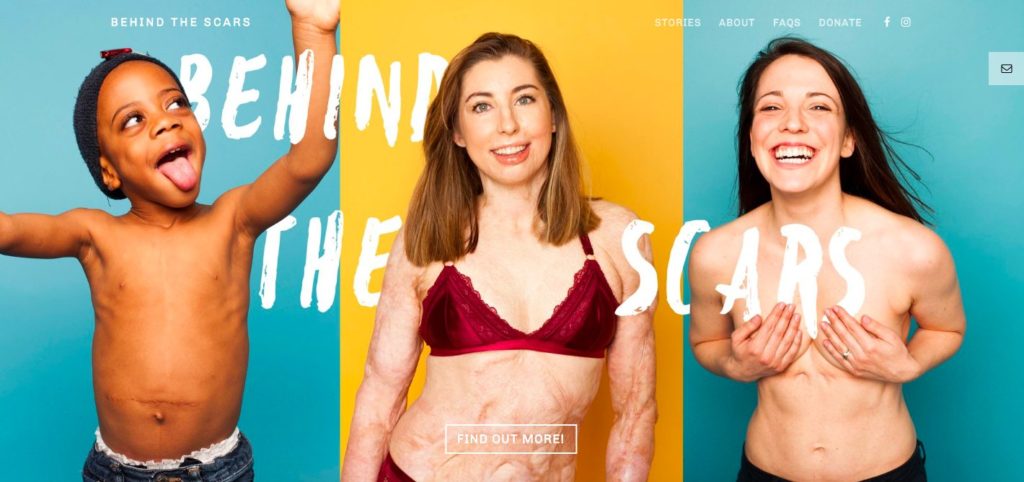
Image description: campaign photography, by Sophie Mayanne, for the #BehindTheScars project.

In February 2018, I got to work with photographer Sophie Mayanne on the Behind The Scars project.

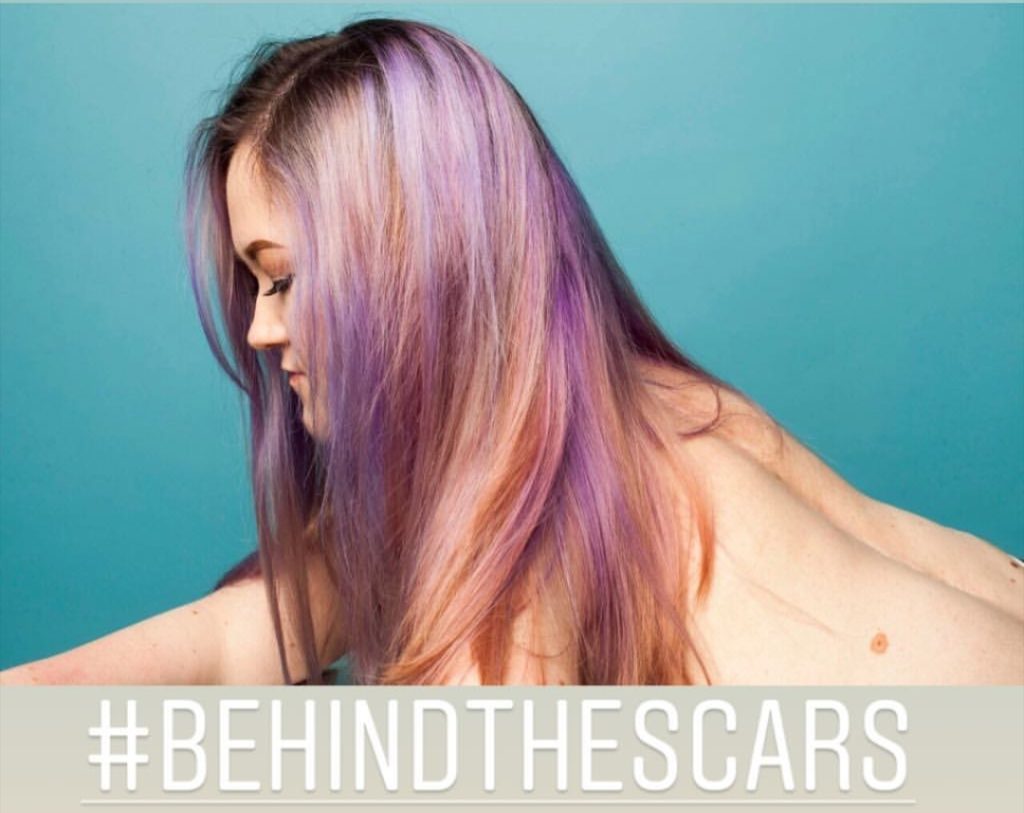
I’ve made it my mission to embrace and love my body after years of self-loathing. It was therefore a really special experience for me, especially to have found the confidence to bare all on camera and share my scoliosis story.

Image description: campaign photo of Kat Pemberton. #BehindTheScars

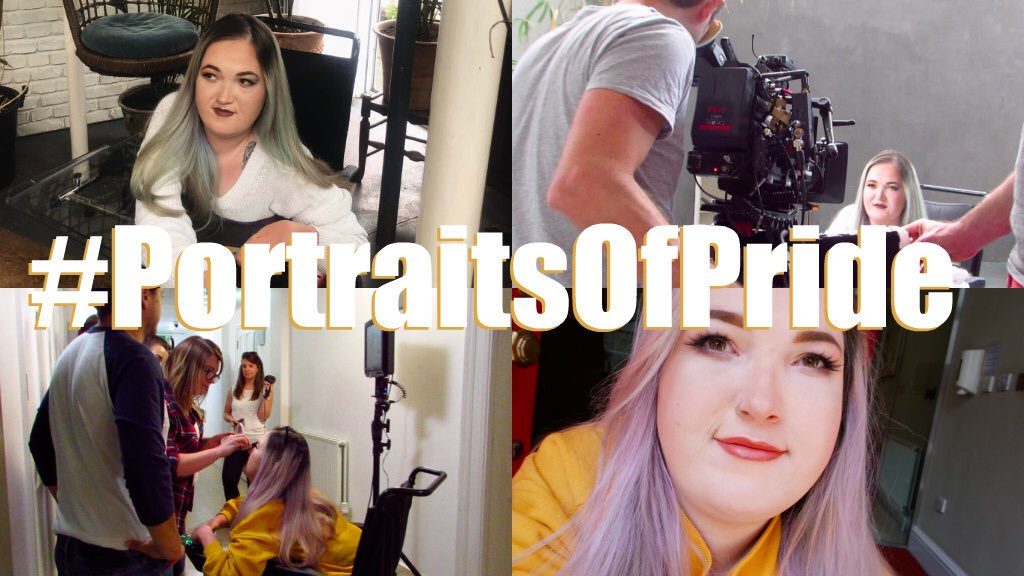
I also participated in the amazing Portraits of Pride campaign for HSBC, who sponsored London and Birmingham Pride.

Image description: a collage of images depicting Kat’s experience with the #PortraitsOfPride campaign.

I was fortunate to be chosen as one of their ambassadors, and to work alongside seven very talented people. The four LGBTQ+ campaigners, including myself, were partnered with four incredible artists who painted our portraits. The portraits were then displayed throughout the UK during the Birmingham, London and Brighton Pride weekends.

Image description: a portrait of Kat Pemberton, painted for the #PortraitsOfPride campaign.

Our portraits went on to be sold at auction and all proceeds went to LGBTQ+ charities.

Visibility, diversity and inclusion is so important, and I’m so proud to be able to share my perspective and represent those with disabilities in the LGBTQ+ community. Unfortunately I do believe that we are underrepresented and I’d love to improve this by talking about my sexuality more.

It is only two years since I came out, so I’m still learning about myself and the community. I’m very fortunate that my Mum accepts me and my sexuality, although my family back home in the Ukraine are not yet aware.

YouTube Vlogger

3. Kat, could you please tell us about your Youtube channel?

Image description: Kat’s YouTube banner.

I started vlogging because I wanted to share the highs and lows of my life, as a young disabled woman living with SMA2. Not only that; I also wanted to raise awareness of the fact that my life is actually pretty ordinary for a 21 year-old woman, despite being a full-time wheelchair user. I live at home with my Mum, younger sister and our dog named Khloe Kardashian. I love to go out shopping, clubbing, meeting friends and traveling.

I was inspired to start my own Youtube channel after I became obsessed with other vloggers whilst in hospital. Back in 2012, I was subscribed to many of the famous ‘Brit crew’ content creators, such as Zoe Sugg and Louise Pentland. I found myself watching their YouTube channels for hours and I always knew it was something I wanted to pursue.

I’m proud to be a disabled creator and put the platform to good use by sharing my experiences. I hope my contribution offers a realisitic and informative insight into what life is like with a disability, and that society learns to understand us (disabled people) better.

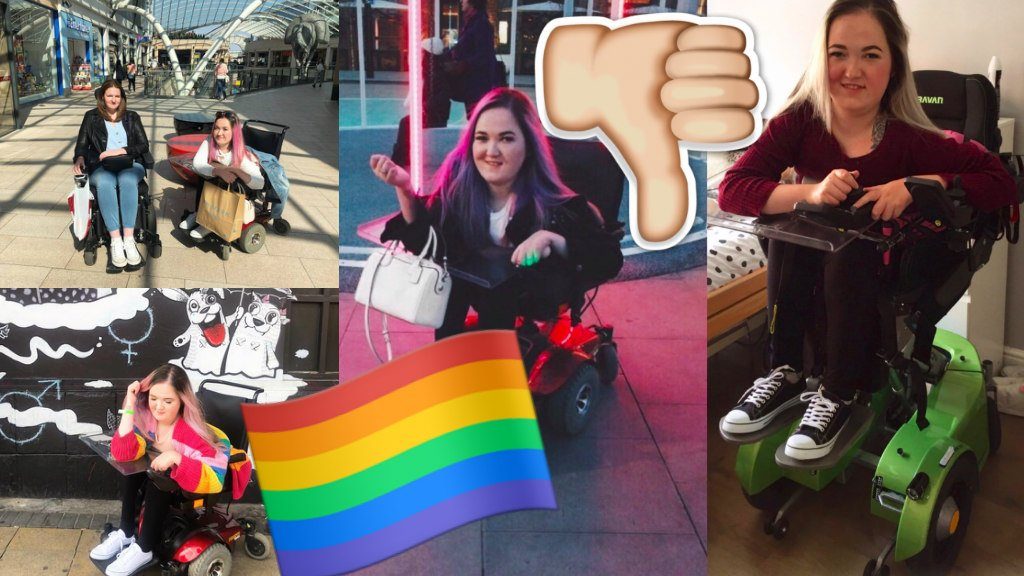
Image description: a collage of screenshots from Kat’s YouTube videos.

I love the YouTube community and feel like it’s a second family. I can definitely see myself working in the media in the future.

I also love that YouTube allows viewer anonymity. Anyone can observe my vidoes without needing to engage with me directly, thereby eliminating any potential awkwardness.

Some people are curious to ask disability-related questions but are often too shy or afraid to do so. They might be scared of saying something that may come across as inappropriate, or they may not know how to address topics appropriately.

I’m open to discussing most topics, however taboo they might seem. For me, it’s about trying to encourage people to interact and engage with me and my videos, as I love to educate, inform, raise awareness and simply chat with curious folk!

Disability Activist

4. You describe yourself as a disability activist. What are the issues that are most important to you?

I grew up feeling super self-conscious about my disability, to the extent I would actually try to ignore it in the hope that one day everything would be ‘normal’. But when you think about it, what is ‘normal’, anyway?

I believe that we should embrace our differences, encourage acceptance and celebrate diversity in all its forms!

I think that society in general still interacts with us (disabled people) in a very condescending and neglectful manner. People are either sweeping us under the rug, or using us as tokens of diversity and not really accepting or understanding our lifestyles. It’s 2018 and frankly, it’s tiring!

I’ve been involved with a number of opportunities, such as speaking on ITV national News about my short film, which I released last year with the help of Fixers UK. I also attended an event in London with Fixers UK, where I spoke to sponsors about my film and promoting disability awareness.

https://www.youtube.com/watch?v=A_Bp9kFNim8)

Following that, I modelled for the BooHoo ‘All Girls’ campaign to promote diversity in society.

Image description: Kat Pemberton modelling for the Boohoo #AllGirls diversity campaign.

I have also presented talks, and held workshops with students and tutors in schools and colleges. As well as participating in panels at the WoW festival, I recently took part in a discussion for BBC 5 Live about how disability can be better represented in the fashion and beauty industry.

Image description: Kat speaking at the WoW festival.

I’d like to thank Kat Pemberton for taking the time to answer my questions.
Twitter, Facebook, Instagram, YouTube

Life, Stress & Coping Strategies

While I’ve been writing and contributing to various other projects, my blog has taken a backseat over the past few months. In all honesty, I’ve recently lacked all motivation and interest to write any blog posts.

I realise many bloggers feel this way from time to time – going through periods of having lots of ideas and enthusiasm, followed by weeks or even months of non-productivity.

I don’t want to go into the reasons for my lack of motivation. Suffice to say, I’ve had other things on my mind. This has resulted in fluctuations in mood, poor focus, zero energy, and insomnia.

For the most part, I’m happy and content with life as it is. Don’t get me wrong, it is far from ideal and there are things I wish were different – things beyond my control. But this is the case for most of us, right?

My point is, sometimes we need to take a break, de-stress and re-evaluate before moving forward. Inevitably, we all experience stress at some point in our lives, and we each have our own methods of dealing with it.


Here are a few of my coping mechanisms:

1. Music therapy ~

Music is a big part of my life and not a day goes by that I don’t listen to some form of music. Most of the time, I can be found wearing earphones. As soon as I have the house to myself, the first thing I do is put music on. I also listen to it every night before bed. If nothing else, it serves as a distraction and helps to prevent overthinking (something I’ll confess, I do a lot).

(Above: YouTube video of the John Lewis TV advert, featuring a little girl dancing carelessly around the house to the song, Tiny Dancer by Elton John. This basically represents me when home alone!)

There are songs appropriate for every mood and occasion. Music has the power to stir emotions, to inspire, to energize, cheer us up, remind us of past events and people. I think I’d go crazy without it!

Here is a recent guest blog post I wrote for Mitch Coles, listing some of my top tunes!

2. Time with loved ones ~

Nothing cheers me up more than babysitting my gorgeous baby nephew, who is almost 15 months old. That kid is truly the love of my life! I may be irritable and in the worst mood, but as soon as I see that little face, everything seems okay.

He’s now at the stage where lots of babbling, climbing (of my wheelchair!) and toddling is taking place. His expressions crack me up, and the way he flashes a beaming smile and puts his arms out for cuddles just melts my heart. On a bad day, there’s nothing better (in my opinion) than taking baby G for a ride on my lap while he beeps the horn again and again and again…

3. Alone time ~

Innately, I am a bit of a loner. I’m not a people person and am quite at ease in my own company. Of course, I enjoy being around those I love and care for. But I also need my own space to just…be! If I’m with lots of people for long periods of time, I reach a point where I need to escape and be on my own for peace of mind.

4. Get out the house ~

Another form of escape. Being stuck at home day after day (as is often the case for many disabled people) sends me stir crazy. Simply getting outdoors can be a huge relief. Sometimes I don’t want or need to go anywhere in particular. It just helps to get in the car and drive around country lanes to get some fresh air and perspective.

5. Avoid social media ~

It’s no secret to those who know me best that I’m no fan. Yes, it serves its purpose and I am fortunate to have met some great friends via social media. For me, this is really the only reason I persevere with it! But again, sometimes I feel the benefit to my state of mind when switching off and abandoning social media, if only for a few days.

This can be difficult as a blogger! But long ago, I promised I would never let myself become the type of person who never looks up from their mobile phone. Even now, I see people tapping away incessantly, unable to tear themselves away from their smartphone, and I wonder what they find to do.

Showing my age now, but I do miss the days before mobile phones were common place; when people actually stopped, looked around, appreciated their surroundings, lived for the moment and spoke to people.


 Please follow me on Twitter and Facebook

Disability & Chronic Illness | Experiencing More Joy

Experiencing more joy might seem a long way off to you, or even impossible to achieve. However, you can improve your happiness simply by adapting your everyday activities, habits and way of thinking. It may sound harsh but it’s important you first choose to stop being a victim of circumstance and start being the hero of your own life!

This is your own unique journey, and you can still make it positive and fulfilling if you are determined enough. Below we have some ideas for finding joy in your everyday life, no matter what your disability, illness or condition. Take a look…

Image Source

Don’t Try To Ignore Or Suppress Your Feelings

First thing’s first: you should not suppress or ignore your true feelings when you begin to feel them.
Inflicting self-judgement and criticism will only have a negative impact. However, this is not to say you should force yourself to feel positive all the time – this just isn’t realistic. We all get down and feel lost and hopeless from time-to-time. Allow yourself time to grieve for whatever or whoever you have lost throughout your life.

Healing Is Not Linear

Healing does not happen in a straight line – it isn’t linear or consistent. One day you may feel great, and the next day you might feel worse than ever.
Write Daily Gratitude Lists
It is hugely beneficial to keep a physical record of all that you are grateful for. Try to get into a regular habit of doing this everyday. It will keep your mind focused and positively proactive.

You might be grateful for your job, friends, family, your home, health and so on. These are just a few ideas to get you started. Try to be specific and review how many different things you can come up with each time you write your gratitude list.

Setting Daily Goals

When you get up each morning, try to set an intention for your day. How do you want to feel today? Is there a specific task or chore you’d like to accomplish? Setting daily goals or intentions can help your day run smoother. As a result, you should find yourself making faster progress towards improving your mood and well-being.

Appreciate At Least Three People Every Day

Whether it’s your partner or a considerate stranger – nurture the important relationships in your life.
Are you appreciative of the people who perform your home care services?
Appreciate The Small Things
You don’t have to have lots of money, possessions and exciting things going on in your life to feel good about it. Appreciating the really small things is important too. Whether you’re reading a good book, chatting with a friend, enjoying a hot cup of coffee or simply watching your favourite TV show – find the enjoyment and fulfilment. The way you frame things in your mind has a lot to do with how happy you feel each day.

Learn To Love And Accept Yourself

Most people find this tough, let alone those with limitations who maybe struggle with things that others don’t. Learning to love and accept yourself will likely be one of the toughest things you set out to do, but it’ll be one of the most worthwhile and important. Don’t compare yourself to others, and find things that you really love and appreciate about yourself every day.

Becoming your own best friend will enable you to always feel comfortable in your own company and never feel the need to escape from yourself.

Join A Support Group

If you want to meet like minded people and share stories and advice, joining a support group could be a great idea. Check out support groups in your area and visit them to see how you feel.

Accept Help If You Need It

If you need help, please don’t be afraid to ask for it – it DOES NOT make you weak. Taking care of yourself and getting other people to help take care of you, whether mentally or physically, is nothing to be ashamed of – quite the opposite. It’s natural to want to maintain as much independence as possible. However, seeking appropriate help and support will allow you to do this for much longer.

Develop New Hobbies And Find Things That Make You Truly Happy

Developing new hobbies is a wonderful way to find happiness. Perhaps you could join a book club, learn to play an instrument, write poetry, paint, draw or do something else with your time – whatever you want to do, just give it a try!

Exercise In A Way That’s Possible For You

You may not be able to exercise much, if at all, but there are likely a few things you can do. Rolling your feet in a circle or moving your head from side to side, for example. Whatever physical activity that is within your limits, do it regularly.

Eat Well

Eating healthily will make you feel good from the inside out. Learn how to read and understand nutritional labels and aim to get plenty of vitamins and minerals into your diet.

Interview | Accessing University as a Disabled Student

My good friend, Lucy, recently graduated from Canterbury Christ Church University with a First-Class Honours degree.

Lucy Hudson at her graduation ceremony

24 year-old Lucy, who lives with her family in Kent, has a progressive form of muscular dystrophy.

Now that she’s free from study, I thought I’d grab her for a chat and ask about her university experience.

Perhaps the insight, information and advice offered here might be helpful to anyone out there with a disability, who is applying to university or considering higher education.

Lucy with her carers and peers at university.

1. Hi Lucy, can you please describe your disability and how it affects you.

Hey! So, I have Congenital Muscular Dystrophy – Merosin Deficient, meaning I lack the merosin needed to knit the layers of my muscles together. Because of this, I get progressively weaker over time due to my muscles being unable to properly repair themselves.

This weakness means I can’t really do anything for myself without support from other people. It also makes daily habits difficult as I lack the strength to hold things and do things. A few examples might be that I find it difficult to feed myself as I find certain cutlery too heavy to lift, I can no longer read books unless they’re digital as I cannot hold them or turn pages, and I need regular hoisting for transfers and the bathroom.

Being a muscle defect, my organs and my lungs in particular are affected, meaning I have regular medication and ventilator intervention to aid my breathing. Lying down helps with this, as well as only being able to write/type lying down, which means I lie down most of the time.

2. Did your disability put off going to university?
And what, if any, concerns did you have prior to applying for university?

I knew it would be difficult to apply to university but I wouldn’t say my disability ever “put me off” of applying. I’ve been very lucky with my education in that my parents have always pushed for inclusion and for me to receive education befitting my abilities. I went to a mainstream primary school, a grammar school for my secondary education, and college after that. So applying for university, whilst scary, was the logical next step for me.

That’s not to say I didn’t have any concerns regarding how I would be able to access higher education with my disability. One of my main worries was that Uni is a very different environment from school in that the campus is a lot bigger! Having hoists and a portable bed so I can lie down is all well and good when it’s accessible but, what if I was timetabled for lectures in a different building to my equipment? It wouldn’t be possible to transfer every 5 minutes, so it took a while to negotiate a timetable solely in one place – it was tough but doable.

3. Could you please explain the application process and any challenges you faced?

The application process itself was exactly the same as if I were an ‘able-bodied’ student – I applied through UCAS and SFE (Student Finance England). However, perhaps most importantly for me, I also had to apply for extra DSA (Disabled Students Allowance) as well. It was the next steps that were a bit different…

After applying and being accepted, I began having regular meetings with the disability officer who would be supporting me during my time at Uni. The disability department at my university in particular was split into different fields: physical disabilities, learning disabilities, and mental health.

We discussed suitable timetabling, storage for my hoists and bed, even suitable places for my carers to chill out whilst I was in lectures. It was all sorted over the summer months before term was due to start.

I chose to live at home with my family throughout the duration of my course (2015-18) rather than on campus, so that was one less thing to organise.

4. What support did you receive and was it difficult to get this support in place?

I have my own team of personal carers, provided by an agency, who supported me whilst a student. In my case, this wasn’t something the university or disability officer organised or supported with.

The DSA I used mainly to pay for transport. I paid for a wheelchair-accessible taxi to take me to Uni or the library each day. The finance was also used to supply me with a MacBook and accompanying software such as Dragon Naturally Speaking and Claroread, as well as a printer and allowances for things like ink cartridges and paper.

I personally found the process of co-ordinating with my disability officer really straightforward at the beginning. She really listened to what my needs were and to the best of her abilities made sure everything was in place before I started my course. However, it was once I had enrolled that her involvement became less proactive. I think a major learning experience for me would be that I should have been more proactive myself in maintaining regular contact with her.

There are undoubtedly going to be a number of disabled students on the system at whichever university you attend. Therefore, I would say if you feel you need help or advice, don’t hesitate to ask! Because, when I did ask, she generally followed through. I only wish I’d asked for her help a lot more than I did.

5. How would you rate your university experience from a disability/inclusivity perspective?

Looking back on my experience as a disabled student, I’d rate my experience quite highly to be honest. There were certain things I found more difficult but generally I was included really well. I was able to lie down in lectures and participate fully, timetabling was set so I remained in one classroom for the entire day (something which my peers were VERY appreciative of, and made it known to me regularly). My equipment both on campus and at the library was easily accessible and staff were very helpful in its safe storage. All members of staff – from lecturers to security and housekeeping were continuously supportive and understanding of my needs.

6. In your opinion, what improvements need to be made to make higher education more accessible to disabled people?

As previously mentioned, I’ve been lucky in having the family support and confidence to access university, but I know how difficult it can be to have that confidence. I think one of the main reasons for this is because the process isn’t made clear or obvious. I mean, I had to work out my own process moving forward after my application. Whilst every process for establishing individual needs at Uni is going to be different, I think it’s important that the availability of such a step is highlighted.

I think UCAS and all university websites should, as a minimum, have a clear disability section outlining key contacts of enquiry. It’s far easier to make confident decisions if you’re fully informed and know that there’s going to be the support you need behind you.

I won’t rose tint – accessing higher education as a disabled student can be like having to find your own way in the dark! By no means is it a clear, easy-to-follow process.

7. What advice would you offer other disabled people considering university?

Having now completed university, I guess I’d advise others to try their best not to get anxious about the process. Yes, it’s daunting. Yes, it’s tough. But ultimately it is worth it.

As long as you’re clear and assertive about your needs, there will always be people around to support you. If you need support with campus or timetabling issues, ask the Uni. If you need help in class, ask your lecturers. If you need a pen, ask one of your peers! It all sounds really obvious and stupid but I can’t stress enough how important it is to just ask for help. But most importantly, be confident in yourself and just be yourself!

8. As a physically disabled individual, what do you consider to be the potential challenges around the social aspect of university life?

I think the social aspects of life in any context can be difficult for disabled people but at Uni it can be especially hard for some. I think one of the most important things to remember is that, actually, it’s not just you and it’s definitely not just disabled people that have this issue.

Many students relocate for university, sometimes half way across the country, sometimes half way across the world. So you’re all going to be in the same boat in that respect.
However, I’m not dismissing the fact that disabled people have it tougher than most. I think the most important thing is, once again, confidence. Many people lack the confidence to introduce themselves to disabled people for a multitude of different reasons – they don’t know what to say, they don’t know if you can respond, they don’t know if you want to be spoken to. All of these things can seriously put people off because they don’t want to embarrass themselves, or you for that matter, so it’s up to us to have the confidence that they lack.

Introduce yourself to people at Freshers’ Fayre, be an active member of your class and, if possible, join a society or two. Be the best version of yourself and people will be drawn to you.

*All images courtesy of Lucy Hudson


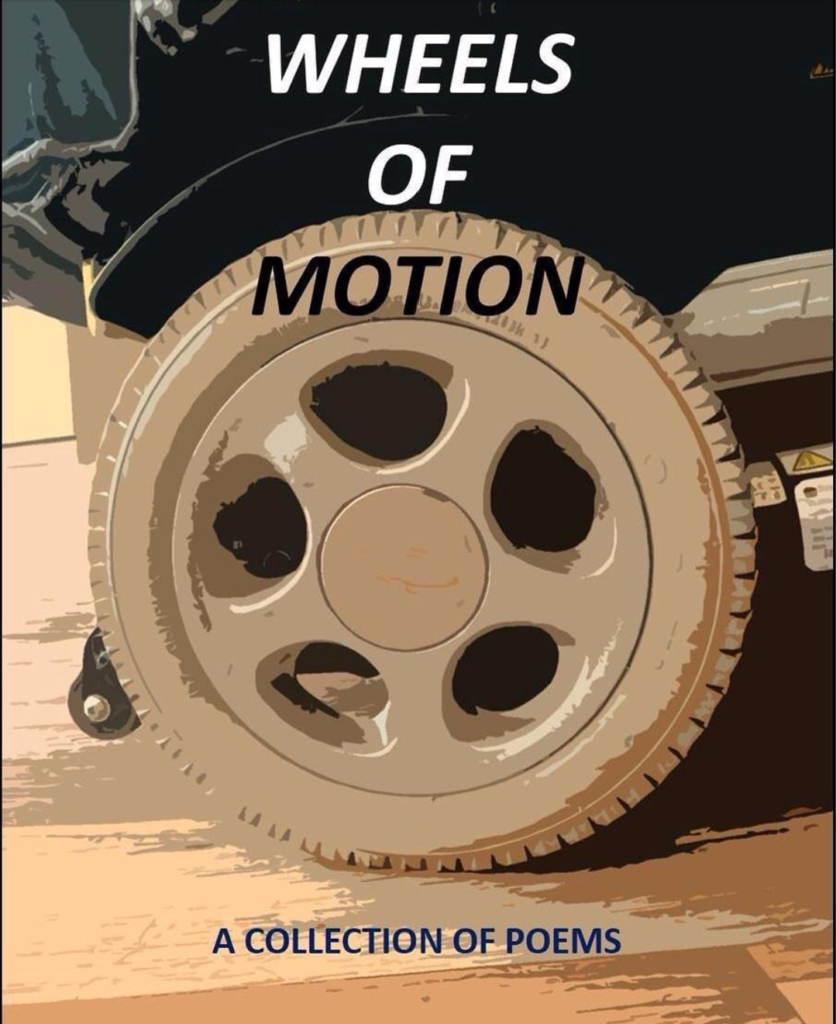
Lucy is a brilliant writer, having co-authored the poetry anthology ‘Wheels of Motion‘ which can be purchased here!

You can also follow Lucy on Twitter


Please follow me on Twitter and Instagram

Britain’s Got Talent | Disability Representation

Are you a Britain’s Got Talent viewer? If like me, you have tuned in this year, you too may have noticed that the semi-final line-up features a number of diversely disabled acts – more so than previous years.

As a wheelchair-user myself, I am thrilled to see disability increasingly represented and celebrated on such a high-profile primetime TV talent show.

Lee Ridley AKA Lost Voice Guy

Lee Ridley, also known as Lost Voice Guy, is the first act through to the live final, having won the audience vote on Monday night. Hotly tipped to win the competition, Lee 37 from Newcastle, has Cerebral Palsy and is unable to speak. This uniquely speechless comedian uses a Lightwriter – a voice synthesiser, and as he says, “walks with a limp”. He is a BBC New Comedy Award Winner who wears slogan T-shirts depicting his self-deprecating and inclusive sense of humour – his audition shirt read, ‘I’m only in it for the parking’.

Lee Ridley AKA Lost Voice Guy

Lost Voice Guy wowed audiences and judges alike with his witty routines that draw attention to and highlight the humour in disability, thereby breaking down barriers and removing social stigma. The “struggling comedian who also struggles to stand up” joked that he “really is disabled. It’s not just really good acting”.

Robert White

Fellow comedian Robert White who has dyslexia, autism and Asperger syndrome, also made it through to Sunday night’s final with his hilariously quirky musical comedy act. The 41 year-old music teacher from West Sussex describes himself as “the only gay, Aspergic, quarter-Welsh comic on the British comedy circuit”.

Though his audition proved impressive, White really upped his game for Wednesday’s live semi-final, in which he employed natural comedy timing to mock the four judges. Accompanied by a keyboard, Robert White flirted with his “next boyfriend” David Walliams and quipped that Amanda Holden dresses far too young for her age, while Alesha Dixon dresses like a hooker! This was met with unanimous rapturous applause and laughter.

Comedian Robert White

Most notably, Robert directly referenced the sensitivity surrounding his condition during his live act: “I am aware that if you mention autism on stage sometimes audiences can go awkward and silent”. This effectively challenges viewers to consider how they receive and react to those of us with a disability, thus initiating the conversation.

Calum Courtney

This year’s youngest finalist is 10 year-old singer Calum Courtney who has a mild form of autism. Calum sailed through to the final after melting hearts with his reworked rendition of Stevie Wonder’s ‘Isn’t She Lovely’, in tribute to his Mum. He didn’t win the overall public vote, but having made it into the top three, was put through by the judges.

Calum Courtney

Calum was part of the line-up at the NSPCC Winter Charity Ball in aid of the National Autistic Society. His endearing and confident audition performance of Michael Jackson’s ‘Who’s Loving You’ caught the crowd’s attention and earned a standing ovation. It just goes to show that even at such a tender age, autism need not be a barrier to success.

RISE Unbroken

Semi-finalists RISE, a group of young dancers from Manchester, presented two moving performances, though they did not make it through to the grand final. Group member 13 year-old Hollie Booth was caught up in the Manchester Arena bombing at an Ariana Grande concert in May 2017. Hollie’s aunt Kellie was one of 22 people who died as a result of the terror attack.

Manchester dance group RISE

Hollie broke her knee, left foot and was left with nerve damage. She has so far had 11 operations and now has to wear an orthotic and use a wheelchair. She was keen to return to the group and continue dancing despite her trauma and the injuries she suffered. As a mark of solidarity and inclusivity in the face of adversity, all RISE dancers incorporate wheelchairs into their routines. The tearful judges hailed the girls as “inspirational”. In this case, I think the term is justified!

B-Positive Choir

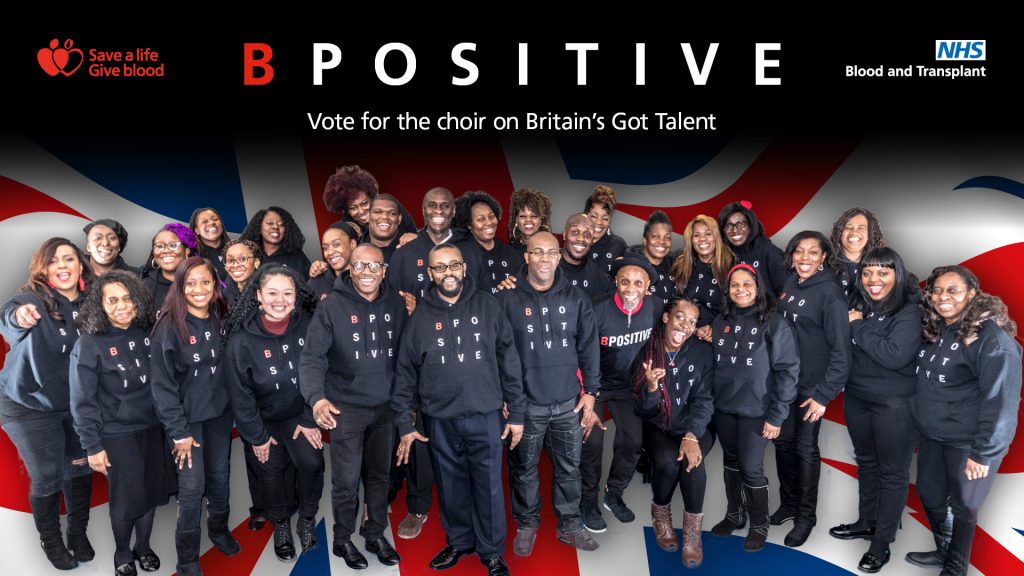
Final mention goes to B-Positive – the official NHS Blood and Transplant choir. The choir consists of 60 singers all of whom suffer from, or are directly affected by, sickle cell disease. Their aim is to raise awareness of the urgent need for blood donation. They sang the “powerful” anthemic hit ‘This is Me’ (a true statement of the importance of diversity). They are hoping for a wild card pass through to Sunday night’s final.

B-Positive Choir

The inclusion of so many disabled acts in this year’s line-up will, I believe, have a positive impact on the disabled community. It suggests and promotes forward-thinking, equality and disability in the mainstream. Furthermore, it inspires open discussion of diversity in all its forms whilst also encouraging society to focus on ability as opposed to inability.

Widespread visibility of disabled talent within the media will naturally be met with questions and curiosity. But that’s okay because it signifies progressive inclusivity.

Many people are talking about the acts they have seen on Britain’s Got Talent. Audiences are realising that it’s acceptable to celebrate disability and to laugh about it! It is okay to ask questions since this educates and informs, thereby resulting in familiarity, recognition and ‘normalisation’.


Please follow me on Twitter and Facebook


Related Blog Posts:

Jonnie Peacock and Strictly Come Dancing

Strictly Come Dancing 2018

Interview | Tabi ~ Singer-Songwriter with Muscular Dystrophy


The Disabled Blogger Tag

In today’s post, I answer some great questions devised by Elin, over at my blurred world, who created the #DisabledBloggerTag.

There are many blogger tags out there, though this is the only one exclusively for disability bloggers – So, my thanks go out to Elin!

I’d also like to thank my friends, Fi Anderson (Mum, disabled blogger and campaigner), Simply Emma (UK travel and disability blogger) and the lovely Claire from a journey in my wheels, for including me in the Disabled Blogger Tag.

Without further ado, let’s get going…


1. When and why did you start your blog?

‘Life on the Slow Lane’ was founded in October 2016, so I’m still relatively new to the blogging scene. I had contemplated it for many months prior, but put it off as I simply thought no one would be interested in anything I have to say. I also didn’t want to rush into it without some sort of plan and objective. But, after much encouragement from friends who told me to just “get on with it”, I finally set up my website and immersed myself in writing. I do however, regret the name of this blog! On reflection, I really wish I had given it more thought.

2. Did you intend to talk about your disability online from the beginning?

Yes, this really was my primary focus. They say, to write well you should write what you know – and having lived with my condition (Ullrich congenital muscular dystrophy) from birth, I would say this is my expert subject!

3. Have you ever been sceptical about talking about your disability online?

Yes, in all honesty I am still often sceptical. I’m actually an incredibly private person. I prefer to remain anonymous and I don’t generally talk about myself or my condition to anyone. Even my closest friends are oblivious to many aspects of how my physical disability affects me.
Having said that, I am aware of how important it is to share knowledge and experiences. By offering wisdom, advice and information via my online platform, other people living with or affected by a disability could benefit.
Furthermore, my form of muscular dystrophy is particularly rare and unheard of. I therefore feel it is my obligation to raise awareness of Ullrich CMD.

4. What kind of response have you/do you receive in terms of your disability related blog posts?

Firstly, I am surprised to receive any feedback at all! As I said previously, I always assume that no one would be interested in anything I have to say. So to read positive comments from complete strangers really is a much needed confidence boost. Knowing that something I have written has helped or provided comfort to at least one person, makes it all worthwhile.


5. Do you write/talk about other topics apart from your disability?

First and foremost, ‘Life on the Slow Lane’ is a disability blog. Not only do I share personal stories and discuss my own condition, I also cover a variety of disability-related topics and feature interviews with disabled people.
I do occasionally write about topical issues too:

  1. There’s no reason to not vote!
  2. A United Kingdom
  3. Armistice Day: Remember & Reflect

On my blog you will also find a few book and film reviews as well as seasonal posts, such as my Halloween specials.

6. What steps do you take to make your blog accessible to yourself as well as other people?

I do the majority of my blogging from my Android Smart phone. It is so much easier than struggling with a heavy laptop, plus it means I can write and edit anywhere and at any time.

Over time, I have tried to edit the design of my blog, in order to make it more accessible for disabled readers. I like to use large-scale images, clear font, larger titles and subtitles, as well as dividers for visual clarity. I have also chosen two contrasting font colours – red and green. Because of its wavelength, the colour green is generally considered to be the easiest for the human eye to see.

Needless to say, there is much more I need to do, to make my blog as accessible as possible. Until now, I haven’t given this issue a great deal of consideration (so, once again, thanks to Elin for bringing it to my attention). I would therefore be incredibly grateful for any suggestions and recommendations from you guys – please leave a comment!

7. What is your favourite thing about blogging about your disability?

Since becoming a disability blogger, I have been fortunate to get to know many of my peers within the disabled community. Some have even become great friends.
I have received a lot of support and learnt a great deal from other people affected by disability. As a result, my outlook on life has changed somewhat, and so too has my attitude towards my own disability.
I do hope that, in a small way at least, my blog is a beneficial contribution to society. The ability to positively affect and influence other individuals through my writing is incredibly rewarding.

8. What are your top three disability related blog posts that you’ve ever published?

  1. My Life with UCMD
  2. Muscular Dystrophy: A Guide for Parents
  3. My Life: Carers, Hoists & Occupational Therapists

9. Do you think that the disabled blogger/YouTube community is overlooked?

Unfortunately I do think it is very much overlooked. However, I do think things are slowly improving as more disabled bloggers are being recognised and applauded for their great work in raising awareness.

I guess essentially, disability isn’t a ‘cool’, popular or fashionable subject to blog about. A disability blogger is highly unlikely to reach an audience as sizeable as a non-disabled beauty blogger, for example. Disability, though it affects so many people (more than you might think), it is not a universal topic with mass appeal.

10. Do you find it difficult to think of new disability related content to publish?

It can be difficult to think of new ideas and original content, that is both interesting and relevant to my readers. I’ll admit, I do often feel like I’m playing catch-up to other, higher profile disability bloggers (which is ridiculous, I know, and a consequence of my own insecurities). I have to sometimes remind myself of why I’m blogging.

11. Do you think blogging about your disability helps to change people’s perceptions?

I can only hope it does! Changing people’s attitudes and perceptions is a very slow process, and one that requires disability bloggers and campaigners to unite and work together in solidarity. Thankfully, the disabled blogger community is amazing and incredibly supportive – an intimate community that I am proud to be a part of!

12. Who do you tag?

It would be great if EmmaGemmaBloo ‘n’ Stuff, Kerry, Mitch, Aidan, Ross, Lucy, Leah and Gem could join in the #DisabledBloggerTag.

I’d also love to hear from you guys! – please feel free to leave a comment and offer your answers to any of these questions.


Please follow me on Twitter and Facebook

Disability & Identity

I was recently invited to participate in a Quality of Life Study, conducted by students at Sheffield University. The ‘Living Life to the Fullest’ research project is aimed at young people (18-30) with life-limiting or life-threatening impairments.

Although data provided by participants is anonymous, I thought the questions asked, along with my personal perspective, might be of interest to some of you.

Below is an extract from my interview. I’d be really interested to know your views and how you might answer…


Do you think the general public hold an accurate understanding of disability? Why or why not?

No, I don’t. I think people who have never had any particular connection or interaction with disabled people lack the knowledge, experience and empathy required to hold an accurate understanding of disability. Furthermore, I think there’s a lack of awareness of how diverse disability is and how many people it actually affects.

I also think people’s perceptions of disability are heavily influenced by the depictions they see in the media. Depictions of disabled people played by able-bodied actors can be very misleading for various reasons. Quite often these portrayals are ‘airbrushed’ and sentimentalized.

The next topic is about your relationship with yourself. Do you have a strong sense of identity? What factors contribute to your identity?

I’m really not sure to be honest. I guess that implies that I don’t have a strong sense of identity. I’ve never really given this question much thought.

I’m not a fan of labelling or categorizing people. At the end of the day, we are all very different, unique individuals.

I guess, in the simplest terms, I am a daughter, a sister, an auntie and a friend. Despite the fact that I often blog about certain aspects of my life, I am actually a very private person who prefers to remain anonymous (or at least, as anonymous as possible).

I identify as somewhat of an introvert. I am incredibly insecure and self-conscious (painfully so) due to my physical disability and the presence of my powered wheelchair. I do feel like people look at the chair before they see me.

I’m very much aware of how different I look compared to ‘normal’ able-bodied people, and how others view and perceive me because of this. I think, because I am so lacking in confidence, my sense of self and identity is negatively impacted.

I am much better at thinking, talking about and dealing with other people and their problems versus my own!

Do you identify as disabled? Has this changed over time?

Yes, I do identify as disabled, though my disability does not define me as a person. I have no problem with the term, nor being referring to as a disabled person. It is simply a matter of fact. In the same way I would describe myself as a white, British female, I am also physically disabled.

I have Ullrich congenital muscular dystrophy. There is no hiding or escaping from it, therefore I choose to accept and embrace it.

Since I began blogging, I have noticed a lot of discussion, within the disabled community, regarding the topics of terminology and semantics. There are those who take offence at being identified as, or even labelled ‘disabled’. Some may prefer terms such as ‘differently abled’. (Personally, I find this descriptor a little ridiculous and would never refer to myself as ‘differently abled’). Then again, there are those who don’t consider their impairment to be a notable part of their identity at all.

My view on this has remained consistent throughout my life. My condition is congenital, meaning that I have lived with it from birth and have always been aware of it. I am disabled. In all honesty, I really wish I wasn’t! But the fact is, I am. To me, there’s really no point in denying or ignoring this part of my identity.

You’ve mentioned your thoughts around how others perceive you and how you therefore perceive yourself. Does how you think others perceive you (or even how you perceive yourself) change depending upon context (e.g. at work; with family; with friends)?

I think the way others perceive me varies depending on context. If I’m out and about amongst the general public – for example, shopping with friends – I do notice looks and stares from strangers. It can be bothersome. Some people are so indiscreet and don’t think twice about glaring!

Complete strangers have approached me in the street, clearly feeling entitled to pass judgement and make offensive and inappropriate comments regarding my disability. For instance, a man once asked if I believe in God. Put on the spot (and obviously quite shocked) I hastily answered, ‘no’. He then told me that is the reason I am in a wheelchair!

However, for the most part, I don’t take offence at people looking or staring, so long as they are respectful. I appreciate that by nature, people are inquisitive. All of us, myself included, are curious about anything considered different or not the norm. For this reason, I will happily answer disability-related questions from people who are polite and considerate.

I can’t speak on their behalf but in general, I think (or assume) my family don’t even see my disability. I’m just Carrie. The only time it really smacks them in the face (so to speak) is when I get ill.

In terms of how I perceive myself, I think this is fairly consistent regardless of context. I am very self-deprecating and self-critical. Essentially, I have always wanted to fit in, especially during my school years. I want to be able to do all the things able-bodied people can. I want to be independent, to drive, to walk, to run, to be spontaneous and do things without having to plan or rely on others.

This research project is about young people with ‘life-limiting’ or ‘life-threatening’ impairments ( LL/LTIs), the next questions surround living with that.
What does ‘life-limiting’ mean to you?

I consider myself to have a life-limiting condition (Ullrich congenital muscular dystrophy). I have come to terms with the fact that my disability will inevitably impact how long I live. Although people with the same condition are now living longer thanks to various treatments and medical intervention, life expectancy is still much shorter than the average person.

I dread winter and all the viruses circulating throughout the community. Every time I get a cold it leads to a chest infection. For me this is very serious since it often develops into a more complex issue. Many times over the years, I have been admitted to hospital with respiratory complaints including pneumonia, pneumothorax (collapsed lung) and pleurisy.

*I did elaborate further during my interview, though for personal reasons, I have chosen not to include the rest of my answer here.

Does this impact any decisions you make?

YES! All of my decisions. I had a particularly bad bout of pneumonia in 2013. It took many months for me to recover and was incredibly difficult to overcome, both physically and mentally. At that point, my priorities changed.

Up until then I had been pursuing my aims of moving out of my parental home, and finding employment….but after realising how fragile my body actually is, I decided to end the lengthy quest for accommodation – an incredibly stressful quest that I had been struggling with for over two years, without assistance!

My primary focus now is health and happiness. I have to do what is best to protect and care for my body.

*I have chosen to remove parts of my original answer to this question.

Do you feel like it is important to set goals? And does anything stop you from doing this? Are your goals are shaped by what support is assumed to be/not be available or by the support you currently receive?

My mother keeps encouraging me to set goals, like aiming for at least one holiday per year. She wants me to make the most out of the time I have – however long or short – which I understand and agree with.

In August 2017, my first nephew was born. This has been the biggest motivation for me to keep going – to pursue good health, happiness and to embrace life!

I am so much happier since he was born – everyone has noticed. I often say, I hope to live long enough to see him grow up. I want most of all for him to remember me. So this is my biggest goal.

This question is rather pertinent as I currently have only one part-time PCA (personal care assistant). She is very young and hates driving my wheelchair accessible vehicle. As a result, I feel very isolated and excluded from society. I would like to be able to get out, to meet friends and go to events. But right now I am unable to, as I don’t have the support in place.

You have talked about not being able to get out of the house. Would you say you ever feel lonely or that you miss out because of your disability?
Do you miss out more because of your own health problems or accessibility issues?

Yes, definitely. There are times I feel lonely even though I am by nature quite a solitary person. I am more than happy with my own company – it’s a good job, really!

I’m not a fan of social media at all. But like it or not, for me it is a lifeline. Without it, I would feel incredibly isolated. I mostly use Facebook Messenger in order to stay in touch with friends and to meet others in a similar position to myself.

Health problems as well as accessibility issues contribute to missed opportunities. So many times I have made plans, then had to cancel due to ill health – usually chest infections. Because of this, I am now very reluctant to make future plans for fear of disappointment.

For example, I finally managed to book tickets for the Strictly Come Dancing, January 2017 tour. I was so excited and had looked forward to it for months. I then caught a severe chest infection and was unable to go. It may sound dramatic but I was gutted. I had tried to get tickets for years but couldn’t, as the limited accessible seating was always sold out.

What worries you about your future with a complex condition? What would you say is your biggest worry?

I worry most about my health and my ability to fight respiratory illness. As a kid, when I got a chest infection I would need a course of antibiotics and a week off school to recover. However, as I have aged, the duration of these illnesses has gradually increased. They have become much more complex to treat too. These days, it takes everything I have to overcome a chest infection. I worry about how many more times I am able to do it and therefore what I might miss out on in life.

How has your family been impacted (for better or worse) by your disability? For example, has it affected them financially or affected your relationships with them? How do you feel about this?

Wow – there is no end to how much my family has been impacted by my disability!

Yes, very much financially. For one thing, I have a ground-floor bedroom/bathroom extension that was built in 2000. Back then, my parents’ income was assessed. They were entitled to a partial grant, though this was a very small sum. In order to fund the build, they had to take out a second mortgage.

Holidays are MUCH more expensive than they would be for the average family. Medical insurance and the need for accessible accommodation, plus equipment hire makes vacationing rather costly.

Essential mobility equipment such as manual and powered wheelchairs are a huge expense!

Furthermore, my parents are affected physically (owing to many years of lifting and manual handling) and emotionally. Obviously they are aware of the fact that my condition is life-limiting, even though this is not discussed. When I am hospitalised, my whole family experience a great deal of distress.

Relationships are inevitably affected. At the age of 29, I still live with my parents in their home, and we are very much in each others pockets. They remain my primary source of support. I am unable to escape when disputes occur – to go for a walk or a drive in order to ease tension and let off steam. This I find incredibly frustrating.

What makes for a good community in regards to disability?

I’m really not sure how to answer this question. Sadly, I don’t think this can ever be fully achieved, as there will always be prejudice, ignorance and exclusion. I think crucially, there needs to be greater awareness, familiarity and education so that disability becomes part of the norm. We need to work in unity to break down barriers and make disability socially acceptable.

How do you feel about dating with a disability? Do you think it is harder when you’re disabled?

It is definitely harder with a disability – or so I have found. I think one of the biggest obstacles is the initial meet and greet stage.

We (disabled people) face assumptions, social prejudice and environmental limitations e.g. Access to buildings and public transport – thus making dating all the more challenging. Then there are our own physical limitations.

I am completely non-ambulant, I have contractures, a severe scoliosis and overall muscle degeneration. These physical limitations have made me overtly self-conscious, socially awkward and anxious when meeting new people.


Thanks for reading! If you found this interesting, leave a comment and share so that others can join in the discussion.

Please follow me on Twitter and Facebook