Interview | Becky Dann

Art & Disability

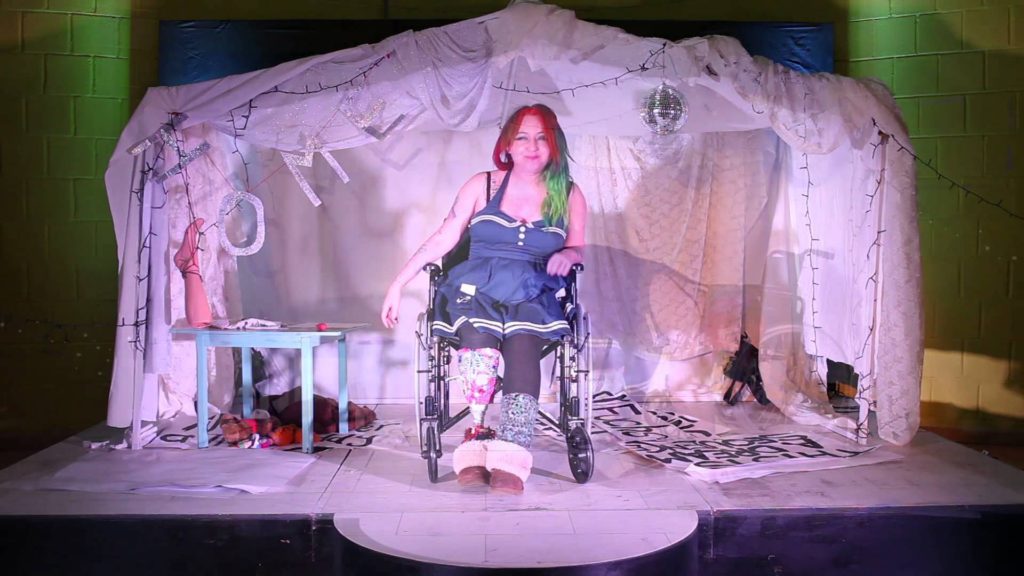
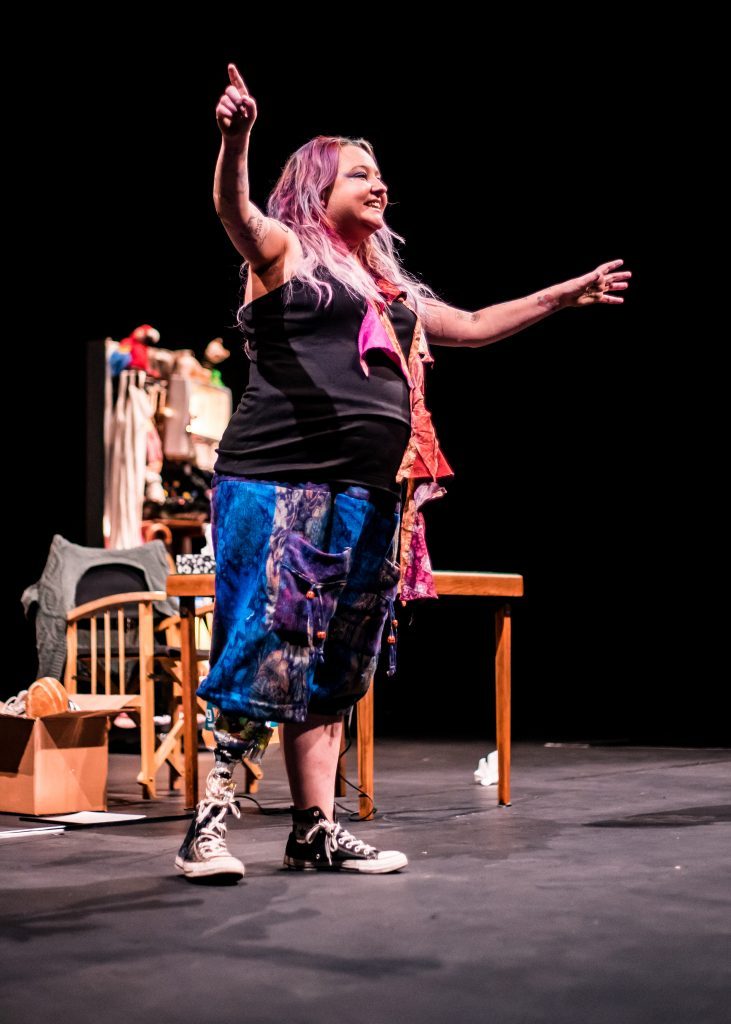
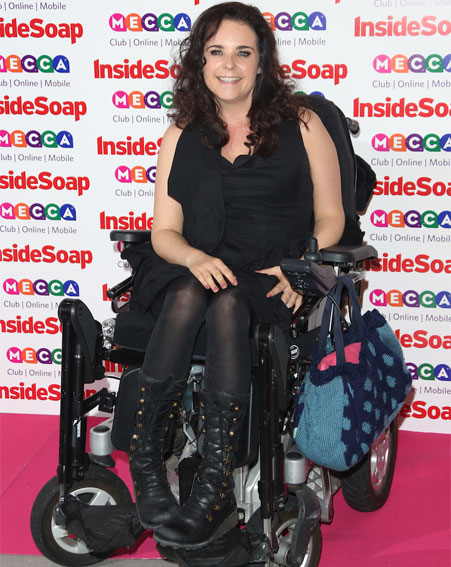
24 year-old Becky Dann has kyphoscoliosis – a severe curvature of the spine. She was diagnosed at the age of four and became a wheelchair-user from the age of nine. She was subsequently bullied at school for her physical appearance.

You may recognise Becky as one of the participants from series 8 of the hit Channel 4 television show, The Undateables. But what you may not know is that she is also an accomplised artist.

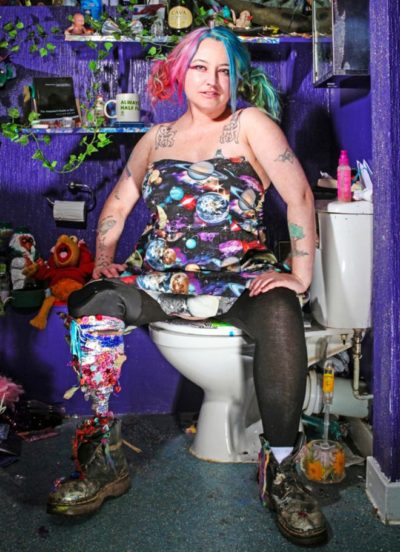
As someone who has studied art throughout school and at undergraduate level myself, I thought it would be interesting to chat with Becky about her striking photography series, ‘I’m Fine’, and her work with Shape Arts, London.


1. Can you tell us about your photography project entitled, ‘I’m Fine’?

‘I’m Fine’ is a project that started in my second year of university. For most of my childhood, I was told I was different (due to my disability) and I didn’t understand it because I felt just like everyone else. University was when I really started to accept myself and how I looked. It was also the time when I started to realise that it wasn’t okay that I was constantly treated differently instead of an equal.

The project originally started with a research and development period, which looked at dating with a disability. As someone who started out very much hiding my disability online, I then explored why I did this and what the outcome was once I told someone. I then looked at the difference in dating online when my disability was put out there publicly from the outset.

As time went on I started to realise that looking deeper into things, I wanted to use this project as a ‘self-exploration’ project as well as a ‘challenging perceptions’ project. I was okay with how I looked – I wanted others to know that I’m okay and that people shouldn’t see me differently.

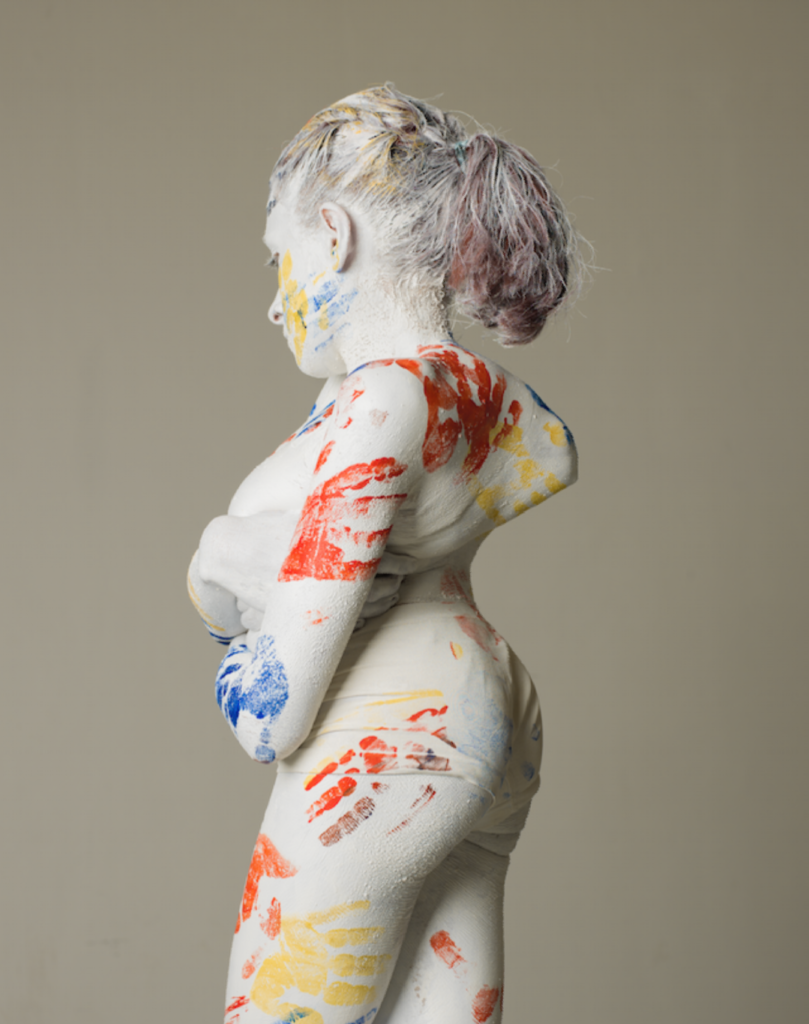
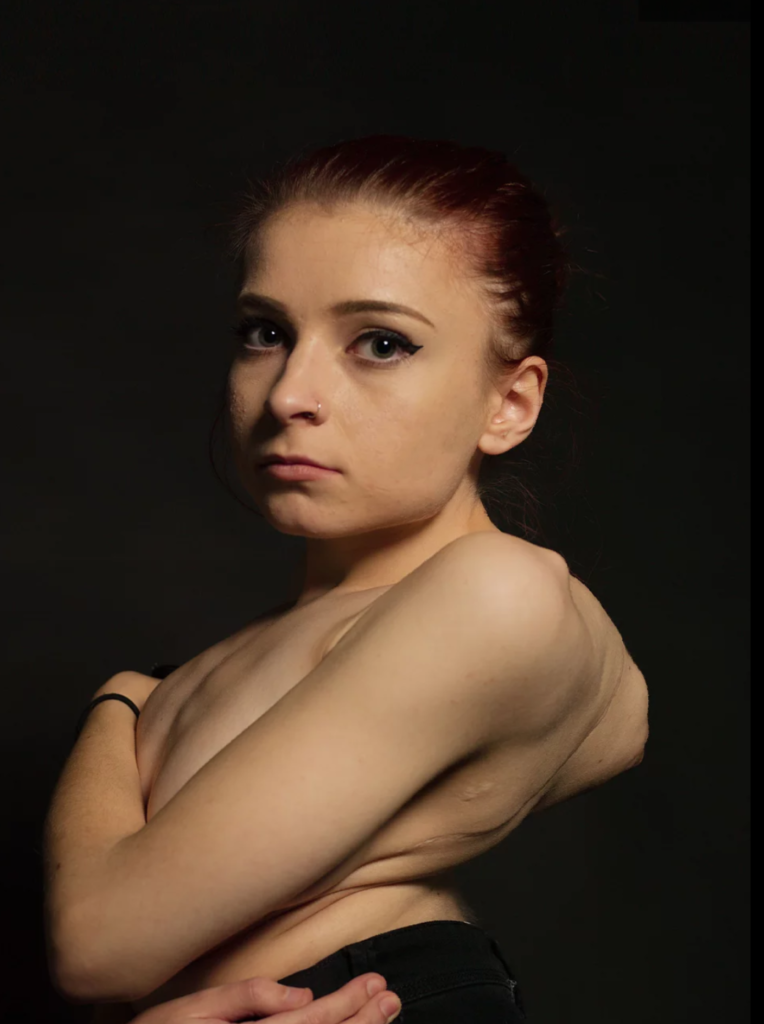
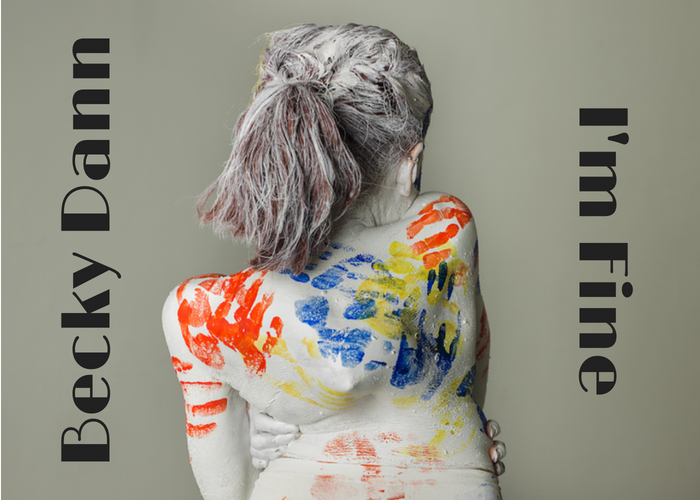
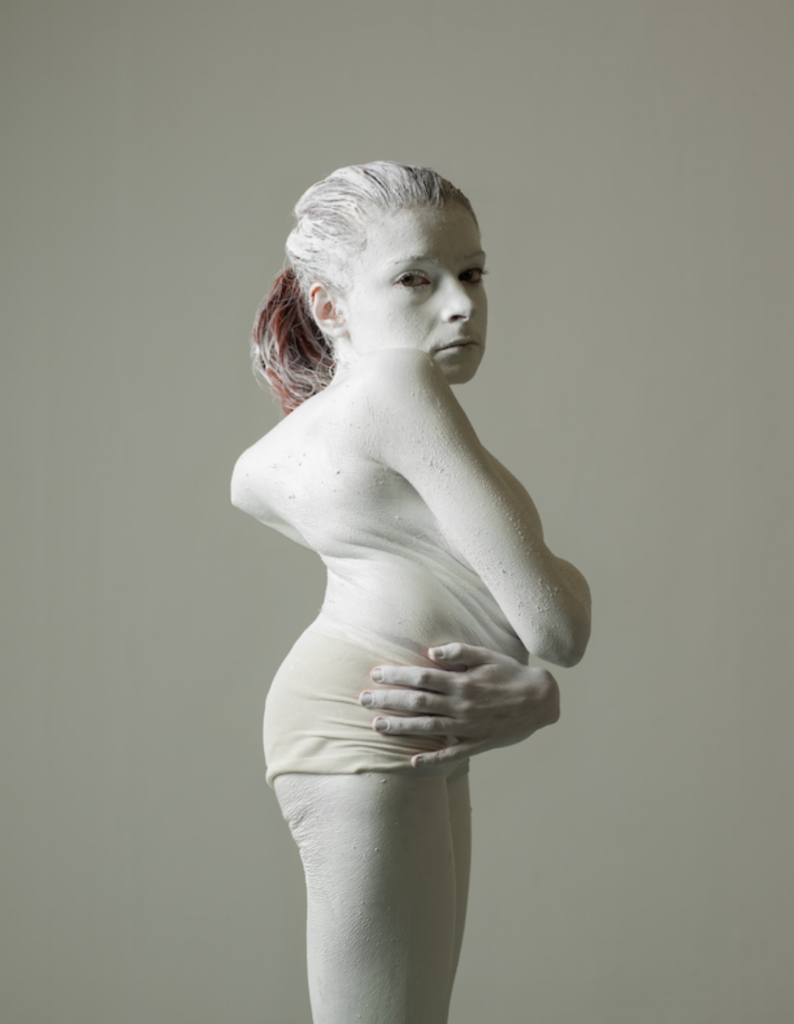
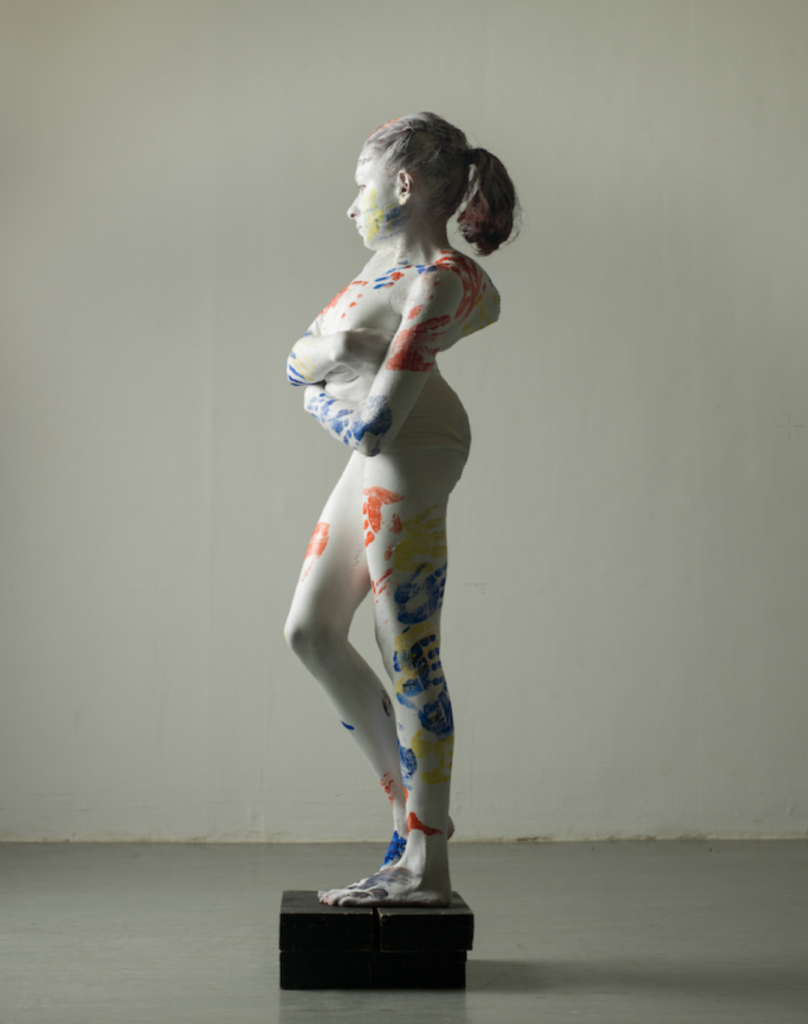
I decided to take some self-portraits in the studio as I wanted to show myself with my scoliosis on show as if to say, ‘this is me, I’m fine’.

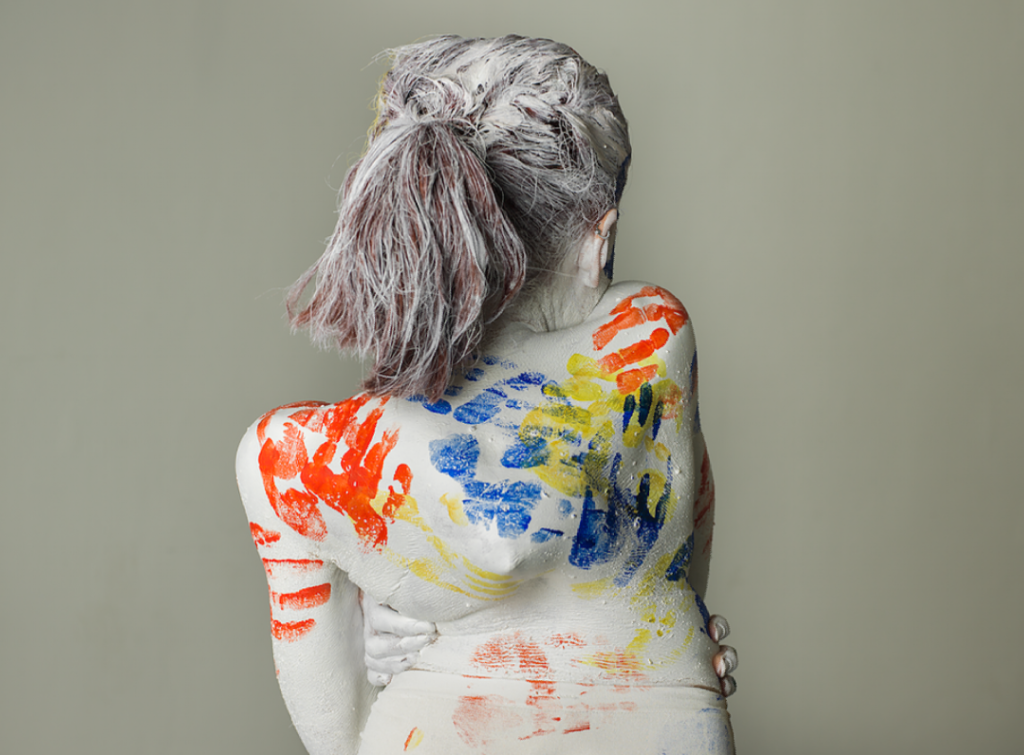
Over the second and third year of university, I really explored this concept deeper and decided to develop the self-portraits into a live art piece. I wanted an audience and I wanted to challenge how comfortable they were around someone with a ‘different’ body. So, I advertised around my university – it was explained to audience members that the piece was a participatory piece whereby they were invited to paint a handprint and place it somewhere on my body, wherever they felt comfortable. Of course I kept my modest areas covered so people couldn’t take advantage, but I left my back clear.

It was really interesting because I was effectively a ‘statue’ and couldn’t talk. People were told to put the handprint anywhere on my body, but they continued to try and ask me where was acceptable. At one point I heard someone say, “There’s nowhere left”, though I knew full well that my back had not been touched. It wasn’t until one confident person put a handprint on my back that suddenly everyone realised it was okay.
© Copyright Rebecca Dann

2. How was your university experience (in terms of inclusivity and being a student with a physical disability)?

When I first started university (the University for the Creative Arts in Farnham, Surrey) I was a full time wheelchair user with no clue what I was entitled to and I didn’t even know I was dyslexic. I remember first viewing my accommodation and quickly picking up on the fact that they seemed to put all disabled people together in one building, which was incredibly segratory.

I struggled to start with because I started to realise that a lot of my curriculum involved doing outdoor photography shoots, and I wasn’t sure how to do this without help – I couldn’t physically carry everything. I eventually asked for help and was pointed to our student services, where I was soon set up with a support worker which became really helpful to me.

In school, I had always struggled to retain information and although this was passed off without concern or investigation, I knew something wasn’t right. It wasn’t until I reached university that one of my tutors hinted that some students may want to go to student services for dyslexia support. I decided to seek help and see if that was the problem, and low and behold it turns out that I am in fact dyslexic! This meant I was given support with essays which became so useful since it really helped me to work to my full potential. I went from being a C/D grade student in my first year, to an A/B student in second and third year, eventually graduating with a First Class Honors degree.

I also gained enough movement in my legs during my second year, enabling me to start walking more with a crutch. Thankfully, my campus was so small and so going from campus to class was simple for me. It was great to finally feel independent.

Admittedly, I was really lucky at university as I had very supportive tutors around me, and I was there when DSA (Disabled Students’ Allowance) was in full force. But it was in my final year at university that I really started to notice how things needed to change for disabled students. Consequently, I ran for Disabled Students’ Officer in my Students’ Union elections, so that I could help represent my peers on campus. I won the election and helped make changes which was great. This then spurred me on to run for Campus President at my Students’ Union, where I was able to continue representing disabled students. I got to sit on boards within the university such as the Equality and Diversity board and the Inclusion board. I was able to speak out on behalf of disabled students, and help the university to become more inclusive. Furthermore, I was asked to speak at conferences with university staff about the importance of an inclusive education, and I was told by tutors who worked there that I’d made a real impact which meant a lot to me.

I was incredibly sad to say goodbye to my university, but I had the best years of my life there and I still speak to some of the staff!

3. What does your job at Shape Arts involve?

I work for an arts commissioning programme called Unlimited, which is run by Shape Arts and Artsadmin, two arts organisations in London. I am based at Shape Arts, an organisation working in the arts sector to improve access for and representation of disabled people, part of which is providing and sharing opportunities for disabled artists.

Unlimited commissions disabled artists to create their work. We have had some amazing artists such as Jess Thom from Touretteshero and Jackie Hagan too.

I am a trainee and have been working there just over a year. I am a key contact for a few of our artists, which means I am their point of call with anything regarding their commissions. When our current commissions are ready to tour, Southbank Centre has a festival at which some of our artists get to show their work. The next festival is 5 – 9 September 2018.

My role allows me the opportunity to do a lot of great things such as travelling to see different artworks, which I love. I recently went to Bristol and saw ‘The Nature of Why’ by Paraorchestra, another Unlimited commission at The Bristol Old Vic. I had already heard about Paraorchestra through working here, though I hadn’t seen any of their work and so I wasn’t entirely sure what to expect.

As someone who isn’t usually good with immersive art, I was kind of nervous when I found out that the performance was around the audience and that dancers could come up to you. But as soon as the musicians started singing and the music started, there was a sudden wave of emotion that came over me. I listened to the whole piece so intensely and I felt so much emotion that I ended up crying! It was amazing and made me feel incredibly happy. I really love my job!


🌟 All images courtesy of Becky Dann.

Follow Becky on social media:
Twitter: @BeckyDann
Instagram: BeckyDann
Website: rebeccadann.wixsite.com/photography

I’d like to thank Becky for taking the time to speak with me and answer my questions.

Please follow me on Twitter and Facebook

The Disabled Blogger Tag

In today’s post, I answer some great questions devised by Elin, over at my blurred world, who created the #DisabledBloggerTag.

There are many blogger tags out there, though this is the only one exclusively for disability bloggers – So, my thanks go out to Elin!

I’d also like to thank my friends, Fi Anderson (Mum, disabled blogger and campaigner), Simply Emma (UK travel and disability blogger) and the lovely Claire from a journey in my wheels, for including me in the Disabled Blogger Tag.

Without further ado, let’s get going…


1. When and why did you start your blog?

‘Life on the Slow Lane’ was founded in October 2016, so I’m still relatively new to the blogging scene. I had contemplated it for many months prior, but put it off as I simply thought no one would be interested in anything I have to say. I also didn’t want to rush into it without some sort of plan and objective. But, after much encouragement from friends who told me to just “get on with it”, I finally set up my website and immersed myself in writing. I do however, regret the name of this blog! On reflection, I really wish I had given it more thought.

2. Did you intend to talk about your disability online from the beginning?

Yes, this really was my primary focus. They say, to write well you should write what you know – and having lived with my condition (Ullrich congenital muscular dystrophy) from birth, I would say this is my expert subject!

3. Have you ever been sceptical about talking about your disability online?

Yes, in all honesty I am still often sceptical. I’m actually an incredibly private person. I prefer to remain anonymous and I don’t generally talk about myself or my condition to anyone. Even my closest friends are oblivious to many aspects of how my physical disability affects me.
Having said that, I am aware of how important it is to share knowledge and experiences. By offering wisdom, advice and information via my online platform, other people living with or affected by a disability could benefit.
Furthermore, my form of muscular dystrophy is particularly rare and unheard of. I therefore feel it is my obligation to raise awareness of Ullrich CMD.

4. What kind of response have you/do you receive in terms of your disability related blog posts?

Firstly, I am surprised to receive any feedback at all! As I said previously, I always assume that no one would be interested in anything I have to say. So to read positive comments from complete strangers really is a much needed confidence boost. Knowing that something I have written has helped or provided comfort to at least one person, makes it all worthwhile.


5. Do you write/talk about other topics apart from your disability?

First and foremost, ‘Life on the Slow Lane’ is a disability blog. Not only do I share personal stories and discuss my own condition, I also cover a variety of disability-related topics and feature interviews with disabled people.
I do occasionally write about topical issues too:

  1. There’s no reason to not vote!
  2. A United Kingdom
  3. Armistice Day: Remember & Reflect

On my blog you will also find a few book and film reviews as well as seasonal posts, such as my Halloween specials.

6. What steps do you take to make your blog accessible to yourself as well as other people?

I do the majority of my blogging from my Android Smart phone. It is so much easier than struggling with a heavy laptop, plus it means I can write and edit anywhere and at any time.

Over time, I have tried to edit the design of my blog, in order to make it more accessible for disabled readers. I like to use large-scale images, clear font, larger titles and subtitles, as well as dividers for visual clarity. I have also chosen two contrasting font colours – red and green. Because of its wavelength, the colour green is generally considered to be the easiest for the human eye to see.

Needless to say, there is much more I need to do, to make my blog as accessible as possible. Until now, I haven’t given this issue a great deal of consideration (so, once again, thanks to Elin for bringing it to my attention). I would therefore be incredibly grateful for any suggestions and recommendations from you guys – please leave a comment!

7. What is your favourite thing about blogging about your disability?

Since becoming a disability blogger, I have been fortunate to get to know many of my peers within the disabled community. Some have even become great friends.
I have received a lot of support and learnt a great deal from other people affected by disability. As a result, my outlook on life has changed somewhat, and so too has my attitude towards my own disability.
I do hope that, in a small way at least, my blog is a beneficial contribution to society. The ability to positively affect and influence other individuals through my writing is incredibly rewarding.

8. What are your top three disability related blog posts that you’ve ever published?

  1. My Life with UCMD
  2. Muscular Dystrophy: A Guide for Parents
  3. My Life: Carers, Hoists & Occupational Therapists

9. Do you think that the disabled blogger/YouTube community is overlooked?

Unfortunately I do think it is very much overlooked. However, I do think things are slowly improving as more disabled bloggers are being recognised and applauded for their great work in raising awareness.

I guess essentially, disability isn’t a ‘cool’, popular or fashionable subject to blog about. A disability blogger is highly unlikely to reach an audience as sizeable as a non-disabled beauty blogger, for example. Disability, though it affects so many people (more than you might think), it is not a universal topic with mass appeal.

10. Do you find it difficult to think of new disability related content to publish?

It can be difficult to think of new ideas and original content, that is both interesting and relevant to my readers. I’ll admit, I do often feel like I’m playing catch-up to other, higher profile disability bloggers (which is ridiculous, I know, and a consequence of my own insecurities). I have to sometimes remind myself of why I’m blogging.

11. Do you think blogging about your disability helps to change people’s perceptions?

I can only hope it does! Changing people’s attitudes and perceptions is a very slow process, and one that requires disability bloggers and campaigners to unite and work together in solidarity. Thankfully, the disabled blogger community is amazing and incredibly supportive – an intimate community that I am proud to be a part of!

12. Who do you tag?

It would be great if EmmaGemmaBloo ‘n’ Stuff, Kerry, Mitch, Aidan, Ross, Lucy, Leah and Gem could join in the #DisabledBloggerTag.

I’d also love to hear from you guys! – please feel free to leave a comment and offer your answers to any of these questions.


Please follow me on Twitter and Facebook

Interview | Daniel Baker

Disabled Actor

Daniel Baker is a first-time actor who landed the role of a man with Duchenne muscular dystrophy, in the primetime BBC1 drama, Requiem. Most notably, Daniel himself has the condition.

Muscular Dystrophy UK contacted Daniel after the production team specifically set out to cast someone with the disability. He appears in the psychological thriller, alongside Brendan Coyle, best known as John Bates from Downton Abbey.

The newcomer, from Cheltenham, is one of the few men with Duchenne muscular dystrophy to reach his forties. Here, he talks openly about life with a muscle-wasting condition, tells all about his debut acting experience, and shares his views on able-bodied actors portraying disabled characters.


1. Could you please tell us a little about yourself and your disability?

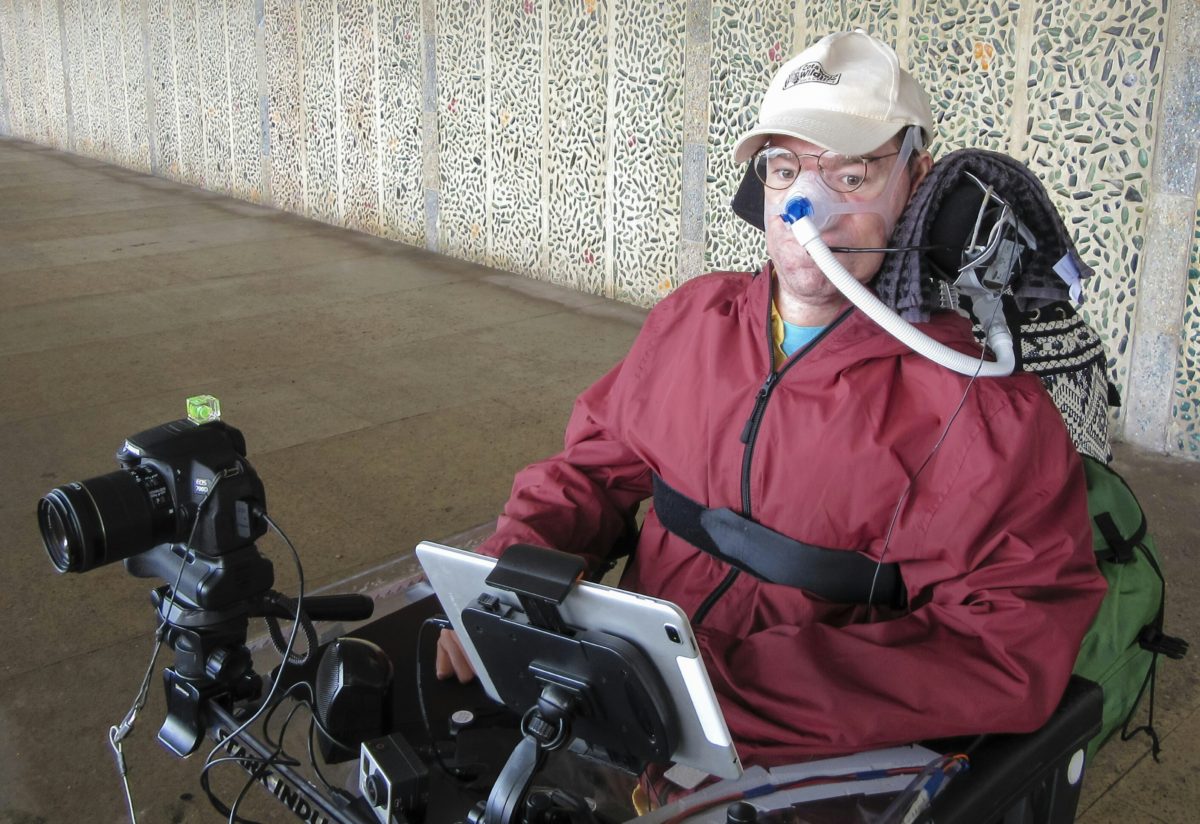
I am a 43 year-old man with Duchenne muscular dystrophy. I had a fairly normal childhood until the final years of primary school, when I could no longer walk and had to start using a wheelchair. I attended mainstream schools, followed by university. After university my condition worsened and I was given a ventilator to help me breathe. Due to this and some medication which caused negative side effects such as panic attacks, I ended up being bed-bound for nearly ten years. However, I eventually managed to control my anxiety. Then, after raising the funds for a new powered wheelchair, I faced the outside world again.

Duchenne is a condition where muscles get progressively weaker over time. We usually end up in a wheelchair by our early teens and require ventilation in our twenties. Although things have progressed medically, life expectancy is still in the 20’s. Some of us are living far longer than this, but sadly it’s still rare.

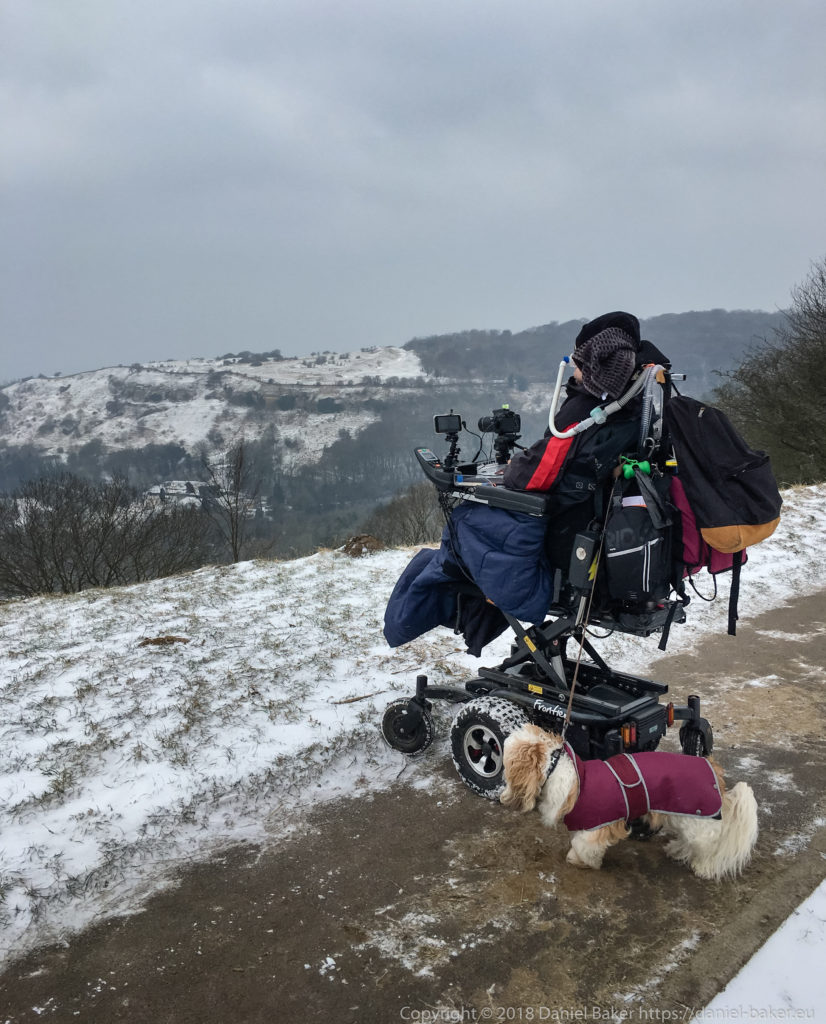
I try to live as normal a life as possible, and although there are always going to be limitations, I push myself and use technology to find ways around them. I manage to get out most days to either explore my hobby of photography or just walk my dogs. The dogs have their leads attached to my wheelchair so I can actually walk them myself. I still need someone with a pooper-scooper following me though as I can’t reach to do that job!

2. You achieved a BSc(Hons) in Applied Physics from Oxford Brookes University. How was your university experience in terms of inclusivity and disability awareness?

I attended university and got a government grant to pay for everything. I also received another grant called the Snowdon Award, which paid for travelling and a carer to help me. Nowadays things look much harder for anyone wanting to attend university and I doubt I would have been able to afford it myself.

I decided to commute each day as living on campus and finding accessible accommodation would have been very difficult for me. The journey varied between an hour and two hours each way, and though this was very tiring, it gave me chance to read text books and revise while in the car.

One consequence of not living closer was that I missed out on the social aspect of university life. I wasn’t overly bothered at the time as I’ve always liked my own company and was really there just to learn. But now when I look back, I think more socialising may have done me good.

The university itself was fairly accessible. There was one lift that was tiny and would break down on occasion, necessitating me being carried down stairs in my wheelchair- not a pleasant experience!

As I studied physics, I did need help performing the experiments, though luckily most lab work was done in groups so it wasn’t a big issue. The staff were always helpful and treated me like any other student. I can’t really complain about the inclusiveness and accessibility at all. Yes, some things could have been better, like having more accessible toilets. But overall it was a good experience and I’m grateful to have had that opportunity.

3. You recently featured in 2 episodes of Requiem (congratulations!) How was this experience and what challenges did you face as a disabled actor?

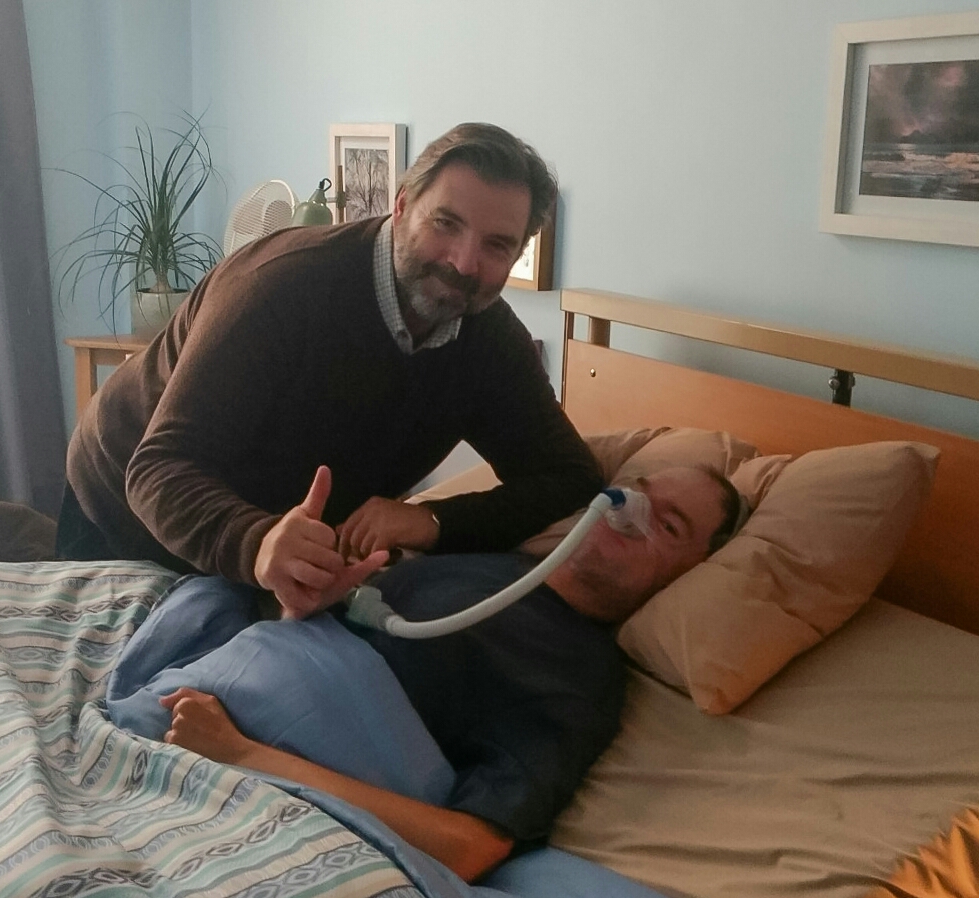
Daniel with actor and co-star, Brendan Coyle

Appearing in Requiem was an amazing experience! I had never acted in any fashion before, other than primary school plays where I usually hid in the background. So the whole experience was something new to me and pushed my boundaries – something I try to do as much as possible these days.

I think the casting process was likely a lot easier due to my disability. They were looking for someone with my specific condition and there aren’t that many of us around. I sent a few headshots and pictures of myself, then chatted with the production team over email. I was offered the part within a couple of days.

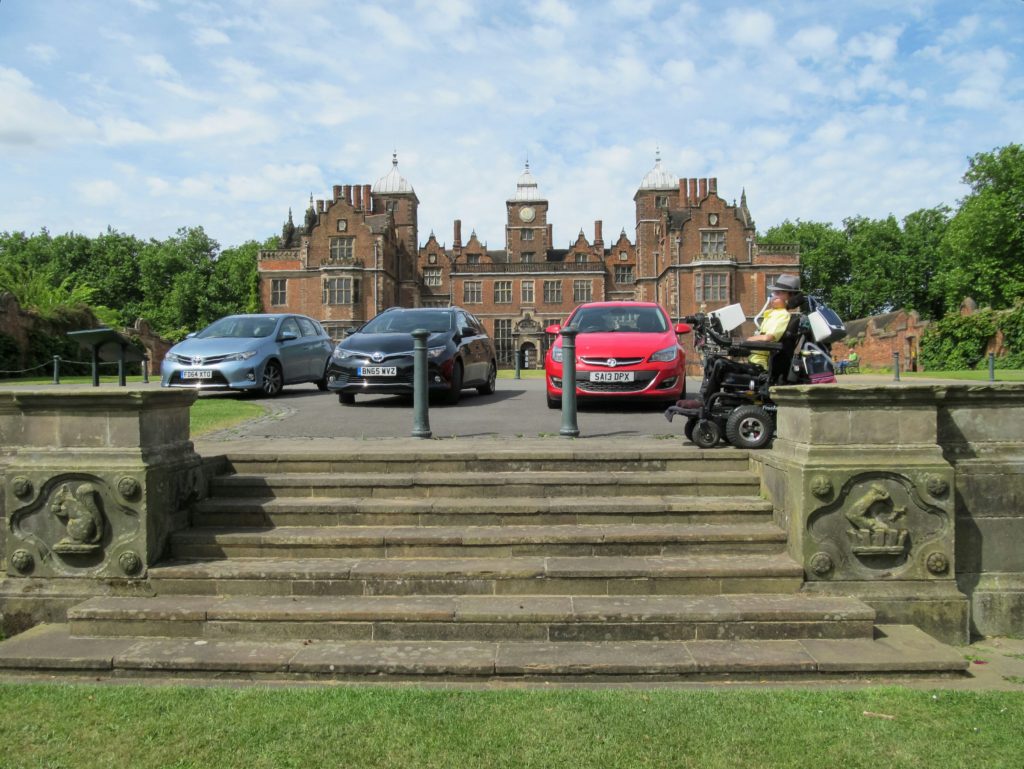
Daniel at Aston Hall in Birmingham

As for difficulties, I think they probably aren’t the things people would expect or think about. As soon as the offer of a role came up, I had to check that my personal assistant would be available and flexible to take me. I had to think about transport and did some research to find which trains had the best accessible carriages without any changes. I even did a test run the week before filming just to make sure everything would go smoothly. I had long chats with the production team to ensure the correct equipment, like a portable hoist, would be available on the day. They were very thorough and wanted to make sure I was safe and comfortable. This is something most actors wouldn’t need to even think or worry about.

I was extremely lucky to be working with a great team on Requiem. They ensured I had my own room on set, organised taxis and sent a runner to meet me at the train station. They also had a medic check my needs on set in case of emergency, and made sure the set itself was accessible.

The day itself was perfect. Everyone (cast and crew) welcomed me into their family and I felt right at home. I didn’t feel nervous at all and the scenes were all shot in one take, which I think really impressed them. I felt just like any other actor – I was treated as one of the team and not “special”.

4. As a disabled actor yourself, how do you feel about able-bodied actors portraying disabled characters on stage and on screen?

I think it depends on context and certain circumstances. Sometimes it is probably necessary, especially when the condition being portrayed is progressive, and when a good actor who has done plenty of research plays the part it can work well.

In general though, I think disabled actors playing the parts of disabled characters is a lot more authentic and should be done as much as possible. We have skills and knowledge that could be invaluable to the production team.

There is also the aspect of showing disability to society so we are more accepted and understood. This can’t really be achieved unless the actor is disabled themselves. The more we (disabled people) are on screen and included in mainstream media the better.

5. What advice would you give to others like yourself, who are living with a muscle-wasting condition?

I would use the old cliché, ‘live every day to the fullest’, because you never know what is going to happen tomorrow. I take risks everyday. For example, if my ventilator stops working while out, I’m in big trouble!

But we need to just get on with life and not worry about every possible risk, otherwise we would be stuck inside doing nothing. This can and does lead to depression, which I have experienced myself.

Having said that, I do believe that people in a similar position as me should embrace and be proud of their internal strength and determination. Yes, we face an uncertain future, most without hope for a cure and declining health. But this gives us an advantage over able-bodied people – we are used to overcoming adversity and major obstacles in life.

Life with Duchenne muscular dystrophy isn’t easy! Maintaining happiness and finding enjoyment in things is an every day struggle. It can be incredibly frustrating too.
There are days I wish I could get myself up, washed and dressed. I would drive my van to the woods, venture to where it would be impossible for a wheelchair to go, and just be alone, listening to nature.

For people like me with a muscle-wasting condition, it isn’t a simple life. There are many things we won’t experience, so I would advise you make the most of what you can do and take advantage of every opportunity.

Some things I have done, like appearing on a primetime BBC drama, most ‘normal’ people will never get to experience.


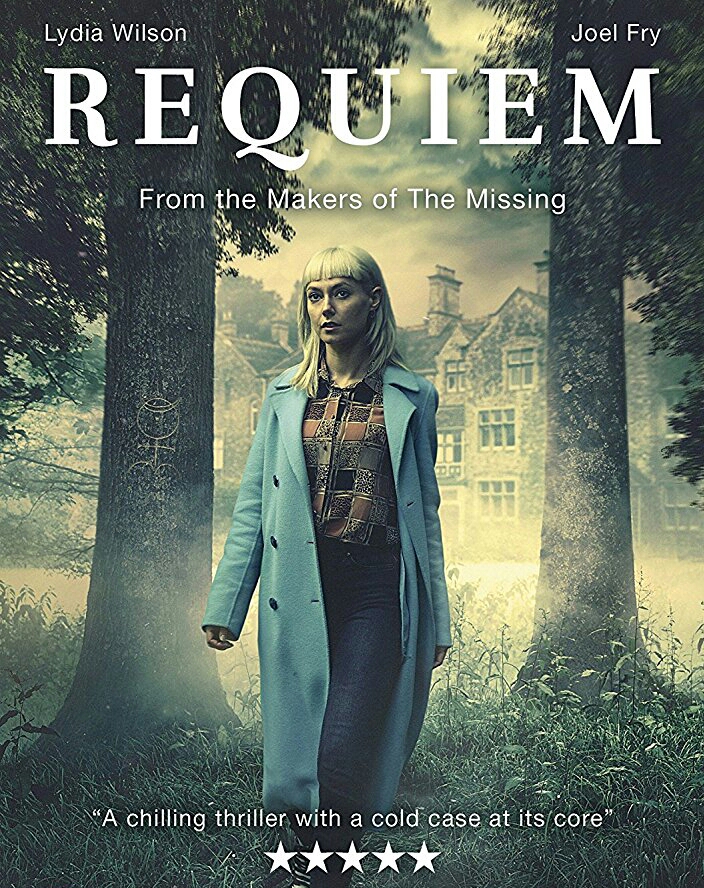
Daniel features in episodes 4 and 6 of the BBC drama Requiem. The whole series can now be found on the BBC iPlayer.

Daniel is also a trustee for the charity DMD Pathfinders. View his IMDB page here, and find out more from the man himself by visiting his personal blog.


I’d like to thank Daniel for taking the time to speak with me and answer my questions.

Please follow me on Twitter and Facebook

Interview | Jackie Hagan

Disabled Poet and Performer

Award winning poet and performer Jackie Hagan’s latest show, ‘This is Not a Safe Space’, explores the impact of benefit cuts on disabled peopled and those living on the margins of society. The creative mix of poetry, puppetry, stand-up comedy and audience participation draws on first-person interviews with 80 working-class people. With an emphasis on class, mental health and disability, Hagan celebrates the weird and wonky lives of those excluded from the mainstream.

Jackie Hagan is herself a queer, bipolar amputee, raised on a council estate. Her work seeks to challenge the ways in which current society relentlessly stereotypes working-class, disabled individuals.

Following on from her previous success with the solo show ‘Some People Have Too Many Legs’ and her play ‘Cosmic Scallies’, this theatre maker once again intertwines spiky humour and quirky expression, resulting in a passionate, provocative and affecting production.


1. Jackie, could you please tell Disability Horizons readers about your disability and how it has affected you and your career?

In summer 2013 I suddenly had my leg amputated [following a series of blood clots and infections]. When I left the hospital they gave me a list of things to avoid, one of them was falling over. I toured a show that year called ‘Some People Have Too Many Legs’, which won some awards.

I had been writing and performing for some time and I had always been a disabled performer – I am partially sighted, have bipolar disorder and a life limiting autoimmune disease. But, having one leg is something people can get their heads around a lot better, people like something they can see. And so it attracted a lot of attention.

As such, when people invite me to diversity events to talk about the leg I often open with a leg gag and then go on to talk about invisible disabilities or class.

2. How and why did you become a poet and performer?

When my Mum was 16 she moved from the thrill and glitter of Liverpool to an isolated new town to have me and my brother. As such, she herself became a disco, she became thrill and glitter. How else are you meant to cope? It meant I grew up to be unafraid to speak my mind in the odd way i found natural. I wasn’t ever encouraged to toe the line or be normal.


3. How does your class, background and disability influence your work?

It means I’ve always got a cob on and I’ve got loads to say that doesn’t often get said. I’ve got council estate bones and they rattle when someone slags off a young lad for dealing or looting or having a big massive telly. I understand why this stuff happens. I’m not saying we’re saints: I’m not an idiot, but I’m closer to the action, I can talk in a measured way about the real reasons. I can give you stories and images that aren’t exaggerated or underplayed. I know what I’m on about.

Obviously it also means I come up against a tonne of prejudice and moments where people tilt their head to one side and use that sing song lilt to the voice “aw, are you in a wheelchair?” etc. It’s all total bollocks and the most satisfying way to show people is by being awesome.

4. Why did you decide to write this show, and why now?

Disabled people and those on benefits are represented in the media one dimensionally. Benefits claimants are shown as sinners: [the TV show] Benefits Street depicts us as if we’re stupid and should just try harder. Disabled people on the other hand are represented as saints, super-humans and paralympians. Real people just aren’t like that.

5. What is the meaning of the title of your new show?

I asked one of the lads I interviewed, “where do you feel the safest?”                 He thought for ages and eventually he said, “in my imagination”.

The government has messed up, massively. People are committing suicide and losing their homes. We’re obviously not safe. The new generation of kids have no security in their future, never mind jobs and homes. They’ve got climate change to worry about! Of course they are obsessed with safety, of course they need to create safe spaces.

People might be used to my old work where I would make hard topics fluffy and palatable. But in this show I need to give it to people straight. That doesn’t mean it’s unrelenting bleakness – no one can take that in, and audiences don’t deserve to have to put up with that. I know how to keep an audience with me. There’s lots of comedy and tenderness in the show, but i also know how to give an audience realities that need to be passed on. We desperately need people to empathise.

We are not safe. It is not fair. The world is not a safe space. The show is not a fairytale.

6. It celebrates and puts forth the lives and experiences of a section of society often misrepresented or ignored entirely by the mainstream. Why do you think that is?

If you [society] ‘other’ us, then you can feel less empathy and understanding. If you lack empathy, it gives people a free ride, it makes the problem go away, because it means we don’t matter.

7. Based on 80 interviews, your show intertwines poetry, DIY puppetry and stand-up comedy. That’s quite an eclectic mix! How do you begin to plan and produce such an original and engaging piece?

Humans don’t think in linear stories, we think in snippets and recurring images. It makes absolute sense to me to collect voices and stories and for me to keep on writing and writing. I then siphon it all down into central questions that I want the audience to think about, and eventually get right down into the essence which is the hour of the show.

In real talk that means A1 flipchart paper, post it notes, about a thousand gallons of tea and one amazing sound producer (Dave James who sat in a room and listened to 16 hours of interviews with me several times). I eat when I make stuff and put on about two stone. But I’d rather be a fat writer than frustrated and at my ideal weight!

8. What do you hope audiences will take away from the show?

  1. One person’s trying doesn’t look like your own.
  2. You don’t have to feel guilty for what you have. It’ll get in the way of you wanting to help.
  3. Classism is constant and as abhorrent as racism, sexism and homophobia! Learn to recognise it.


I’d like to thank Jackie Hagan for taking the time to speak with me.

My interview with Jackie was originally published by Disability Horizons, for whom I am a frequent contributor.


Connect with Jackie Hagan on Twitter and visit her website for news and more information.

Interview | Scott Watkin: SeeAbility

36-year-old Scott Watkin, an eye care and vision development officer with the charity SeeAbility, is one of this years deserving recipients of the British Empire Medal.

Scott, who has learning disabilities and the eye condition keratoconus, is recognised for his tireless work in the learning disability community.

A dedicated ambassador, Scott began his career co-chairing the learning disability partnership board on the Isle of Wight. This led onto an influential role as co-national director for learning disabilities within the Department of Health. He also lectures at the University of Hertfordshire, focusing on eye care, vision and equal rights. However, he notes his work with SeeAbility as a major milestone.


1. Scott, could you please tell Disability Horizons readers a little about yourself and your disability?

I was born with Williams syndrome which is a learning disability. Apparently I am one in ten thousand! Some of my muscles can be quite weak and my coordination can be not great at times.

I went to a special school and teachers never really paid attention to me, and it meant I didn’t really get the grades I wanted to get. I was bullied too which made learning very hard.

It also means I am more likely to have vision problems and actually I was diagnosed with keratoconus which I’ve had two corneal graftoperations on. I have quite a difficult daily routine involving eye drops and contact lenses.

2. How does your learning disability and eye condition affect you, and how have you found working with a disability?

My learning disability only shows when I’m nervous or worried about something, otherwise I’m a very confident person. I just need a bit of support to do my job and I’ve been really lucky to be supported well at SeeAbility.

My vision varies, some days it’s ok some days really poor. But I’m always ready to work!

3. What adjustments have you and/or your employer had to make in order for you to do your job effectively?

If I don’t know a journey, my manager will meet me in London and we will continue the journey together. I know my way from the IOW to London very well having made the trip many times.

If my vision is really poor, we put all my information on yellow paper in Arial 16pt font. This helps me to read it better.

When I first started working, I had lots of support to make steps in my job. But for me it’s just being able to talk to someone when I need to, and that’s the case at SeeAbility. If I don’t need that then I just get on with my job and carry on!

4. How and why did you get involved with the charity SeeAbility?

I first met Paula Spinks-Chamberlain (Director of External Affairs) at the Department of Health. SeeAbility supported me through my keratoconus and then I did some work as an ambassador. After that I was offered a job!

5. Could you please explain the role you play within SeeAbility?

I’m an eye care and vision development officer and I make sure people with learning disabilities get good eye care. I travel around the country giving training sessions to people with learning disabilities and carers. I need to make sure we lobby government to make sure they understand that eye care for people with learning disabilities is really important.

People with learning disabilities are much more likely to have sight problems than other people. Not only that, but they are the least likely to get the eye care they need. We are working so that eye care professionals make reasonable adjustments but what we really need is a national eye care pathway so that everyone with a disability can access a sight test.

6. You are also on the board of Learning Disability England. What are your aims and objectives in this capacity?

I try and make sure people with a learning disability have a voice. People with learning disabilities need the same access to services as everybody else.

It’s about setting the direction of learning disabilities in England. Lobbying government and challenging the social care cuts. I need to make sure we do what we say we are going to do.

7. Why is it so important to you to campaign for people with learning disabilities?

Firstly, people with learning disabilities are much more likely to have sight problems than other people. Not only that, but they are the least likely to get the eye care they need. We are working so that eye care professionals make reasonable adjustments but what we really need is a national eye care pathway so that everyone with a disability can access a sight test.

Secondly, people with learning disabilities deserve to have their voice heard. We deserve the same opportunities as everyone else as we have so much to offer. We just need the chances to shine.

8. What do you think are the main issues that require attention and improvement?

We need to stop the social care cuts and get a good eye care pathway down for people with learning disabilities so they can get the right eye care!

We need good annual health checks.

And to make sure the government take people with learning disabilities seriously and listen to what they want. For example, most people with learning disabilities want to work, and we just need employers to give us chance so we can achieve what others can have a good life.

9. Congratulations on being awarded a British Empire Medal in the New Year 2018 Honours list. How does it make you feel to be recognised for your achievements?

I never thought I’d be recognised in this way, it’s a real big honour. I’m glad my work is being recognised nationally because it’s really important. It sends a message to all the eye care professionals that I work with, they need to know how important eye care for people with disabilities is.

10. Finally, what tips would you offer anyone like yourself with a similar disability, who is seeking employment?

Don’t stop trying to find employment. Don’t be afraid to say you have a learning disability and it’s ok to ask for reasonable adjustments. You will have so many positives to bring to any role and don’t forget that, you are actually very reliable, more than other people!


I’d like to thank Scott Watkin for taking the time to speak with me.

My interview with Scott was originally published by Disability Horizons

Please follow me on Twitter and Facebook

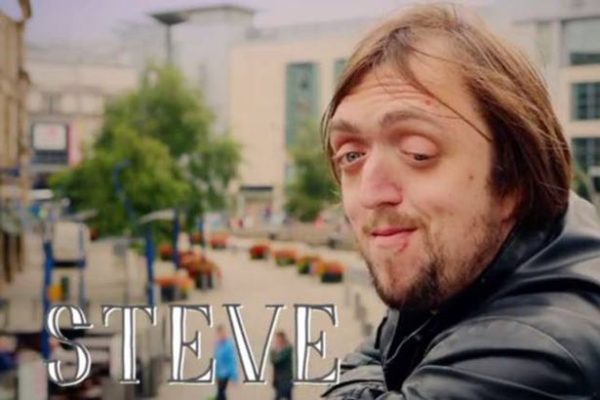
Interview | ‘The Undateables’ Steve Carruthers

“It is a life-changing experience.        Embrace it!”


The Undateables is a Channel 4 TV show featuring people with a variety of disabilities, all of whom are looking for love.

Steve Carruthers, who has Crouzon syndrome (a genetic condition affecting the shape of the face and head), was a participant on series two, back in 2013. Though romance did not blossom with his date, the experience gave him much needed confidence.

Following his appearance, Steve – now 36, from Manchester – soon met the love of his life Vicky, through social media. Vicky had in fact seen Steve on the show and decided to contact him.

The Undateables screened Steve’s romantic proposal and the couple later married in 2015.

1. Steve, why did you apply to The Undateables and, what reservations did you have?

I initially applied for a different show called ‘Beauty and the Beast: The Ugly Face of Prejudice’. As a result, I was approached to appear on series one of ‘The Undateables’, but I declined as it had never been on TV and I didn’t get the gist of the show. After series one ended, I was approached again but this time it was by my good friend Adam Pearson, who worked with the team to find participants for the show. He convinced me to give it a chance as he said it would help me with my confidence and outlook as I had a negative outlook on life after the loss of two of my siblings. I was a bit reserved and concerned that after being on the show, more people would make fun of my appearance. But, in doing the show, my outlook changed to a positive one and allowed me to help other people in a similar position.

2. How were you treated throughout the production process?

The whole team was incredibly nice, supportive and understanding. Everything was treated with care and compassion.

3. What response have you received following your appearances?

Like all things with TV, there are negative people who see disability as something to mock and joke about. But the positives outweighed the negatives in a huge way. People are so kind and understanding. I found that it [the show] helped educate people about disability. It also helps with how we perceive ourselves and how society perceives us to.

4. The show has been accused of being insensitive and exploitative. The title in particular is widely criticised. What do you think?

The show itself really is everything you see (believe it or not). It is exactly how dates are in real life – you have moments of silence, awkwardness and moments of hope. The show’s titles show cupid shooting the [prefix] ‘Un’ off, leaving the word ‘dateables’. The point of this is to prove we are all dateable, and that we [disabled people] have the same experiences on dates as everyone else does.

5. What would you say to anyone who is considering applying to the show?

My advice to anyone applying for or appearing on the show is to go into it with an open mind. There will be those who will say [derogatory] things, but overall the positives more than outweigh the negatives. It is a life-changing experience. Embrace it! The positive message you’re putting out there helps others as well as yourself. The show has had a huge impact and gives so many people, like me, much needed confidence. Those who watch the show have gained so much more understanding of different disabilities too.


I’d like to thank Steve for taking the time to speak with me.

You can watch his original appearance on the show here.

Images courtesy of The Undateables and The Sun


Please follow me on Twitter and Facebook

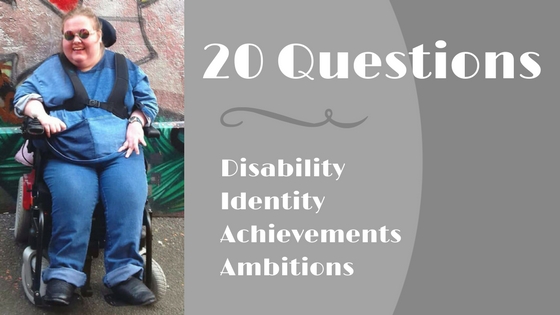
20 Questions with…

Rebecca who has cerebral palsy

I recently got chatting with a lovely lady called Rebecca, who contacted me after reading my blog.

Rebecca, who has cerebral palsy, is high-achieving, ambitious and incredibly interesting to talk to.

Consequently, I thought it would be beneficial for you guys to learn more about Rebecca, her views and how she manages life with a physical disability…


1. What is your disability and how does it affect you?

I have Ataxic Cerebral Palsy, which affects my four limbs and means that I use an electric wheelchair for getting around both inside the house and for outside activities in my day-to-day life. I also have a visual impairment called Nystagmus, which prevents me from going out unaccompanied as I sometimes struggle to see steps and kerbs in the street.  My disability affects my life as I require 24 hour care.

2. What is the worst thing about living with your disability?

The worst thing is the stigma and negative attitudes that still surround disability. For example, strangers often make assumptions about my mental capabilities and underestimate my intelligence. However, I am learning to become resilient through my experience of this, and have developed coping mechanisms.

3. What, if any, are the positives to having a disability?

The free carer ticket to gigs/festivals/theatre/talks is a bonus! I also value my electric chair and the feeling of acceleration when I drive fast. On a more serious note, I view the fact that I feel I have a unique perspective on the world as a result of my disability as a positive. I have a greater tolerance of difference due to the empathy and understanding that my disability has taught me.

4. How do you feel about the term ‘disability’? Do you refer to yourself as having a disability or do you prefer another term, such as differently abled?

I used to physically jump at the word ‘disability’ as well as ‘wheelchair’ and ‘handicap’. This was because hearing myself being described as disabled hit home the fact that other people viewed and labeled me in this way. It made me feel as if my disability was my main or only attribute. This all changed when I attended counseling sessions in my early 20’s, where I was encouraged to unpack the meaning of these words and confront why they prompted a physical reaction from me. It is still the case that disability will never be my favourite word, but I’m now comfortable enough to describe myself in that way to others.

5. Do you feel under-represented in the media? If so, what changes would you like to see?

I can understand why some people would feel under-represented, and I agree changes do need to be made. But in my opinion, these changes reside in discussion, ideas and inclusion rather than purely exposure.

6. Are you a leader or a follower?

I used to be a follower, afraid to voice my opinions.  Now I am comfortable taking the role of the leader in certain social situations, i.e. with less confident friends I am able to guide the conversation to allow people to be heard. As well as this, I hope to lead with my ideas surrounding disability ethics and the research I am doing in this particular area.

7. Optimist, pessimist, realist or idealist?

I live in the most realistic way possible so that I am most connected with reality and grounded in my thoughts. To be too pessimistic can prevent us from progressing, whereas being overly optimistic can also be counterproductive to personal growth.

8. Are you easy going or high-maintenance? Would those who know you best agree?

I would say that I am easy going because I have learnt how to balance my own well-being so as not to allow myself to become too stressed out. Those who know me best would probably agree, but I imagine they would claim that I’m more high-maintenance when I have an important deadline to meet!

9. Are you more of an introvert or an extrovert?

This really depends on whom I am with. In my professional career as a counsellor it is my responsibility to be the facilitator who steers the conversation, and this doesn’t allow for me to be introverted.  However I can still become shy around people that I struggle to connect with on a deeper level.

10. Are you more creative or logical?

I am more creative in my thoughts and my writing and in the way I can construct an argument in a debate.

11. You are currently studying Philosophy at Cambridge University –  why did you choose that subject in particular?

I have been fascinated by the world around me from a young age with my intuitive questioning of values and beliefs. This then developed when I embarked on a short course to find out more about the subject, which then inspired me to study philosophy at a higher level. What I like about philosophy most is that it’s a never-ending endeavour; there is always more to question, learn and explore. Philosophy can help to find new ways to think about old problems and with considering things from different perspectives, to overcome many of the hurdles that we encounter in our everyday lives.

12. What difficulties have you faced whilst at University, resulting from your disability?

Having to deliver presentations has been difficult for me, but luckily the University allowed me adapt my assessments, and have been really accommodating. One of my personal assistants delivered this presentation and I was able to answer class questions afterwards. I also require a personal assistant to write down my thoughts, and this can sometimes take a long time because conversations can be misinterpreted. For this reason, I always request the option of extra time because it can take longer for me than for an able-bodied student to formally express my thoughts in an assignment.

13. What do you hope to do following completion of your degree?

I am hoping to continue studying and develop my qualifications, embarking on a postgraduate course that combines philosophy and mental health.

14. Are you the type of person who always knew, from an early age, what job you wanted to pursue?

Yes, from about the age of 10 I remember hearing of people’s difficulties and wanting to help them by giving them advice at the time! This then developed into aspiring to become a qualified counsellor.

15. What is your ultimate ambition in life?

To gain as much knowledge and wisdom as possible to discuss new ideas and create meaningful change.

16. Bucket list: Can you list your top 5 goals?

I took some time to contemplate this question because I’ve never had a bucket list as such, but I’ve managed to come up with 5 things that are important to me:

 1. Experience something daring in nature – i.e. wheelchair tree-top climbing

2. Using my counseling skills to change someone’s life for the better

3. Learn more about the psychiatry side to mental health

4. Finish reading a book in its entirety!

5. Finish my dissertation

17. If you won the Euromillions, what would you do with the money?

I would first of all build my own custom-made cabin in the forest. I would also double my betting stakes. (I do now and again enjoy a little flutter on the horses and football!) Although overall I am pretty content with my life how it is now.

18. Where is your favourite place in the world?

I really love spending time by the weeping willows in Newnham, Cambridge. These trees overlook the River Cam which makes it a very tranquil spot, where I feel safe and at peace.

19. Do you believe in ghosts, spirits and the like?

I have heard many stories about spirits and the afterlife that have led me to believe, or at least be open to the idea.

20. If a pill existed that could completely cure you of your disability, would you choose to take it, and why?

No, simply because I wouldn’t be me any more. And I wouldn’t have experienced the same things if I had been able-bodied. The only thing I would perhaps alter is the fact that I don’t get to spend much time on my own.


I’d like to thank Rebecca Sherwood for taking the time to answer my questions.

What do YOU think of Rebecca’s responses? how would YOU answer these questions? Leave and comment and let me know!

If you found this blog post interesting, please do share so that others can see it too – thank you!

My Top 10 Disabled Celebs | The Girls

The Girls:

My latest article for Disability Horizons showcases my pick of the top 10 disabled FEMALE celebrities. Because, in the wise words of Beyonce, girls run the world!

*Last year, Disability Horizons compiled their top 10 disabled celeb’s, including both men and women. To avoid repetition, I have not included any of the women from that previous article.


There is a great deal of ongoing discussion and debate around the inclusion and representation of disabled people within the media. Put simply, there is not enough diversity. Still, in 2017, the vast majority of British ‘celebrities’ are able-bodied.

However, we are seeing the emergence of more and more disabled people on our television screens and in the public eye. But, how many can you name? When contemplating this very question, I realised that most of those who immediately came to mind were male – Stephen Hawking, Warwick Davies, Alex Brooker, Adam Hills, Ade Adepitan and Jonnie Peacock, to name a few.

So what about the ladies?…


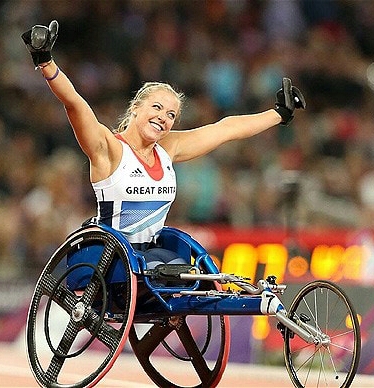
Hannah Cockroft MBE

Hannah, who has cerebral palsy, suffered two cardiac arrests within 48 hours of birth, which affected two parts of her brain. She was left with balance, mobility and fine motor impairment.

But this has most certainly not held her back. She is a gold medal-winning Paralympic wheelchair racer and 10 times world champion. In 2012 she became the first Paralympian to break a world record in the London Olympic Stadium for the 100 metres T34.

In 2014 she won the Sport Relief edition of Strictly Come Dancing with professional dancer Pasha Kovalev. That same year she launched 17 Sports Management Limited, a company representing disabled athletes.

Hannah continued her reign of success at the 2016 Paralympics in Rio where she won three gold medals.

Katie Piper

The victim of a vicious acid attack in March 2008, Katie has endured more than 250 surgical procedures to date. She suffered full-thickness burns (where both layers of the skin are destroyed) and had to wear a face mask for 23 hours every day. She also swallowed some of the sulphuric acid, damaging her throat, and was blinded in her left eye.

In 2009, the former model shared her horrific ordeal in the Channel 4 documentary Katie: My Beautiful Face. She also established the Katie Piper Charitable Foundation, which supports those with severe burns and disfigurement injuries.

In addition, she is now a successful author, television presenter, magazine columnist and philanthropist. An inspiration to many, Katie married in 2015 and is currently expecting her second child.

Cerrie Burnell

Cerrie was born with no right forearm and is severely dyslexic. Since childhood, she has always refused to wear a prosthesis or hide her disability.

An all-round entertainer, Cerrie is an accomplished actress, singer, playwright, children’s author and TV presenter. Between 2002-2008, she appeared in Holby City, Eastenders, Grange Hill, The Bill and Comedy Lab. She then transitioned to presenting, working on The One Show, The Wright Stuff and CBeebies (Jan 2009 – April 2017).

But her first appearance on children’s television was met with controversy. Some claimed that the presence of someone with a physical disability like hers could scare young viewers. In response, Cerrie spoke candidly about her disability and how it’s important that children are exposed to differences, for which she was widely applauded.

She now regularly speaks out in favour of diversity and the inclusion of disabled people in the media. In fact, she recently took part in the Channel 4 documentary Diverse NationShe’s since reached an even wider audience by presenting all the swimming events for the Channel 4 and the 2012 Paralympics.

Named by The Observer as one of the top 10 children’s presenters of all time, Cerrie has also been declared, by The Guardian, as one of Britain’s 100 most inspirational women.

A supporter of many charities including body-confidence organisation Body Gossip, Cerrie now wants to focus on writing more children’s books and acting.

Francesca Martinez

Critically-acclaimed stand-up comedian Francesca Martinez first became prominent playing Rachel Burns in Grange Hill (1994-8). Since, she has starred in BBC shows Holby City, Doctors and Extras.

But it’s not her acting that she’s most well known for, it’s her comedy. With a self-deprecating sense of humour, Francesca, who has cerebral palsy, describes herself as “wobbly”. In 2000 she became the first female to win the prestigious Daily Telegraph Open Mic Award at the Edinburgh Festival. She was also named one of the 50 funniest acts in British comedy by The Observer.

Also a campaigner and activist, Francesca has organised many charity shows and is a patron of several charities, including Evenbreak, which helps pair disabled people with inclusive employers. She’s also an outspoken opponent of government welfare reform, in 2012 launching the campaign War on Welfare (WOW), which called for an end to disability benefit cuts. She later secured the first parliamentary debate for disabled people by disabled people.

In 2013 she won the Public Affairs Achiever of the Year Award and the following year was named one of Britain’s most influential women.

Her recent sell-out comedy tour was followed by a best-selling book, both titled WHAT THE **** IS NORMAL?! She is currently working on a feature documentary of the same name.

Cherylee Houston

Screen and theatre actress Cherylee was diagnosed with Ehlers-Danlos Syndrome type III (EDS) at the age 23. She has appeared in Doctors, The Bill, Holby City, Emmerdale and Little Britain.

Her most recent role is that of Izzy in Coronation Street, which she has played since 2010, and is the soap’s first disabled character to be played by a disabled actor.

Aside from acting, Cherylee established the Manchester-based youth project TripleC, which aims to make drama accessible to all. She has spoken out about a number of political issues too, including the Conservative cuts to disability benefits and the representation of disability in the media. She also continues to raise awareness of EDS.

Anne Hegerty

Better known as The Governess in the award-winning ITV quiz show The ChaseAnne has a form of autism. In 2005, after watching a documentary about Asperger’s Syndrome and identifying with the symptoms, Anne told her doctors she believes she has the disability. It took two years for her to be officially diagnosed, during which time she lost her job as a proof-reader, due to her inability to multi-task.

Unable to pay her bills, Anne was confronted by bailiffs on New Year’s Day in 2008. She later sought advice and assistance and is to this day in receipt of Disability Living Allowance. Around the same time, her social worker encouraged her to audition for The Chase and even paid her travel costs to get there.

She is now a highly successful television personality and professional quizzer, have participated in Mastermind, Fifteen to One and Brain of Britain. Anne also talks candidly about her life with Asperger’s Syndrome and how it affects her.

Jess Thom

Jess, a comedian and public speaker, was diagnosed with the neurological condition Tourette Syndrome in her early twenties, and also uses a wheelchair. She’s most widely recognised for her memorable appearance on Russell Howard’s Good News in October 2015. The interview garnered much attention and has subsequently been viewed more than 600,000 times on Youtube – you can check it out in our article on 10 awesome disability-related videos.

In 2010 she co-founded Touretteshero, a blog that documents what it’s like living with Tourettes, featuring articles and videos. Its first production, Backstage in Biscuit Land (2014), met with critical acclaim. It has since toured nationally and internationally.

She has appeared on various television and radio programs including The Late Late Show, This Morning and Fry’s Planet Word. In 2013 she also delivered a TED talk about the misconceptions of Tourette’s and the creative potential of tics. While admitting her Tourette’s presents challenges and has been met with discrimination, she prefers to “celebrate [its] creativity and humour.”

Jess is an outspoken advocate and campaigner for disabled people’s rights. Her work often draws attention to the environmental and social barriers that prevent inclusion. An opponent of the medical model of disability, Jess insists her Tourette’s is a source of creativity, her wheelchair allows her freedom, and she is disabled not by her body but by the inaccessible environment.

Libby Clegg

Libby is a Scottish Paralympic champion sprinter, having won gold and broken records. She has a deteriorating condition Stargardt’s macular dystrophy, leaving her with only slight peripheral vision in her left eye. She is registered blind and is an ambassador for the Royal Blind Charity.

She has represented Great Britain in the T12 100m and 200m races at the 2008 Summer Paralympics, and the T11 100m and 200m in 2016 at the Paralympic Games in Rio. She is also the 2012 IPC European Champion and 2013 IPC World Champion.

As if she isn’t busy enough, Libby is also a course tutor and ambassador for Ability Training (ability-training.com), offering accredited disability specific awareness courses for sports coaches and fitness professionals.

Along with her beloved guide dog Hattie, she is helping to educate dog owners on the importance of nutrition and health. Libby raises awareness of the essential part guide dogs play in the lives of those with visual impairment.

She was recently honoured in the 2017 New Year’s honours service when she was appointed MBE for her contribution to sport.

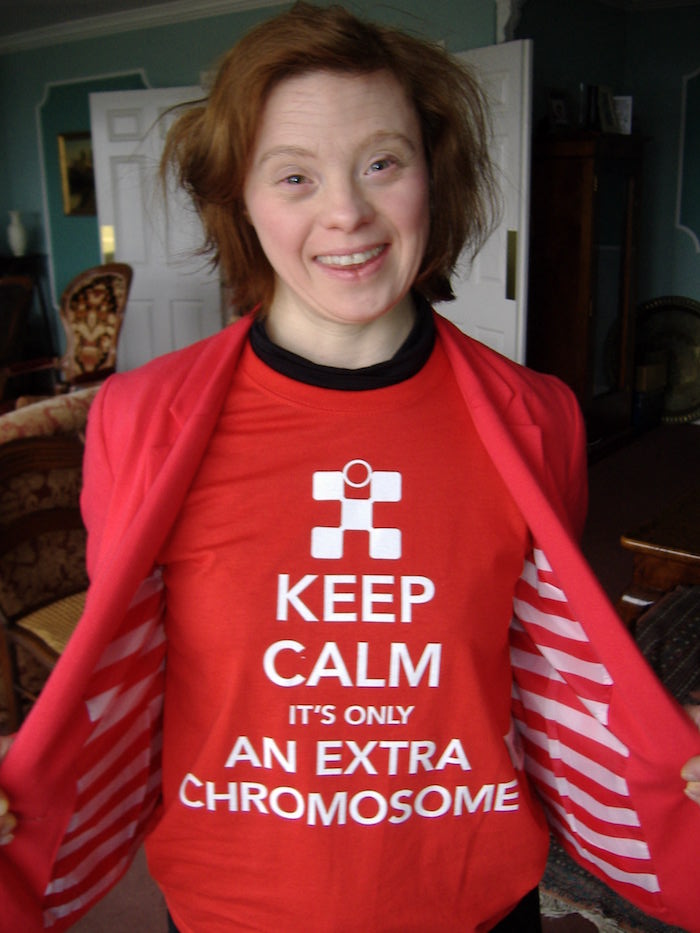
Sarah Gordy

Award winner Sarah, who has Down’s Syndrome, is best known for her role as Lady Pamela Holland in the 2010 BBC TV series Upstairs Downstairs. She has also appeared in Holby City, Call the Midwife and Doctors, as well as various short films, radio dramas, commercials and many theatre productions.

She most recently portrayed Orlando Quine in the BBC series Strike: The Silkworm, based on the books by J.K. Rowling.

She is an ambassador for Mencap and patron of Circus Starr, a performance group that does shows for disabled children. When not acting, she volunteers at her local British Heart Foundation charity shop.

Genevieve Barr

Star of the latest Maltesers advert, Genevieve was born deaf. Having never learned sign language, she lip reads, and is, in fact, a professional lip-reader for different organisations.

She had a major role in the 2010 BBC drama The Silence, and the previous year played a deaf nurse in the Channel 4 comedy, The Amazing Dermot. Following her Bafta and International Emmy Award nominations for The Silence, she went on to act in the BBC3 drama series The Fades, and Shameless on Channel 4.

A freelance disability consultant and public speaker, Genevieve works with the charities Hear the WorldAction on Hearing Loss and AFASIC – a charity for children with speech, language and communication difficulties. She also runs courses and workshops for disabled actors.


What do you think of my choices? Who would be in your top 10?

Please leave a comment and share this blog post if you enjoyed it.

Jonnie Peacock and Strictly Come Dancing

Here is my latest article for Disability Horizons!


A move forward for disability representation within the media!

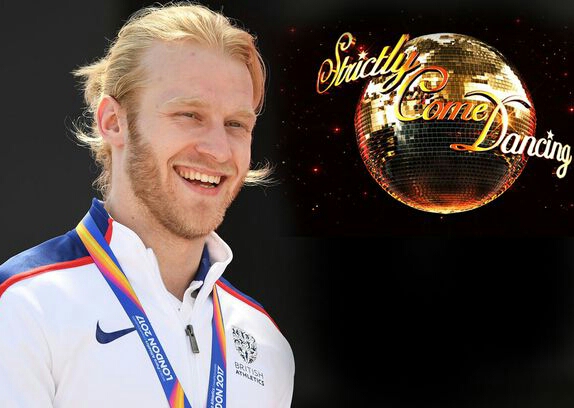
As a die-hard Strictly Come Dancing fan, and being disabled myself, admittedly I was pretty excited to hear that Paralympian Jonnie Peacock MBE would be competing in the 15th series.

In a landmark move forward for disability representation in the media, the 24 year-old sprinter is the first physically disabled contestant to appear on the main, primetime show.

Jonnie has taken on the ‘glitterball’ challenge in the hope that it will break down peoples’ views and “change some of the stigmas” around disability.

He added, “some people have preconceived notions of what people can and cannot do based on looking at them, but I think sometimes it’s just a case of not judging a book by its cover.”

Jonnie’s right leg was amputated below the knee after contracting meningitis, aged five. Clearly though, this has not held him back. He competed at the London 2012 and Rio 2016 Paralympics, winning gold medals in both games, and breaking a record for the fastest 100m T44 time in the process.

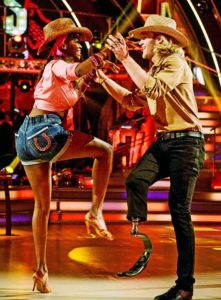
Partnered with professional dancer and last year’s runner-up Oti Mabuse, he quipped that if voted through to week three, he will ‘glitter up’ his prosthetic leg.

Having made a smooth debut with a charming and technically adept waltz, Jonnie opted to dance with a brand new blade in week two. A decision that paid off!

An energetic jive to Chuck Berry’s Johnny B. Goode caught the attention of the judges and public alike. Earning 29 points put him fourth on Saturday night’s leader-board. His combined score placed him sixth overall. It’s only after celebrities have danced twice: one ballroom and one Latin routine, that they face the public vote.

Since the jive is such a fast-paced dance that requires a lot of bounce action, the blade was a wise move. Despite being highly praised by all four judges for his “outstanding kicks and flicks”, Jonnie later commented that it was “tough” dancing with a blade which is much longer than his usual prosthetic limb.

In fact, the only criticism he received was for his upper body, particularly the lack of focus and refinement in his arms. Both Jonnie and his partner Oti agreed, this is something he has found particularly challenging.

The improvement from the previous week was evident, with greater enthusiasm and commitment to the complex choreography, characterisation and story-telling.

Jonnie revealed his disappointment with the waltz which he felt could have gone better. In contrast, the action-packed jive suits his fun-loving personality much more. He gave it his all, shedding the nerves and demonstrating increased confidence and showmanship.

His memorable jive rivals those of former Strictly winners Ore Oduba, Jay McGuiness and Jill Halfpenny. What makes it all the more impressive is the fact that the jive is notoriously difficult to master, and this was only his second performance. Furthermore, unlike several fellow competitors, Jonnie has no dance experience whatsoever.

The couple’s latest dance, a Paso Doble to the Indiana Jones theme tune achieved a respectable 26 points, placing them eighth for movie week. The slight down-score can be attributed to Jonnie’s dislike of the Paso which demands a stern, serious expression. It also marked a return to his usual prosthesis.

The sportsman says of his choice of prosthetic, “when [the dance] is controlled, slow and not so much jumping around it will probably be my standard leg”. So, it seems the blade will make a reappearance for at least some future Latin routines.

Having captivated the nation with such an endearing and “inspiring” start, could Jonnie be headed for Strictly glory? He has the skill, stamina, drive and discipline, with the potential to go far in the competition. So, why not!

This however, is not the first time we’ve seen an amputee dance with a blade on Strictly. Lance Corporal Cassidy Little, a Royal Marine medic, performed a winning Paso Doble with pro-dancer Natalie Lowe on a one-off edition of The People’s Strictly for Comic Relief in March 2015.

Cassidy, a former comedian and avid tap-dancer, lost his right leg below the knee in 2011, when hit by an improvised explosive device (IED) while on tour in Afghanistan.

Following the loss of his lower leg, Cassidy who in fact studied ballet at University in Canada many years prior, thought his dancing days were over. But a perfect score of 40 for the dramatic and expertly executed Paso Doble proved that his disability need not impede on his natural ability for dance.

Producers invited the war veteran to return for a Christmas special that same year, since the impression he made on the viewing public was so evident. Partnered once again with Natalie Lowe, this time the couple danced an equally impressive, festive-themed jive and competed against able-bodied celebrities.

Earlier this year, Gold medal winning Paralympic sprinter Heinrich Popow dropped out of the German version of the show, Lets Dance, because of swelling to his stump – a concern for prosthesis wearers due to fit and friction. Heinrich, who incurred an injury in week two, pushed through to the semi-final. But, in the end he was unfortunately forced to concede defeat to prevent further damage.

British amputee and former model Heather Mills wowed audiences with her daring moves on the American version, Dancing with the Stars, in 2007. She approached the experience with determination and humour, joking candidly that her prosthetic limb could well fall off mid-dance! The undefeated disability advocate later appeared on the popular ITV show, Dancing on Ice.

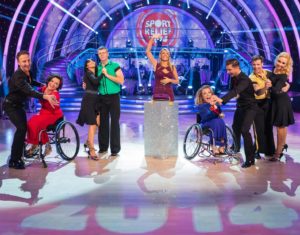
Back here in the UK, a Sport Relief edition in 2014 featured four Paralympians: wheelchair racer Hannah Cockroft, blind footballer David Clarke, former World Champion javelin thrower Nathan Stephens and sitting volleyball player Maxine Wright. 10-time Paralympic Gold medalist Lee Pearson took the seat of regular judge Craig Revel Horwood to help select a winner.

Strictly Come Dancing, established in 2004, is now a mainstream television programme in British popular culture. Reaching viewing figures of over 11 million, it is a perfect platform for contestants to raise their profile.

The inclusion of Jonnie Peacock in this year’s lineup has already made a huge impact on the disabled community. It represents forward-thinking, equality and disability in the mainstream. Furthermore, we are encouraged and yes, inspired to focus on ability as opposed to disability and limitation.

Widespread visibility of disabled individuals, such as Jonnie, in the media, will naturally be met with curiosity and questions. But that’s okay, that is progress. Questions result in answers which in turn leads to familiarity, recognition and ‘normalisation’.


Have you been watching Jonnie perform each week on Strictly?

Are you pleased to see a Paralympian included on the show?

Leave a comment and let me know what you think.

If you liked this article, please share so that others can join the discussion.

Thanks!


Related Blog Posts:

Strictly Come Dancing 2018

Britain’s Got Talent | Disability Representation

My Top 10 Disabled Celebs | The Girls

Breathe (Andrew Garfield, Claire Foy) | Film Review

Interview | Author Janine Shepherd

Here is my latest interview, with Janine Shepherd, for Disability Horizons.


Janine Shepherd: A Broken Body is not a Broken Person

Former elite athlete and celebrated author, Janine Shepherd shares her inspirational story in the best-selling memoir, Defiant: A Broken Body is not a Broken Person.

It chronicles her journey following a tragic accident that cut short her bid to compete in the 1988 Calgary Winter Olympics.

Partially paralysed and suffering life-changing injuries, Janine made the courageous decision to let go of her former life and face adversity head-on, creating a new dream for herself.

Here I speak to Janine about her journey, the challenges she has faced and how she’s reinvented herself and her outlook.

Hit by a truck in 1986 during a bicycle ride in Australia’s Blue Mountains, Janine was not expected to survive. Told by doctors that she would never walk again, nor have children, she spent the next few years rehabilitating her permanent disabilities and defying all the odds.

A mother of three, best-selling author, public speaker, aerobatics pilot and the first female director of the Civil Aviation Safety Authority, Janine speaks candidly and with humility about how and why she reinvented herself and changed her self-perspective.


Janine, please tell us about your disability and how it continues to affect you.

The accident gave me severe spinal cord injury – I broke my neck and back in six places. After extensive surgery and rehabilitation, there was just about enough nerve connectivity to be able to learn to walk again, albeit with a significant limp.

Now, in addition to significantly wasted lower leg muscles, I have limited feeling from the waist down and chronic bladder and bowel dysfunction. I also have to self-catheter a lot, which results in regular urinary tract infections. Your readers might agree that these issues are possibly the worst part of living with spinal cord injury.

‘Janine the machine’ is how you referred to your old self – the elite cross-country ski racer. Do you feel this remains a true representation of your character? If not, how would you now define yourself?

Even though I felt that my body was ‘broken’ after my accident, I realised that my spiritual essence and mental toughness remained unchanged. I soon learned that being ‘Janine the machine’ had less to do with athletic prowess than unshakeable determination and persistence. Recognising that gave me the strength to reinvent my life in a most remarkable way.

Following the accident and being unable to walk, you focused on learning to fly. In your book, you state: “I had to find something to replace what I had lost in my accident”. Why was it so important to set yourself such an ambitious goal?

We often define ourselves by things outside of us – our jobs, our relationships, the roles we play in life. When we lose those things, who we are and everything we believed in is challenged. When we experience such immense loss in life, whatever form it may take, it is very easy to slip into despair, which is what happened when I got home from the hospital. Flying filled me with so much joy and gave me the inspiration and hope that I really could rebuild my life in an unlikely and extraordinary way.

The feeling of despair was almost inevitable. You state that you suffered depression on returning home after a six-month stay in hospital. How did overcome this?

I overcame the despair by throwing myself into flying as well as my physical therapy. At first, this was more discipline than it was a spiritual or emotional triumph. I simply interrupted the pattern of depression by charting progress on all fronts, no matter how incremental it may have been from one day to the next. This helped to refocus my life and channel my depression elsewhere. Hope and application proved to be powerful antidotes to depression.

You discuss your choice to keep fighting versus letting go and accepting not only your body but also the circumstances. This led you to stop asking “why me?” but rather, “why not me?” Why was it so essential to change your perspective?

Before my accident, I had led a very narrow life in that all of my friends were athletes of some sort. In hospital, I met so many other people, whom I would normally not have met. This opened my eyes to the fact that I wasn’t alone on this journey.

Even though we came from very different walks of life, we experienced similar struggles with acceptance and recalibrating how to live life post-recovery. Equally important, we had in common the typical hopes and dreams of anyone for a ‘normal’ life once we left the spinal ward.

You have faced great adversity on a number of occasions. Having rebuilt your life following your accident, you then later experienced the upheaval of divorce and financial ruin. What gave you the strength to once again thrive and persevere despite these challenges?

I developed a philosophy very early on in my days as an athlete called ‘loving the hills.’ One of my racing advantages was that I took on the climbs my competitors dreaded with a passion. That not only made me physically stronger but mentally tougher as well.

This proved to be more than just a training philosophy; it became my choice as a way seeing and living life. Ski races and life experiences are both full of hills; loving them not only gave me a competitive edge but also developed my resilience. So when faced with a life challenge that, metaphorically, looks insurmountable, I take that on as just another ‘hill’. Loving it, not fighting it, teaches me the lessons I need in order to grow into a wiser and more compassionate person.

One of the themes of your book is the concept of disability. You emphasise the importance of believing in the power of potential and adopting a defiant mindset, so that one may not be defined by their physical limitations. Can you share your outlook on disability?

I went from being a gifted, multi-sport athlete to having to relearn how to walk. So, it took me years to finally and fully accept that I am a woman with a disability. At first I felt embarrassed by many aspects of my spinal cord injury, bladder and bowel dysfunction.

However, as I look back and see how much I have achieved, despite my challenges, and how much I have overcome, I feel like the aspect of loss in my life is no longer something to try to hide. Instead, I’m proud of being able to acknowledge my disability and put my energy into making the best use of my gifts.

Despite your many life-altering setbacks, you write with great humour, humility and encouragement. How have you managed to maintain such a positive and empathetic attitude? And do you feel that humour is important in maintaining a healthy outlook?

I absolutely feel that being able to laugh at life is an essential part of the healing process. I tell others not to take life too seriously or you’ll cloud the experience. There are so many documented mental and physical health benefits of laughter. Humour helps me to deal with chronic pain, something that remains a part of my life on a day-to-day basis.

You state that the loss of your athletic career and your physical limitations ultimately allowed you the freedom to embrace life’s potential and infinite possibilities. This is a remarkably refreshing and open-minded viewpoint. How have you ensured that you are defined by your accomplishments rather than your broken body?

I believe that life is about loosening our grip on the things that we feel entitled to. Many of the ancient teachings state that this only leads to suffering. When we let go of the life that we feel we should have, we gain the freedom to see the world through new eyes, and create a more ideal life we can only then envision. This is the gift that comes from realising that life is not about having it all, but loving it all, even the painful parts.

Finally, what do you hope readers will take away from your memoir?

I believe that each of us serves both as companion and as mirror to those we meet along the way. When we accept that we are not alone on our journey, and just how precious and short it is, we become open to seeing the world from a perspective of love and hope.

We then understand that, despite the inevitable life challenges, we always have the choice to reinvent our lives and embrace the new with a sense of wonder and joy. My sincere wish is that my story helps each reader better connect with his or her defiant human spirit. And, that doing so serves to foster the pursuit of the uniquely rich, extraordinary life that awaits every one of us.


I would like to thank the wonderful Janine Shepherd for speaking with me.

Please follow me on Twitter and Facebook