Breathe | Film Review

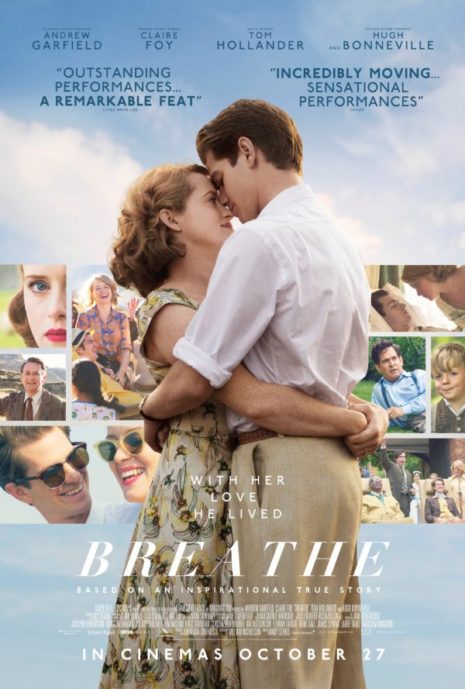
Admittedly, I was unaware of the pioneering disability advocate Robin Cavendish prior to the release of Breathe, a much anticipated biopic starring Andrew Garfield. Thankfully, this important figure’s story is sympathetically portrayed with charm, decency and humour in Andy Serkis’s directorial debut. 


The film brings to attention the life and achievements of one of Britain’s longest-lived responauts – Robin Cavendish (Garfield) who, at the age of 28, became paralysed from the neck down after contracting polio. Unable to breathe for himself, he was kept alive for almost forty years by a mechanical respirator.

The real Robin Cavendish with son Jonathan

We are first introduced to the handsome, sporty and awfully posh tea-broker in late 1950s England, where he meets and falls in love with the equally posh Diana, affectingly played by Claire Foy. The blissfully happy couple marry and relocate to Nairobi where Diana announces she is pregnant. Life was good and seemingly limitless.

Struck down only a year into their marriage, Robin and Diana are told curtly by doctors that he will survive no more than a few months. Confined to his hospital bed, Robin wished for death, mouthing to his brothers-in-law the words ‘let me die’. Depressed and resentful, he spits in the face of a hospital chaplain who suggests his suffering is part of God’s plan.

A helplessly devoted Diana asks what she can do, to which her husband responds, “Get me out of here”. Choosing to courageously risk death rather than submit to merely exist, hidden away as a patient for the remainder of his days, Robin was the first to pave the way for all other incarcerated disabled individuals. He determinedly pursued life, freedom, social integration and acceptance.

Opposing contemporary medical convention, the Cavendishes defiantly leave the hospital constraints in a blaze of glory, ignoring a disgruntled doctor who calls after them, “You’ll be dead in two weeks!”

Upon their exit they pass by two women who comment that it’s “not right” and “cruel” even, for “them” to be out and seen in public. This brief dialogue epitomizes the narrow-minded medical and social prejudice towards the severely disabled population, at the time.

The remainder of the film chronicles Robin’s fight to challenge such perceptions, whilst also pushing the boundaries of possibility. Not only does he succeed in changing attitudes, he was instrumental in making revolutionary practical advancements, thus effectively changing the lives of thousands of disabled people worldwide.
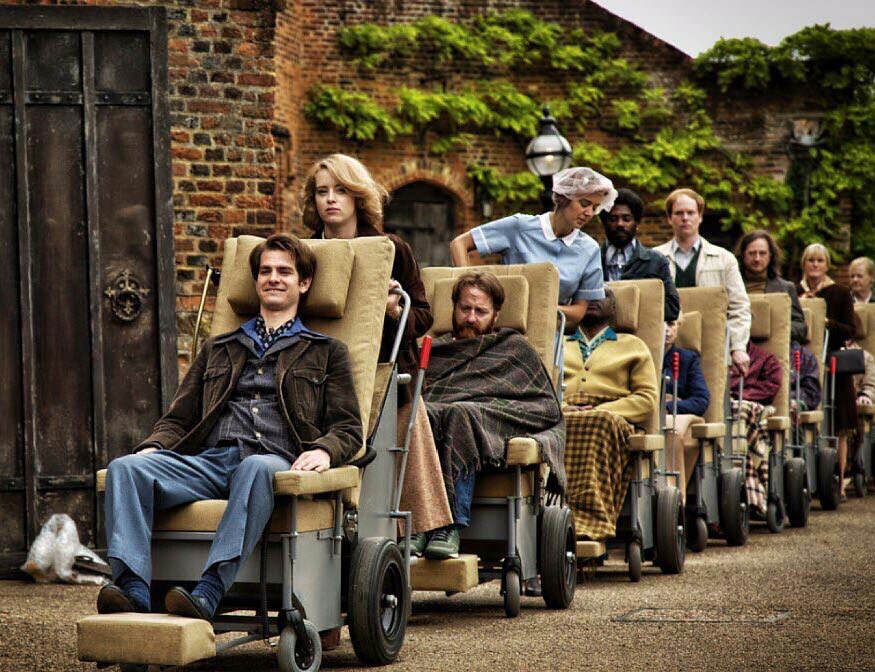
With the assistance of Oxford professor and inventor Teddy Hall (Hugh Bonneville), Robin develops a wheelchair that incorporates a ventilator, allowing him the freedom to venture beyond four walls, which he does with gusto.

A particularly funny episode involves a family holiday to Spain, during which Robin’s electrical respirator blows up, leaving him, Diana, their son and Diana’s brother stranded on a dusty layby. Not so funny, you might think. But the interaction that follows adds much needed light-relief.

While wife and son keep a jovial Robin breathing with the aid of a bag respirator, Tom Hollander’s character goes in search of a phone to call Teddy Hall back in England. The group then set up camp and attract a local crowd who party with them until Teddy makes a comical arrival on the scene.

As in life, there are moments of heart-breaking despair adding shade to the sunny optimism and whimsical jollity throughout. In one such scene, Diana presents photos of their former life in Nairobi to young son Jonathan who asks, “Can we go to Africa, Daddy?”

Unable to explain his plight to the youngster, he stifles tears of anguish as a watery-eyed Diana can say only, “I’m so sorry”. “So am I”, Robin softly replies.

Some years later, Robin teams up with Doctor Clement Aitken and together they tour Europe, demonstrating the custom made wheelchair. Particularly shocking is their visit to a German hospital where disabled patients are maintained in what looks like a futuristic, white-washed morgue. If you didn’t know this is a true story, you wouldn’t believe it.
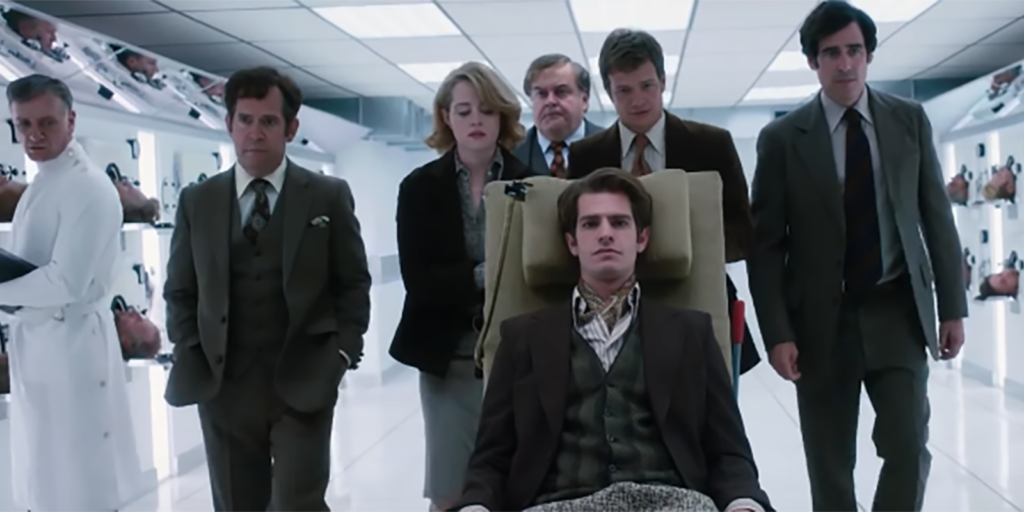
The film, which on the whole is a little too rose-tinted, benefits from stark, impactful reminders of the ways disabled people were viewed, treated and constricted. However, it lacks detail and grit, failing to depict the daily grind of real life, the mental strain and tensions within relationships.
While the central performances are commendable, they fail to achieve the same conviction and reaction as those of Eddie Redmayne and Felicity Jones in the comparable The Theory of Everything (2014).

Nevertheless, Breathe no doubt remains an inspiring tribute to the highly influential innovator Robin Cavendish and his triumph over adversity. His story has been realised with love, affection and sincerity, quite literally since the producer, Jonathan Cavendish, is his son.

*This article can also be found on the Muscular Dystrophy Trailblazers website.*


You might also be interested to read:

My Interview with disabled actor Daniel Baker, who has Duchenne Muscular Dystrophy

My Interview with Emmerdale Actor James Moore, who has cerebral palsy
Scoliosis | Why I Chose NOT To Have A Spinal Fusion

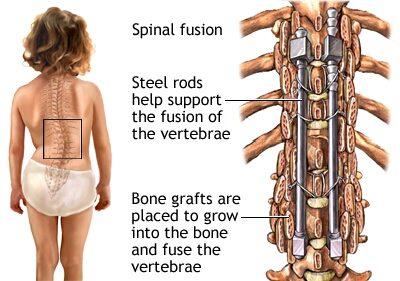
In my latest piece for Muscular Dystrophy Trailblazers, I explain how and why I chose NOT to have a spinal fusion.


My Experience

Aged four, I received a general diagnosis of congenital muscular dystrophy. Many years later, this was specified as Ullrich congenital muscular dystrophy.

Aged nine, I was offered corrective scoliosis surgery.

At the time, I had no idea why I was going to see this new doctor. To me, it was just another appointment.

There was no faffing around; this guy was straight to the point!

He firmly asserted that I needed an operation to prevent further decline of my spinal curvature.

I was horrified to hear of the graphic details, lengthy recovery period, and how it could even prove fatal.

Bear in mind, we’re going back more than 20 years – the whole procedure was very different to what it is today.

Of course, as an adult I now appreciate that with any surgical procedure, doctors are obliged to inform the patient of every potential risk and outcome, including death. But this was pretty shocking and unexpected news to take in at a young age.

How I Made My Decision

As a child, I attended annual outpatient appointments at Birmingham Heartlands Hospital, where I saw a paediatric neuromuscular Consultant.

My parents and I were never given a prognosis, nor any indication regarding if or how my condition might progress. Life expectancy was never discussed and no doctor could tell if I would, in time, come to rely on a wheelchair. We were very much in the dark, living day-to-day.

Frankly, these appointments frustrated and bored me to tears! We would wait hours to see the doctor, and leave knowing nothing more than we did before.

I have, in all honesty, learnt infinitely more as an adult through my own research and from others living with muscular dystrophy.

My point here is that my parents and I had nothing on which to base our decision. Or rather, my decision.

It is now more than 20 years since I was told I needed a spinal fusion. This was pre-Google and pre-social media.

We weren’t put in contact with anyone who had experienced the operation. So, other than a brief verbal overview from the Consultant, we had no other information or point of reference.

After leaving the appointment in a state of shock, my parents told me that ultimately the choice was mine. I decided I didn’t want to put myself through such an ordeal. I was, at that age, considerably more able than I am now, and none of us had any reason to think I would deteriorate as severely as I have.

Do I Regret My Decision?

At the time, it was, or at least seemed the right decision. I was able to weight-bear, finding clothes wasn’t an issue, I was pain-free, and did not require any inhalers, medication or respiratory support.

The procedure back then was much more invasive, and the recovery extremely lengthy compared to what it is today.

My condition was stable, I was happy and relatively able. Under those circumstances, the disadvantages outweighed the potential advantages.

However, I do often wonder how different my life, body and health might be had I said yes to a spinal fusion.

No one predicted that just a year after the offer was made, aged 10, I would become completely non-ambulant within a very short space of time. Had I any indication that this might occur, my decision may have been different.

Though my scoliosis was considerable, the ‘S’ shaped curve is now much greater. Consequently, my respiratory function is significantly affected and basic comfort is a distant memory.

On bad days, when I’m in pain and struggling for breath, or when I’m ill for months (yes, months) with respiratory infections; I do regret forgoing my one opportunity to correct my skeletal deformity.

But, what’s done is done, and cannot be undone. I’m stuck with me! I can’t change past decisions. I simply have to make the best of what I have and keep moving forward.


I’d love to hear about your experiences with scoliosis and spinal surgery.

– Have you turned down corrective surgery?

– Have you had a spinal fusion? If so, how has your life changed as a result? Is it better or worse?

Interview | Author Janine Shepherd

Here is my latest interview, with Janine Shepherd, for Disability Horizons.


Janine Shepherd: A Broken Body is not a Broken Person

Former elite athlete and celebrated author, Janine Shepherd shares her inspirational story in the best-selling memoir, Defiant: A Broken Body is not a Broken Person.

It chronicles her journey following a tragic accident that cut short her bid to compete in the 1988 Calgary Winter Olympics.

Partially paralysed and suffering life-changing injuries, Janine made the courageous decision to let go of her former life and face adversity head-on, creating a new dream for herself.

Here I speak to Janine about her journey, the challenges she has faced and how she’s reinvented herself and her outlook.

Hit by a truck in 1986 during a bicycle ride in Australia’s Blue Mountains, Janine was not expected to survive. Told by doctors that she would never walk again, nor have children, she spent the next few years rehabilitating her permanent disabilities and defying all the odds.

A mother of three, best-selling author, public speaker, aerobatics pilot and the first female director of the Civil Aviation Safety Authority, Janine speaks candidly and with humility about how and why she reinvented herself and changed her self-perspective.


Janine, please tell us about your disability and how it continues to affect you.

The accident gave me severe spinal cord injury – I broke my neck and back in six places. After extensive surgery and rehabilitation, there was just about enough nerve connectivity to be able to learn to walk again, albeit with a significant limp.

Now, in addition to significantly wasted lower leg muscles, I have limited feeling from the waist down and chronic bladder and bowel dysfunction. I also have to self-catheter a lot, which results in regular urinary tract infections. Your readers might agree that these issues are possibly the worst part of living with spinal cord injury.

‘Janine the machine’ is how you referred to your old self – the elite cross-country ski racer. Do you feel this remains a true representation of your character? If not, how would you now define yourself?

Even though I felt that my body was ‘broken’ after my accident, I realised that my spiritual essence and mental toughness remained unchanged. I soon learned that being ‘Janine the machine’ had less to do with athletic prowess than unshakeable determination and persistence. Recognising that gave me the strength to reinvent my life in a most remarkable way.

Following the accident and being unable to walk, you focused on learning to fly. In your book, you state: “I had to find something to replace what I had lost in my accident”. Why was it so important to set yourself such an ambitious goal?

We often define ourselves by things outside of us – our jobs, our relationships, the roles we play in life. When we lose those things, who we are and everything we believed in is challenged. When we experience such immense loss in life, whatever form it may take, it is very easy to slip into despair, which is what happened when I got home from the hospital. Flying filled me with so much joy and gave me the inspiration and hope that I really could rebuild my life in an unlikely and extraordinary way.

The feeling of despair was almost inevitable. You state that you suffered depression on returning home after a six-month stay in hospital. How did overcome this?

I overcame the despair by throwing myself into flying as well as my physical therapy. At first, this was more discipline than it was a spiritual or emotional triumph. I simply interrupted the pattern of depression by charting progress on all fronts, no matter how incremental it may have been from one day to the next. This helped to refocus my life and channel my depression elsewhere. Hope and application proved to be powerful antidotes to depression.

You discuss your choice to keep fighting versus letting go and accepting not only your body but also the circumstances. This led you to stop asking “why me?” but rather, “why not me?” Why was it so essential to change your perspective?

Before my accident, I had led a very narrow life in that all of my friends were athletes of some sort. In hospital, I met so many other people, whom I would normally not have met. This opened my eyes to the fact that I wasn’t alone on this journey.

Even though we came from very different walks of life, we experienced similar struggles with acceptance and recalibrating how to live life post-recovery. Equally important, we had in common the typical hopes and dreams of anyone for a ‘normal’ life once we left the spinal ward.

You have faced great adversity on a number of occasions. Having rebuilt your life following your accident, you then later experienced the upheaval of divorce and financial ruin. What gave you the strength to once again thrive and persevere despite these challenges?

I developed a philosophy very early on in my days as an athlete called ‘loving the hills.’ One of my racing advantages was that I took on the climbs my competitors dreaded with a passion. That not only made me physically stronger but mentally tougher as well.

This proved to be more than just a training philosophy; it became my choice as a way seeing and living life. Ski races and life experiences are both full of hills; loving them not only gave me a competitive edge but also developed my resilience. So when faced with a life challenge that, metaphorically, looks insurmountable, I take that on as just another ‘hill’. Loving it, not fighting it, teaches me the lessons I need in order to grow into a wiser and more compassionate person.

One of the themes of your book is the concept of disability. You emphasise the importance of believing in the power of potential and adopting a defiant mindset, so that one may not be defined by their physical limitations. Can you share your outlook on disability?

I went from being a gifted, multi-sport athlete to having to relearn how to walk. So, it took me years to finally and fully accept that I am a woman with a disability. At first I felt embarrassed by many aspects of my spinal cord injury, bladder and bowel dysfunction.

However, as I look back and see how much I have achieved, despite my challenges, and how much I have overcome, I feel like the aspect of loss in my life is no longer something to try to hide. Instead, I’m proud of being able to acknowledge my disability and put my energy into making the best use of my gifts.

Despite your many life-altering setbacks, you write with great humour, humility and encouragement. How have you managed to maintain such a positive and empathetic attitude? And do you feel that humour is important in maintaining a healthy outlook?

I absolutely feel that being able to laugh at life is an essential part of the healing process. I tell others not to take life too seriously or you’ll cloud the experience. There are so many documented mental and physical health benefits of laughter. Humour helps me to deal with chronic pain, something that remains a part of my life on a day-to-day basis.

You state that the loss of your athletic career and your physical limitations ultimately allowed you the freedom to embrace life’s potential and infinite possibilities. This is a remarkably refreshing and open-minded viewpoint. How have you ensured that you are defined by your accomplishments rather than your broken body?

I believe that life is about loosening our grip on the things that we feel entitled to. Many of the ancient teachings state that this only leads to suffering. When we let go of the life that we feel we should have, we gain the freedom to see the world through new eyes, and create a more ideal life we can only then envision. This is the gift that comes from realising that life is not about having it all, but loving it all, even the painful parts.

Finally, what do you hope readers will take away from your memoir?

I believe that each of us serves both as companion and as mirror to those we meet along the way. When we accept that we are not alone on our journey, and just how precious and short it is, we become open to seeing the world from a perspective of love and hope.

We then understand that, despite the inevitable life challenges, we always have the choice to reinvent our lives and embrace the new with a sense of wonder and joy. My sincere wish is that my story helps each reader better connect with his or her defiant human spirit. And, that doing so serves to foster the pursuit of the uniquely rich, extraordinary life that awaits every one of us.


I would like to thank the wonderful Janine Shepherd for speaking with me.

Please follow me on Twitter and Facebook

The Kindness of Strangers | Wheelchair Life ♿

I was out shopping yesterday in my Quantum 600 powered wheelchair. While the many other shoppers bustled past without a second thought, one considerate old lady stopped to ask if I needed her help to reach anything.

As fellow wheelchair-users will know, shopping can be frustrating for various reasons. Not only are we grappling with the general public (the pushing, shoving and impatience), and trying to navigate narrow aisles without running over any toes; we are also bum height! 😣

Not only that – reaching anything above or below torso level is a challenge, particularly with elbow contractures and poor grip (as in my case).

With that in mind, those few kind words from one generous old lady truly made my day. It really is the little things in life – the small gestures – that make a big difference. If only everyone was so thoughtful!

I am aware that some disabled individuals may take offence at such an offer, presumably seeing it as a sign of pity – the implication being we (disabled people) cannot manage by ourselves. However, I personally cannot construe it as anything other than sincere concern and consideration for a fellow human being.

We all need help and support every once in a while, regardless of ability or circumstance. Even if you don’t require assistance from others, at least show some gratitude and have the courtesy to decline their offer politely.


#respecttotheoldies ✌💗

#MuscularDystrophy

#WheelchairLife ♿


Follow me on Twitter

Walking vs Wheelchair: Accepting the Need for a Wheelchair

I was recently invited to write a guest post for the lovely SimplyEmma.

You can view my post for Emma here.


I’ve noticed a lot of discussion, within Facebook groups, around the topic of walking versus the use of a wheelchair.

Many disabled people gradually lose the ability to walk over a period of time. Often it occurs in stages: from independent mobility, to the need for walking sticks, then a frame and finally a wheelchair.

I appreciate that for the individuals affected, it is an incredibly difficult decision to make. Do I continue to walk for as long as possible, despite the struggle and restraints? Or, do I resign myself to the confines of a wheelchair?

I have noticed, from comments on social media, that this is how some view wheelchairs: objects of confinement and restriction.

On the contrary, I see my wheelchair as an essential mobility aid, removing the limitations I faced when walking for only short durations. The powered chair I now use offers me freedom and independence.

Obviously, your condition and individual circumstances determine whether or not you have the option to continue walking.

Personally, I never had a choice. I have Ullrich congenital muscular dystrophy and lost the ability to walk quite abruptly at the age of 10. Not that I could walk very well or very far up to that point.

Nevertheless, the choice was taken from me. I had reached a stage where I literally couldn’t support my own weight. Grit and determination played no part. And so, I went from walking minimal distances whilst wearing leg splints, to using a manual wheelchair that I couldn’t self propel due to a lack of strength and joint contractures. Sticks and frames were of no use to me whatsoever.

It was a difficult transition, of course. But not totally unexpected. As a child, I was offered little assurance of how my condition would progress. Doctors simply didn’t know. They couldn’t tell me if I would maintain my ability to walk or not. It was a case of, wait and see; roll with the punches. So that’s what I did.

To be honest, I was to a large extent relieved to be using a wheelchair, despite the fact I was dependant on others to manoeuvre me around. Even just a few small steps was a huge feat and physically laborious. That in itself was disabling me.

Committing to a wheelchair full time meant that I was free to roam with my peers. Kids at school used to squabble over whose turn it was to push me around. I was no longer exhausted, battling to stay on my feet or falling over and injuring myself. Being non-ambulant, I no longer had to wear those unsightly leg splints, which pleased me no end!

I had recently started middle school and, within a matter of a few weeks, I found myself completely unable to weight-bear.

However, less than twelve-months later, I was fortunate enough to benefit from my first powered wheelchair. I can’t emphasise enough how much of a difference this made to my life.

I could zip around at break times with friends, I could take myself wherever I wanted to go without the need for assistance, and I could venture into the local countryside. I was no longer confined!

It’s been eighteen years since I took my last footstep. And, I can honestly say I don’t miss walking. Naturally, I wish I could stand, walk and run ‘normally’. But I would never trade my wheelchair for my old leg splints, the bumps and bruises from falling so often, and the constant exertion to achieve a few small steps.

Not that I have a choice.

The [Un]dateables

In February 2017, I wrote a piece for Muscular Dystrophy UK about the Channel4 TV dating show, The Undateables


Last week, Channel4 aired the final episode of its reality series The Undateables, a dating show for disabled people.

For those who are unfamiliar, individuals with any disability are invited to appear on the show, now in its sixth season.

With the help of dating agencies and personal introduction services, they take part in blind dates, speed dating and match-making in the hope of finding love.

Now, I’ve seen almost every episode since it premiered in 2012, and I have to say I am a fan and supporter.

I appreciate and understand the controversy surrounding the show, particularly within the disabled community, although I personally disagree with much of the negative criticism. For this reason, as someone with a physical disability myself, I would like to offer my point of view.

Firstly, I’d like to point out that all participants have applied of their own free will. Following their appearances, all have reported a positive experience, even those who did not find love as a direct result of the show.

Tammy from series 5 says, “I put myself forward for The Undateables. At no point during filming did I feel like I was being used for entertainment. It’s an entertaining show [but] we all just want to find someone who loves us for us.”

The program has been invaluable and life changing for many, leading to long term relationships, marriage and babies. Furthermore, despite the claims of some, disabled individuals have not been coupled exclusively with other disabled people.

For example, Brent, a young man with tourettes married his able-bodied date Challis.

Steve with Crouzon syndrome married able-bodied Vicky whom he met on Twitter after the show gave him much needed confidence – he remains friends with his able-bodied date from the show.

Then there’s Carolyne from the first series, whose childhood sweetheart left her when she became paralysed following a spinal cord lesion. She later met Dean who is able-bodied. The couple had their first child together in 2014.

These are just a few of the many success stories resulting from the show.

Some critics have called into question the editing, which it can be argued is an issue with any reality TV show. However, taking into consideration the accounts offered by the participants themselves, it would seem to me that great care has been taken to ensure fair and accurate representation.

Again, I personally have no issue with the tone or editing, and have never found it to be exploitative, patronising, sensationalist or insincere. Quite the opposite in fact, I feel The Undateables realistically and positively depicts a range of disabilities, thereby raising awareness and breaking down social barriers and stigma.

James, who has Asperger’s, took part in the show last year. He told ITV’s This Morning, “It [the show] provides a lot of education on a wide range of things, not just conditions… The fact that people will tune in knowing they will learn a bit more, maybe take away the stigma, is a very positive thing. It paints a very positive picture of British audiences.”

The format itself is understandably a contentious issue: why is it not the norm for disabled people to participate in mainstream dating shows such as First Dates, (also a product of Channel4), and ITV’s Take Me Out?

Why must the disabled community be confined to a show exclusively for them? There is no definitive answer, though I would argue that it comes down to choice and demand.

As previously stated, those who partake make the choice to do so. Many have learning disabilities and are supported by family, friends and caregivers, as viewers will know. Therefore, to suggest they are being taken advantage of by producers, which some critics have, I feel implies that these people are not able to form rational decisions and make up their own minds. This is inaccurate and unjustified.

Secondly, the show is now in its sixth year (as of Feb 2017), which proves there is continuing demand from both the viewing public and applicants eager to find love, friendship and companionship.

I have found that questions and accusations such as the aforementioned are often posed, more often than not by those with disabilities. This indicates to me that, in fact, it is not predominantly the able-bodied community who have issues with the show. Yes, you may hear the occasional, ‘bless them’, ‘aw, how sweet’ and ‘good for them’ from able-bodied viewers – how very dare they indeed!

But to conclude that this is a form of ‘inspiration porn’ is in my opinion, vastly overstretching the mark. I take issue with the term ‘inspiration porn’, particularly in relation to The Undateables.

Frankly, even if viewers are in some way inspired by the determination and go-getting attitude of those they see on the show, why is that so awful?

Paralympians are equally as inspiring as Olympians. Yet there are some, particularly in the disabled community, who deem this to be ‘inspiration porn’. That is to say, people draw inspiration from disabled athletes solely due to their disability rather than their sporting achievement, as well as to feel better about their own lives. Personally, I think this is nonsense and insulting to both the able-bodied and disabled.

I cannot speak for the entire viewing public, obviously, but I have watched the show with friends and family over the years, and the feedback has always been one of support and genuine happiness for the love-seekers. Not one person I have spoken to has ever indulged in this so called ‘inspiration porn’ to, as critics say, feel better about themselves. This is the one accusation that frustrates me the most.

Okay, the title… Are Channel4 saying that we, the disabled, are undateable? Put simply, NO!

Producers have themselves stated that the title is to challenge this common misconception within society. Furthermore, as viewers will know, during the opening sequence of each episode, the prefix clearly falls from the word ‘dateables’, thus indicating the contrary.

The show itself is proof that no one is undateable – an eye opener to many viewers who may have previously thought otherwise, or have just never considered the fact that like them, we (the disabled) also need, want and desire love and intimacy.

For one reason or another, there remains a section of society that has never encountered anyone with a disability. Through no fault of their own, they consequently may be ignorant to the needs, desires and feelings of disabled people. I think The Undateables is a great way to introduce this concept to such individuals.

As James with Asperger’s says, the show is successfully removing stigma and raising awareness.

I have an older brother with complex learning disabilities, and so I’m able to draw from his perspective in addition to my own. He has expressed a keen interest to appear on The Undateablesand my family and I would be more than happy for him to do so. Neither of us feel alienated, uncomfortable, ridiculed or patronised by the show. Again, I do appreciate the criticism but for those who bother to watch it with an open mind, I believe you will find it to be well-meaning, sincere and sympathetic.

Those involved have benefitted, it has given others in similar circumstances the confidence to look for love, and it has made society realise that we all have basic human needs and desires, and the right to pursue them.

It’s easy for viewers to criticise on social media, having watched only one episode, or even one at all. But I implore you, ask the participants. Their response says it all, for me anyway. It seems to me the majority of negative critics haven’t actually seen the show and are therefore judging it superficially. It is certainly not a freak show and is not treated as such.

The dating agencies, often run by the parents or relatives of those with disabilities, aim to match clients based on common interests. Disabled people are not matched with others with similar disabilities. To assume so says more about those who think this than anyone involved with The Undateables.

So finally, I urge the harsher critics out there to actually WATCH (preferably more than once!) before judging so narrow-mindedly.

Who knows if Channel4 will commission another series of the popular show. Based on viewing figures, I’m guessing it’s more than likely they will. If so, I’ll certainly be tuning in.

The Winter Edit: Part 1

5 Tips to Keep Warm this Winter

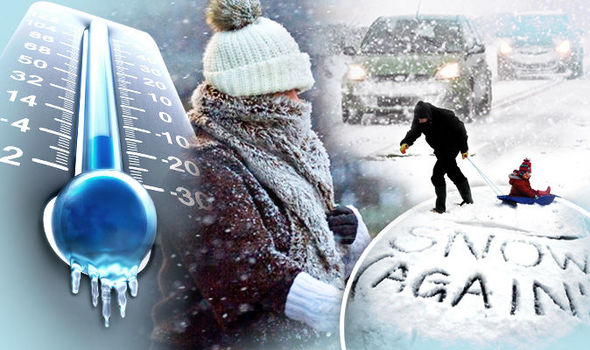
Winter is well and truly here and so too is the frosty weather. British winters can be long, dark and unforgiving.

To help you make the most of the season ahead, I bring you Part 1 of my Winter Edit – advice, tips and tricks to ward off the chill.


1. Chilblains:

Because I am unable to weight-bear, I suffer from poor circulation, making my feet permanently cold. I have what can only be described as corpse feet – purple and puffy!

I have tried all sorts of remedies over the years to treat recurrent chilblains, but I’ve found the best to be Gehwol Fusskraft Red cream (available on Amazon).

I slather it on generously before putting on a pair of thick woolly socks, and find my feet are subtly but noticeably warmed and chilblains are kept at bay.

  • A good alternative to the Gehwol Fusskraft Red cream is the Pink Peppermint foot lotion by Lush, which works similarly to stimulate circulation. If going out on a cold day I’ll sometimes rub this into my hands to fend off frosty fingers.
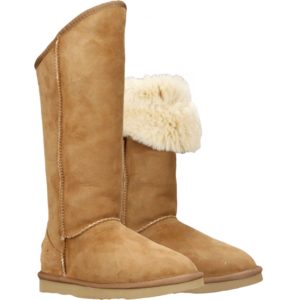
  • In terms of footwear, you can’t beat (in my humble opinion) a pair of shearling lined boots *ahem, Ugg dupes*. They may not be the height of sophistication, but they do the job and they’re ridiculously comfortable. I can imagine all the guys out there are thinking this is one for the ladies, but there is a good selection of shearling lined winter boots out there for men too.

2. Layering:

We all know it’s best to layer clothing when cold. However, this is not so easy to do when you’re a wheelchair-user.

Getting dressed is a daily struggle for me, so having to battle with more than one top fills me with dread.

So, my advice put simply; if you can layer, do. If like me you can’t, keep reading…

I live in leggings as they’re stretchy and comfortable. You can buy leggings everywhere and anywhere these days but I favour Marks and Spencer heatgen thermals.

There are socks, tights, vests, long sleeved tops and of course the leggings I love. Again if you’re able to, I recommend wearing these items under your usual attire for added insulation. But they’re ideal to wear alone too. M&S also feature a men’s thermal underwear range.

A great alternative to M&S is the Uniqlo Heattech range for men, women and children. This extensive selection is it is competitively priced, practical and fashionable. Definitely check this one out!

uniqlo

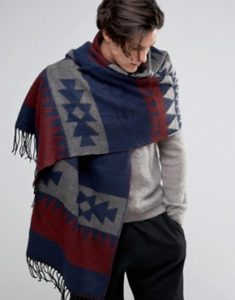
  • I swear by scarves. They’re so easy to throw around to protect against the winter chill. They come in so many fabrics, sizes, colours and styles. Invest in a thick woollen scarf big enough to wrap around your body like a poncho or use as a blanket over your legs. I sometimes do this if I’m home alone as I can’t manage sleeves myself.
  • Wear a woollen hat when going out in cold weather as heat escapes from our heads.
  • Gloves aren’t just for outdoors. If you suffer from cold hands, try wearing a fingerless pair when indoors which allow you the freedom to continue with your daily tasks. If it’s a particularly frosty day and I need to go out, I will layer woolly gloves over a fingerless pair. You could also purchase some USB heated gloves online.

  • Throughout the coldest months, ensure you use several bed sheets as this traps heat in far better than having one thick blanket. It’s also much easier to turn and reposition yourself with a few thinner cotton sheets over you than one heavy blanket. *I’ve mentioned it before but for those of you who struggle with turning in bed, I highly recommend investing in a satin fitted sheet.

3. Fabric:

When trying to keep warm it’s worth considering where you are and what you’re doing as this will determine which fabrics to opt for.

  • Natural fibres such as wool, cotton and silk are more insulating since they trap heat. So lightweight silky pyjamas will not only keep you snug at night, they will also help you manoeuvre more easily. Cotton is hypoallergenic, breathable and good for layering but not advisable in wet weather as it is also highly absorbent. Wool too absorbs moisture though due to its structure, water cannot enter the interior fibre. Therefore, even when soaking wet the air pockets inside the woollen fibres prevent you from losing heat. 100% wool is best as blends are less insulating.
  • The synthetic fabric polyester is good when out on a windy day. It’s durable, lightweight and can be made to any thickness. A polyester coat or jacket is a must. And why not snuggle up in bed with a polyester fleece mattress topper, available from Amazon.

4. Food:

  • Swap your morning cereal for warming porridge oats. Add a little cinnamon as it stimulates circulation thereby raising body temperature. Cinnamon spice is also full of antioxidants and anti-inflammatory properties which will protect you from winter viruses.

  • Opt for soup over sandwiches. Include iron rich foods, garlic, onions, spices and orange vegetables such as carrots, sweet potato and squash.
  • Whole grains, nuts and nut butters are great insulating snacks.
  • The dark days and cold weather can make us lethargic. Many of us lack the energy to cook after a busy day. So to prepare for the week ahead, make yourself plenty of warming hearty meals like stews, broths, casserole and chilli, then freeze. When you then come home in the evening, all you need do is reheat and enjoy. You’ll be warmed through in no time.
  • Hot drinks are a winter essential. I drink a lot of herbal teas, especially lemon and ginger as these ingredients are great for flushing out the system and warding off coughs and colds. When on a long journey take a flask of hot coffee or tea with you to stay warm and hydrated.

5. Home Heating:

It’s important to maintain a warm and consistent temperature in your home throughout the winter.

Exposing yourself to extreme and varied temperatures can leave you vulnerable to ill health and infection. Government guidelines advise heating our living rooms to 21C (70F).

Most of us now have central heating which can even be controlled from our mobile phones.

My family home is primarily heated by a wood burner which warms the whole house.

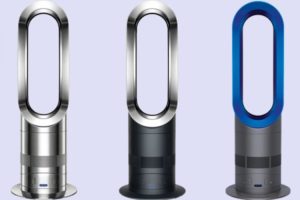
However, I cannot prepare and light the fire myself due to my disability. I therefore store a fan heater in my bedroom which is simply operated by the flick of a switch. There are many different electric heaters now on the market. Here’s a budget option and a higher end option for you.

You could also pre-heat your bed with an electric blanket or a hot water bottle so that it’s nice and toasty for you to get into at night.

Honourable Mentions:

  • Invest in a high tog duvet for frost nights.
  • For a quick fix, blast yourself with the hairdryer for instant heat
  • Heating pads and microwaveable heat pack
  • Reusable hand gel warmers (I have these)
  • Microwaveable slippers/USB foot warmer
  • Check out the complete care shop for a variety of warming aids
  • Enjoy a cosy night in front of the fire with a milky hot chocolate – my favourite is Galaxy or Aero – and a big bowl of homemade cinnamon popcorn!

I hope this was helpful! If so, please SHARE 

Winter Edit: Part 2 ~ Tips to Stay Well through Winter